Przejdź do zawartości
Merck

Przejdź do

P5704

Monoclonal Anti-Protein Kinase C (PKC) antibody produced in mouse

clone MC5, ascites fluid

Synonim(y):

Monoclonal Anti-Protein Kinase C, Anti-PKC

Zaloguj się, aby wyświetlić ceny organizacyjne i kontraktowe.

Wybierz wielkość

Zmień widok
Gabaryty przesyłkiSKUDostępnośćCena netto
0.2 mL
Skontaktuj się z Obsługą Klienta, aby uzyskać informacje na temat dostępności
2840,00 zł
2414,00 zł
100 μL
Skontaktuj się z Obsługą Klienta, aby uzyskać informacje na temat dostępności
2920,00 zł

Informacje o tej pozycji

UNSPSC Code:
12352203
eCl@ss:
32160410
NACRES:
NA.44
MDL number:
Conjugate:
unconjugated
Clone:
MC5, monoclonal
Application:
ARR, IHC (f), IP, WB
Citations:
66

2414,00 zł

Cena katalogowa2840,00 złZaoszczędź 15%

Skontaktuj się z Obsługą Klienta, aby uzyskać informacje na temat dostępności
Rekombinowane, niezawierające konserwantów przeciwciało jest dostępne dla Twojego celu. Wypróbuj ZRB2094

Zamów zamówienie zbiorcze
Pomoc techniczna
Potrzebujesz pomocy? Nasz zespół doświadczonych naukowców chętnie Ci pomoże.
Pozwól nam pomóc


biological source

mouse

Quality Level

conjugate

unconjugated

antibody form

ascites fluid

antibody product type

primary antibodies

clone

MC5, monoclonal

mol wt

antigen 80 kDa

contains

15 mM sodium azide

species reactivity

rat, bovine, mouse, human

technique(s)

immunohistochemistry (frozen sections): suitable, immunoprecipitation (IP): suitable, microarray: suitable, western blot: 1:500 using rat brain cytosol preparation

isotype

IgG2a

UniProt accession no.

shipped in

dry ice

storage temp.

−20°C

target post-translational modification

unmodified

Gene Information

General description

Protein Kinase C (PKC) is a phospholipid and calcium dependent enzyme that regulates intracellular signal transduction. Neuronal PKC modulates several functions such as nerve cell excitability, neuronal plasticity, and release of neurotransmitters. PKC inhibitors have been implicated in diabetic retinopathy . Monoclonal Anti-Protein Kinase C (clone MC5) recognizes an epitope located within the amino acid sequence 296-317 at the hinge region (close to or at the trypsin cleavage site) of PKC . The antibody is specific for PKC in humans, bovines, rats and mice. Binding of the antibody to in vitro purified PKC blocks trypsin-mediated partial proteolysis. Phorbol-ester induced down-regulation of the kinase is inhibited by the introduction of Fab fragment of the antibody into a rodent glioma cell line .
Protein kinase C (PKC) is a 77-90kD protein that belongs to serine/threonine protein kinases family. It has a crucial role in cellular regulation, signal transduction and tumor promotion and oncogenesis. Monoclonal Anti-Protein Kinase C (PKC) antibody can be used for identification and localization of PKC in normal and malignant tissues. It can also be used in immunoblotting (diluted 1:500) using rat brain extracts. Mouse Anti-Protein Kinase C (PKC) antibody reacts specifically with PKC polypeptide (80kD). The product has also shown cross reactivity for rat, bovine, mouse and human.

Immunogen

purified bovine brain protein kinase C

Application

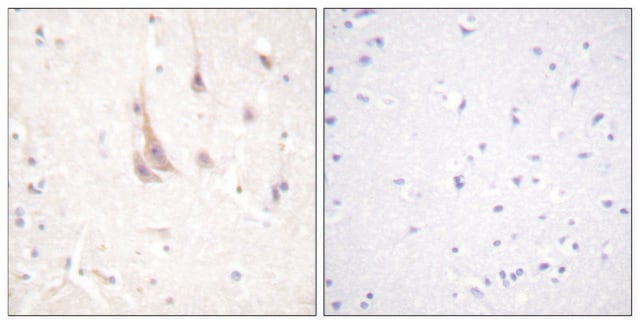
Monoclonal Anti-Protein Kinase C (PKC) antibody can be used for the localization of protein kinase C by using different immunochemical assays like- dot blot, immunoprecipitation and ELISA. It can also be used as a primary antibody in immunohistochemistry[1] (diluted 1:200) .
Monoclonal Anti-Protein Kinase C (PKC) antibody is suitable for use in immunohistochemistry (frozen sections), immunoblot (80 kD, using bovine brain PKC, extracts of rat glioma and murine NIH 3T3 cell lines), dot blot, ELISA, microarray and immunoprecipitation (rat glioma and human cell extracts/lysates).

Biochem/physiol Actions

Reacts with the 80 kDa polypeptide of PKC. Binding of the antibody to purified kinase in vitro, blocks partial proteolysis by trypsin. Introduction of Fab fragments of the antibody into a rodent glioma cell line inhibits phorbol-ester-induced down-regulation of the kinase.

Disclaimer

Unless otherwise stated in our catalog or other company documentation accompanying the product(s), our products are intended for research use only and are not to be used for any other purpose, which includes but is not limited to, unauthorized commercial uses, in vitro diagnostic uses, ex vivo or in vivo therapeutic uses or any type of consumption or application to humans or animals.
Ta strona może zawierać tekst przetłumaczony maszynowo.

Porównaj podobne pozycje

Wyświetl pełne porównanie

Pokaż różnice

1 of 1

Ta pozycja
P4334SAB1404242SAB4502380
conjugate

unconjugated

conjugate

unconjugated

conjugate

unconjugated

conjugate

unconjugated

Gene Information

human ... PRKCB(5579), PRKCZ(5590)
mouse ... Prkcb(18751), Prkcc(18752)
rat ... Prkcb(25023), Prkcg(24681)

Gene Information

mouse ... Prkca(18750)
rat ... Prkca(24680)

Gene Information

human ... PRKCD(5580)

Gene Information

human ... PRKCZ(5590)

antibody form

ascites fluid

antibody form

whole antiserum

antibody form

purified immunoglobulin

antibody form

affinity isolated antibody

clone

MC5, monoclonal

clone

polyclonal

clone

6A2, monoclonal

clone

polyclonal

biological source

mouse

biological source

rabbit

biological source

mouse

biological source

rabbit

species reactivity

rat, bovine, mouse, human

species reactivity

mouse, rat

species reactivity

human

species reactivity

human, rat, mouse


Still not finding the right product?

Wypróbuj nasze narzędzie Narzędzie selektora produktów, aby zawęzić opcje.


Klasa składowania

10 - Combustible liquids

wgk

WGK 3

flash_point_f

Not applicable

flash_point_c

Not applicable


Wybierz jedną z najnowszych wersji:

Certyfikaty analizy (CoA)

Lot/Batch Number

Nie widzisz odpowiedniej wersji?

Jeśli potrzebujesz konkretnej wersji, możesz wyszukać konkretny certyfikat według numeru partii lub serii.

Masz już ten produkt?

Dokumenty związane z niedawno zakupionymi produktami zostały zamieszczone w Bibliotece dokumentów.

Odwiedź Bibliotekę dokumentów


Zi-Li Yu et al.
International journal of molecular medicine, 37(2), 468-474 (2016-01-09)
Lysophosphatidic acid (LPA) is an efficient, bioactive phospholipid involved in various biological processes. In this study, LPA-induced connective tissue growth factor (CTGF/CCN2) expression and the underlying mechanisms were investigated using the MC3T3-E1 cell line. The MC3T3-E1 cells were stimulated with
Influence of intrathecal injection with dexmedetomidine on the
behavioral ability and analgesic effects on rats with neuropathic
pain and expression of protein kinase C in the spinal dorsal horn
Li X and Zhang W
Experimental and Therapeutic Medicine, 16(5), 3835-3840 (2018)
Laura Restani et al.
Traffic (Copenhagen, Denmark), 13(8), 1083-1089 (2012-04-24)
The widely used botulinum neurotoxin A (BoNT/A) blocks neurotransmission via cleavage of the synaptic protein SNAP-25 (synaptosomal-associated protein of 25 kDa). Recent evidence demonstrating long-distance propagation of SNAP-25 proteolysis has challenged the idea that BoNT/A remains localized to the injection


Numer pozycji handlu globalnego

SKUNUMER GTIN
P5704-100UL04061837914157
P5704-.2ML04061837914140

Questions

Reviews

No rating value

Active Filters