
Przejdź do
O7889

Anti-OMP antibody produced in rabbit
~2 mg/mL, affinity isolated antibody, buffered aqueous solution
Synonim(y):
Anti-Olfactory Marker Protein
Wybierz wielkość
| Gabaryty przesyłki | SKU | Dostępność | Cena netto |
|---|---|---|---|
| 200 μL | Skontaktuj się z Obsługą Klienta, aby uzyskać informacje na temat dostępności | 3260,00 zł 2771,00 zł |
Informacje o tej pozycji
2771,00 zł
Cena katalogowa3260,00 złZaoszczędź 15%biological source
rabbit
Quality Segment
conjugate
unconjugated
antibody form
affinity isolated antibody
antibody product type
primary antibodies
clone
polyclonal
form
buffered aqueous solution
mol wt
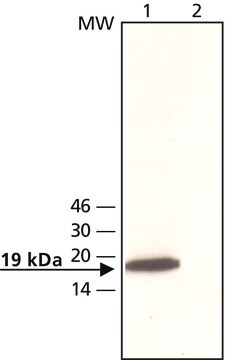
antigen ~19 kDa
species reactivity
rat, mouse
concentration
~2 mg/mL
technique(s)
western blot: 0.5-1.0 μg/mL using rat brain (olfactory bulb) extract (S1 fraction).
UniProt accession no.
shipped in
dry ice
storage temp.
−20°C
target post-translational modification
unmodified
Gene Information
rat ... Omp(24612)
General description
Immunogen
Application
- immunoblotting
- double immunofluorescence
- staining
Biochem/physiol Actions
Physical form
Disclaimer
1 of 1
Ta pozycja | |||
|---|---|---|---|
| antibody form affinity isolated antibody | antibody form affinity isolated antibody | antibody form purified immunoglobulin | antibody form affinity isolated antibody |
| biological source rabbit | biological source rabbit | biological source mouse | biological source rabbit |
| Quality Level 200 | Quality Level 200 | Quality Level 100 | Quality Level - |
| conjugate unconjugated | conjugate unconjugated | conjugate unconjugated | conjugate unconjugated |
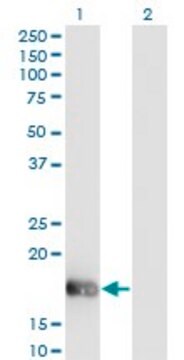
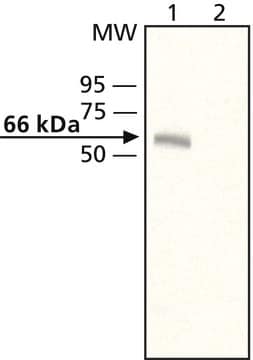
| technique(s) western blot: 0.5-1.0 μg/mL using rat brain (olfactory bulb) extract (S1 fraction). | technique(s) western blot: 0.5-1.0 μg/mL using A431 cell lysate, western blot: 0.5-1.0 μg/mL using extract of rat brain cytosolic fraction (S1) | technique(s) capture ELISA: suitable, western blot: 1-5 μg/mL | technique(s) western blot: 0.75-1.5 μg/mL using mouse brain extract (S1 fraction) |
| UniProt accession no. | UniProt accession no. | UniProt accession no. | UniProt accession no. |

Still not finding the right product?
Explore all of our products under Anti-OMP antibody produced in rabbit
— lub —
Wypróbuj nasze narzędzie Narzędzie selektora produktów, aby zawęzić opcje.
Klasa składowania
10 - Combustible liquids
wgk
WGK 3
flash_point_f
Not applicable
flash_point_c
Not applicable
ppe
Eyeshields, Gloves, multi-purpose combination respirator cartridge (US)
Wybierz jedną z najnowszych wersji:
Masz już ten produkt?
Dokumenty związane z niedawno zakupionymi produktami zostały zamieszczone w Bibliotece dokumentów.
Powiązane treści
Instructions
Numer pozycji handlu globalnego
| SKU | NUMER GTIN |
|---|---|
| O7889-200UL | 04061837721182 |