Przejdź do zawartości
Merck

Przejdź do

G9293

Anti-GAL4, Activation domain antibody produced in rabbit

~1.0 mg/mL, affinity isolated antibody, buffered aqueous solution

Synonim(y):

Anti-Galactose 4

Zaloguj się, aby wyświetlić ceny organizacyjne i kontraktowe.

Wybierz wielkość

Zmień widok
Gabaryty przesyłkiSKUDostępnośćCena netto
200 μg
Skontaktuj się z Obsługą Klienta, aby uzyskać informacje na temat dostępności
2240,00 zł

Informacje o tej pozycji

UNSPSC Code:
12352203
NACRES:
NA.56
MDL number:
Conjugate:
unconjugated
Clone:
polyclonal
Application:
WB
Citations:
5

2240,00 zł


Skontaktuj się z Obsługą Klienta, aby uzyskać informacje na temat dostępności

Zamów zamówienie zbiorcze
Pomoc techniczna
Potrzebujesz pomocy? Nasz zespół doświadczonych naukowców chętnie Ci pomoże.
Pozwól nam pomóc


biological source

rabbit

Quality Level

conjugate

unconjugated

antibody form

affinity isolated antibody

antibody product type

primary antibodies

clone

polyclonal

form

buffered aqueous solution

concentration

~1.0 mg/mL

technique(s)

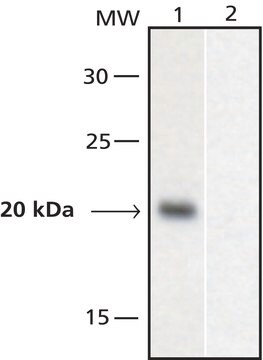
western blot: 0.5 μg/mL using GAL4-AD fusion protein in Saccharomyces cerevisiae extract

shipped in

dry ice

storage temp.

−20°C

target post-translational modification

unmodified

General description

GAL4 protein is an 881 amino acid transcription factor containing an independent N-terminal DNA binding (147 amino acids) and C-terminal activator domains. It is a regulatory gene that belongs to GAL gene family. It is a component of yeast two hybrid system, where GAL 4 DNA-BD is fused to protein X (bait) and GAL4 activation domain is fused to protein Y (prey).
Useful in the study of protein:protein interaction studies. GAL4 DNA activation domain fusion proteins.

Immunogen

Synthetic peptide corresponding to amino acids of Saccharomyces cerevisiae GAL4 protein.

Application

Anti-GAL4, Activation domain antibody produced in rabbit has been used in western blotting.

Biochem/physiol Actions

GAL4 induces the genes that are responsible for regulation of galactose metabolism in saccharomyces cerevisiae. GAL4 protein is widely used for studying transcriptional activation in eukaryotes. The yeast two hybrid system is widely used to study to discover protein− protein interactions (PPIs) and protein−DNA interactions.

Physical form

The product is provided as a solution of affinity isolated antibody in 0.01 M phosphate buffered saline, pH 7.4, containing 1% bovine serum albumin and 15 mM sodium azide as a preservative.

Preparation Note

For continuous use, store at 2-8 °C for up to one month. For extended storage, freeze in working aliquots. Repeated freezing and thawing is not recommended. Storage in “frost-free” freezers is not recommended. If slight turbidity occurs upon prolonged storage, clarify the solution by centrifugation before use. Working dilution samples should be discarded if not used within 12 hours.

Disclaimer

Unless otherwise stated in our catalog, our products are intended for research use only and are not to be used for any other purpose, which includes but is not limited to, unauthorized commercial uses, in vitro diagnostic uses, ex vivo or in vivo therapeutic uses or any type of consumption or application to humans or animals.
Ta strona może zawierać tekst przetłumaczony maszynowo.

Porównaj podobne pozycje

Wyświetl pełne porównanie

Pokaż różnice

1 of 1

Ta pozycja
Y0396Y4770HPA028983
conjugate

unconjugated

conjugate

unconjugated

conjugate

unconjugated

conjugate

unconjugated

antibody form

affinity isolated antibody

antibody form

affinity isolated antibody

antibody form

affinity isolated antibody

antibody form

affinity isolated antibody

biological source

rabbit

biological source

rabbit

biological source

rabbit

biological source

rabbit

Quality Level

200

Quality Level

200

Quality Level

-

Quality Level

100

shipped in

dry ice

shipped in

dry ice

shipped in

dry ice

shipped in

wet ice

technique(s)

western blot: 0.5 μg/mL using GAL4-AD fusion protein in Saccharomyces cerevisiae extract

technique(s)

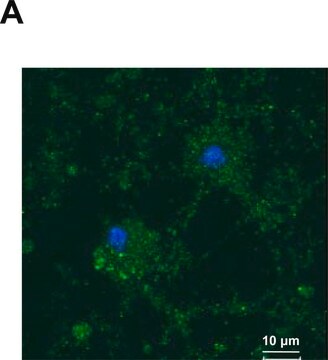
immunoprecipitation (IP): 5-10 μg using HEK-293T cell lysates, indirect immunofluorescence: 2-5 μg/mL using paraformaldehyde-fixed NIH-3T3 cells, western blot: 0.5-1 μg/mL using PC12 cell lysates

technique(s)

western blot: 0.5-1 μg/mL using HEK-293T cells co-transfected with human YAP1 and c-Abl

technique(s)

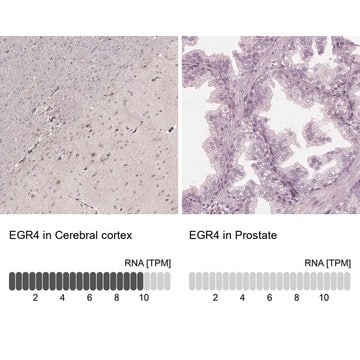
immunohistochemistry: 1:50-1:200


Still not finding the right product?

Wypróbuj nasze narzędzie Narzędzie selektora produktów, aby zawęzić opcje.


Klasa składowania

10 - Combustible liquids

wgk

WGK 3

flash_point_f

Not applicable

flash_point_c

Not applicable


Wybierz jedną z najnowszych wersji:

Certyfikaty analizy (CoA)

Lot/Batch Number

Nie widzisz odpowiedniej wersji?

Jeśli potrzebujesz konkretnej wersji, możesz wyszukać konkretny certyfikat według numeru partii lub serii.

Masz już ten produkt?

Dokumenty związane z niedawno zakupionymi produktami zostały zamieszczone w Bibliotece dokumentów.

Odwiedź Bibliotekę dokumentów


Powiązane treści


Lidia Hurtado et al.
Plant molecular biology, 62(1-2), 291-304 (2006-07-18)
Arabidopsis thaliana BRAHMA (BRM, also called AtBRM) is a SNF2 family protein homolog of Brahma, the ATPase of the Drosophila SWI/SNF complex involved in chromatin remodeling during transcription. Here we show that, in contrast to its Drosophila counterpart, BRM is
Temperature-sensitive Mutations Made Easy Generating Conditional Mutations Using TS-inteins That Function Within Different Temperature Ranges
Tan G, et al.
Genetics, 62(1-2), 291-304 (2009)
Yeast Gal4: a transcriptional paradigm revisited
Traven A, et al.
EMBO Reports, 7(5), 496-499 (2006)


Numer pozycji handlu globalnego

SKUNUMER GTIN
G9293-200UG04061838071071

Questions

Reviews

No rating value

Active Filters