Przejdź do zawartości
Merck

B7151

Anti-Mouse IgG (Fab specific)–Biotin antibody produced in goat

affinity isolated antibody, buffered aqueous solution

Zaloguj się, aby wyświetlić ceny organizacyjne i kontraktowe.

Informacje o tej pozycji

UNSPSC Code:
12352203
NACRES:
NA.46
MDL number:
Conjugate:
biotin conjugate
Clone:
polyclonal
Application:
ELISA (d), IHC (p), WB
Citations:
48

Przejdź do

Pomoc techniczna
Potrzebujesz pomocy? Nasz zespół doświadczonych naukowców chętnie Ci pomoże.
Pozwól nam pomóc

biological source

goat

conjugate

biotin conjugate

antibody form

affinity isolated antibody

antibody product type

secondary antibodies

clone

polyclonal

form

buffered aqueous solution

technique(s)

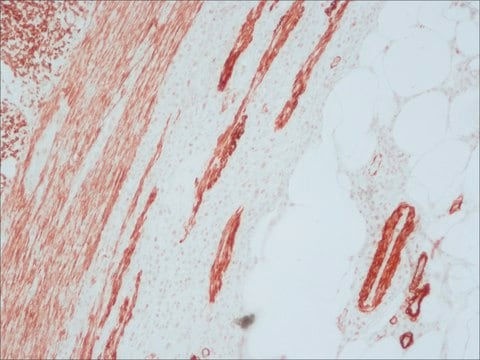
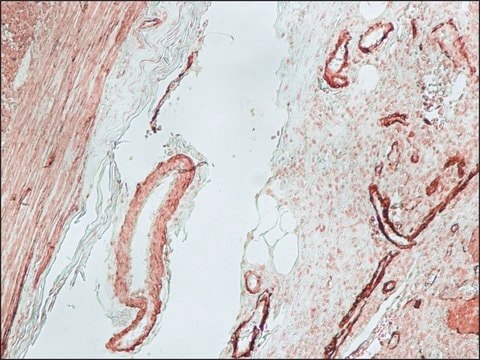
direct ELISA: 1:200,000-1:300,000, immunohistochemistry (formalin-fixed, paraffin-embedded sections): 1:200, western blot: 1:400,000-1:800,000 using total cell extract of HeLa cells

storage temp.

−20°C

target post-translational modification

unmodified

Quality Level

Szukasz podobnych produktów? Odwiedź Przewodnik dotyczący porównywania produktów

Powiązane kategorie

Porównaj podobne pozycje

Wyświetl pełne porównanie

Pokaż różnice

1 of 4

Ta pozycja
B0529B7401B8895
biological source

goat

biological source

goat

biological source

goat

biological source

goat

conjugate

biotin conjugate

conjugate

biotin conjugate

conjugate

biotin conjugate

conjugate

biotin conjugate

technique(s)

direct ELISA: 1:200,000-1:300,000, western blot: 1:400,000-1:800,000 using total cell extract of HeLa cells, immunohistochemistry (formalin-fixed, paraffin-embedded sections): 1:200

technique(s)

direct ELISA: 1:200,000, immunohistochemistry (formalin-fixed, paraffin-embedded sections): 1:300, western blot: 1:300,000-1:600,000 using using Hela cells extract

technique(s)

direct ELISA: 1:160,000, immunohistochemistry (formalin-fixed, paraffin-embedded sections): 1:400, western blot (chemiluminescent): 1:300,000 using total cell extract of HeLa cells (5-10 μg/well)

technique(s)

direct ELISA: 1:200,000, immunohistochemistry (formalin-fixed, paraffin-embedded sections): 1:800, western blot: 1:400,000-1:800,000 using using an assay detecting actin in total cell extract of HeLa cells (5-10 μg per well)

antibody form

affinity isolated antibody

antibody form

affinity isolated antibody

antibody form

affinity isolated antibody

antibody form

affinity isolated antibody

clone

polyclonal

clone

polyclonal

clone

polyclonal

clone

polyclonal

form

buffered aqueous solution

form

buffered aqueous solution

form

buffered aqueous solution

form

buffered aqueous solution

General description

IgG (immunoglobulin G) antibody subtype is a predominant serum immunoglobulins of the immune system. It is secreted by B cells and is found in blood and extracellular fluids. IgG is found in four subclasses IgG1, IgG2, IgG3 and IgG4. IgG has a monomeric structure.
The product binds to all mouse Igs

Application

Anti-Mouse IgG (Fab specific)-Biotin antibody produced in goat was used in immunohistochemistry of lateral and medial menisci of rabbits and human adipose-derived stem cells.

Biochem/physiol Actions

IgG (immunoglobulin G) antibody participates in complement fixation and opsonization.
IgG antibody provides protection from infections caused by bacteria, fungi and viruses. Maternal IgG is transferred to fetus through the placenta that is vital for immune defense of the neonate against infections. The coupling of biotin to Anti-Mouse IgG (Fab specific) antibody allows for the binding of various labels such as avidin or streptavidin.

Physical form

Solution in 0.01 M phosphate buffered saline, pH 7.4, containing 15 mM sodium azide.

Preparation Note

Adsorbed to reduce background staining with bovine, horse or human samples.

Other Notes

Antibody adsorbed with bovine, equine and human serum proteins.

Disclaimer

Unless otherwise stated in our catalog or other company documentation accompanying the product(s), our products are intended for research use only and are not to be used for any other purpose, which includes but is not limited to, unauthorized commercial uses, in vitro diagnostic uses, ex vivo or in vivo therapeutic uses or any type of consumption or application to humans or animals.
Ta strona może zawierać tekst przetłumaczony maszynowo.

Nie możesz znaleźć właściwego produktu?  

Wypróbuj nasz Narzędzie selektora produktów.

Klasa składowania

10 - Combustible liquids

wgk

nwg

flash_point_f

Not applicable

flash_point_c

Not applicable


Wybierz jedną z najnowszych wersji:

Certyfikaty analizy (CoA)

Lot/Batch Number

Nie widzisz odpowiedniej wersji?

Jeśli potrzebujesz konkretnej wersji, możesz wyszukać konkretny certyfikat według numeru partii lub serii.

Masz już ten produkt?

Dokumenty związane z niedawno zakupionymi produktami zostały zamieszczone w Bibliotece dokumentów.

Odwiedź Bibliotekę dokumentów

Joseph F Poduslo et al.
Journal of neurochemistry, 102(2), 420-433 (2007-06-29)
Targeting therapeutic or diagnostic proteins to the nervous system is limited by the presence of the blood-brain barrier. We report that a F(ab')(2) fragment of a monoclonal antibody against fibrillar human Abeta42 that is polyamine (p)-modified has increased permeability at
Brian O Diekman et al.
Journal of biomedical materials research. Part A, 93(3), 994-1003 (2009-09-02)
Adipose-derived stem cells (ASCs) are multipotent progenitors that can be chondrogenically induced by growth factors such as bone morphogenetic protein 6 (BMP-6). We hypothesized that nonviral transfection of a BMP-6 construct (pcDNA3-BMP6) would induce chondrogenic differentiation of ASCs encapsulated in
Franklin T Moutos et al.
Tissue engineering. Part A, 16(4), 1291-1301 (2009-11-12)
Articular cartilage possesses complex mechanical properties that provide healthy joints the ability to bear repeated loads and maintain smooth articulating surfaces over an entire lifetime. In this study, we utilized a fiber-reinforced composite scaffold designed to mimic the anisotropic, nonlinear
G M Cunniffe et al.
European cells & materials, 33, 130-142 (2017-02-16)
Limitations associated with demineralised bone matrix and other grafting materials have motivated the development of alternative strategies to enhance the repair of large bone defects. The growth plate (GP) of developing limbs contain a plethora of growth factors and matrix
Brian O Diekman et al.
Tissue engineering. Part A, 16(2), 523-533 (2009-09-01)
Adipose-derived stem cells (ASCs) and bone marrow-derived mesenchymal stem cells (MSCs) are multipotent adult stem cells with potential for use in cartilage tissue engineering. We hypothesized that these cells show distinct responses to different chondrogenic culture conditions and extracellular matrices

Questions

Reviews

No rating value

Active Filters

Nasz zespół naukowców ma doświadczenie we wszystkich obszarach badań, w tym w naukach przyrodniczych, materiałoznawstwie, syntezie chemicznej, chromatografii, analityce i wielu innych dziedzinach.

Skontaktuj się z zespołem ds. pomocy technicznej