
SCC195

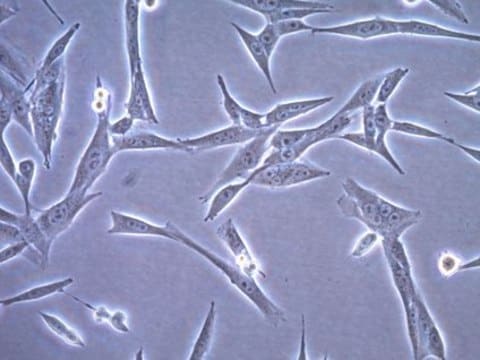
CT-2A-Luc Mouse Glioma Cell Line
Mouse
Synonim(y):
CT-2A Luciferase, CT2A Luciferase, mouse astrocytoma cell line
Wybierz wielkość
| Gabaryty przesyłki | SKU | Dostępność | Cena netto |
|---|---|---|---|
| 1 vial | Skontaktuj się z Obsługą Klienta, aby uzyskać informacje na temat dostępności | 5340,00 zł |
Informacje o tej pozycji
5340,00 zł
Nazwa produktu
CT-2A-Luc Mouse Glioma Cell Line, CT-2A-Luc mouse glioma cell line is a valuable mouse model for therapeutic research on brain malignancies.
biological source
mouse
technique(s)
cell culture | mammalian: suitable
shipped in
ambient
storage temp.
-140 to -196°C
General description
References:
1. Weller M, Cloughesy T, Perry JR, and Wick W (2013) Neuro Oncol 15(1): 4-27.
2. Seyfried TN, Mukherjee P (2010) J Oncol 2010:961243 doi.10.1155/2010/961243.
3. Cotterchio M, Seyfried TN (1994) J Lipid Res 35(1): 10-14.
4. Binello E, Qadeer ZA, Kothari HP, Emdad L, Germano IM (2012) J Cancer 3: 166-174.
5. Martinez-Murillo R, Martinez A (2007) Histol Histopathol 22(12): 1309-1326.
6. Zimmerman HM and Arnold H. (1941) Cancer Res 1(12): 919-938.
7. Huysentruyt LC, Mukherjee P, Banerjee D, Shelton LM, Seyfried TN (2008) Int J Cancer 123(1): 73-84.
Source:
The parental CT-2A cell line was generated from a malignant astrocytoma formed via implantation of the carcinogen 20-methylcholanthrene in the cerebrum of a C57BL/6J mouse (6). The tumor was maintained through serial intracranial transplants prior to cell line isolation. The CT-2A-Luc luciferase cell line was clonally derived from CT-2A cells transduced with a lentiviral vector harboring a firefly luciferase (Fluc)-IRES-GFP cassette under control of the CMV promoter; cells were subsequently sorted for EGFP expression (7).
Application
Cancer
Oncology
Biochem/physiol Actions
Preparation Note
Analysis Note
• Cells are tested negative for infectious diseases by a Mouse Essential CLEAR panel by Charles River Animal Diagnostic Services.
• Cells are verified to be of mouse origin and negative for inter-species contamination from rat, chinese hamster, Golden Syrian hamster, human and non-human primate (NHP) as assessed by a Contamination CLEAR panel by Charles River Animal Diagnostic Services.
• Cells are negative for mycoplasma contamination
1 of 1
Ta pozycja | |||
|---|---|---|---|
| biological source mouse | biological source mouse | biological source mouse | biological source mouse |
| technique(s) cell culture | mammalian: suitable | technique(s) cell culture | mammalian: suitable | technique(s) cell culture | mammalian: suitable | technique(s) cell culture | mammalian: suitable |
| storage temp. -140 to -196°C | storage temp. -140 to -196°C | storage temp. -140 to -196°C | storage temp. -140 to -196°C |
| shipped in ambient | shipped in ambient | shipped in ambient | shipped in ambient |


Klasa składowania
12 - Non Combustible Liquids
wgk
WGK 2
flash_point_f
does not flash
flash_point_c
does not flash
Certyfikaty analizy (CoA)
Poszukaj Certyfikaty analizy (CoA), wpisując numer partii/serii produktów. Numery serii i partii można znaleźć na etykiecie produktu po słowach „seria” lub „partia”.
Masz już ten produkt?
Dokumenty związane z niedawno zakupionymi produktami zostały zamieszczone w Bibliotece dokumentów.
Powiązane treści
Numer pozycji handlu globalnego
| SKU | NUMER GTIN |
|---|---|
| SCC195 | 04054839573736 |