Przejdź do zawartości
Merck

Przejdź do

SCC173

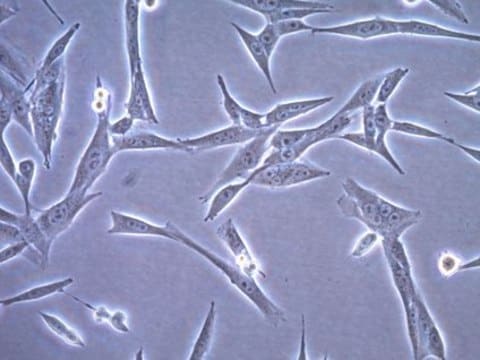
MCA205 Mouse Fibrosarcoma Cell Line

Mouse

Synonim(y):

MCA-205, MCA 205

Zaloguj się, aby wyświetlić ceny organizacyjne i kontraktowe.

Wybierz wielkość

Zmień widok
Gabaryty przesyłkiSKUDostępnośćCena netto
1 vial
Skontaktuj się z Obsługą Klienta, aby uzyskać informacje na temat dostępności
5340,00 zł

Informacje o tej pozycji

UNSPSC Code:
41106514
NACRES:
NA.81
eCl@ss:
32011203
Biological source:
mouse

5340,00 zł


Skontaktuj się z Obsługą Klienta, aby uzyskać informacje na temat dostępności

Pomoc techniczna
Potrzebujesz pomocy? Nasz zespół doświadczonych naukowców chętnie Ci pomoże.
Pozwól nam pomóc


Nazwa produktu

MCA205 Mouse Fibrosarcoma Cell Line, MCA205 mouse fibrosarcoma cell line is an excellent model for studying immune response to tumor cells and the development of targeted cancer immunotherapies.

biological source

mouse

technique(s)

cell culture | mammalian: suitable

shipped in

ambient

storage temp.

-140 to -196°C

General description

Cancer immunotherapy is a rapidly expanding field that has produced significant advances in cancer treatment. Understanding the interactions of tumor cells with the immune system is crucial to the development of effective immunotherapeutic approaches. Fibrosarcoma is a rare yet aggressive soft-tissue sarcoma characterized by frequent tumor recurrences and a high degree of resistance to radio- and chemotherapy [1].
MCA-205 is a weakly immunogenic fibrosarcoma-derived cell line that has been used in many studies to induce tumor-reactive T lymphocytes, the key aspect of adoptive immunotherapy [2]. MCA-205 cells are widely utilized as stimulators for inducing cytokine expression [3]. The MCA-205 mouse fibrosarcoma cell line is an excellent model for studying the immune responses to tumor cells and for supporting the development of targeted cancer immunotherapies.

Source:
Non-GMO. MCA-205 was derived from 3-methylcholanthrene-induced fibrosarcoma in C57BL/6 mice. Tumors were maintained in vivo by serial subcutaneous transplantation in syngeneic mice and single-cell suspensions were prepared from solid tumors by enzymatic digestion [4]. From these cells the MCA-205 cell line was established and maintained in vitro.

Application

MCA205 mouse fibrosarcoma cell line is an excellent model for studying immune response to tumor cells and the development of targeted cancer immunotherapies.
Research Category
Cancer

Oncology
Subject to local law, this product is intended to be sold for internal in vitro research use only subject to terms and conditions found here: www.sigmaaldrich.com/restrictedcelluse. This product may not be: re-engineered or copied; used to make derivatives, modifications or functional equivalents; used to obtain patents or other IP claiming use of the product; used to develop, test, or manufacturer a commercial product; used as a component in a commercial product; resold or licensed; used in any clinical applications or trials; or used in humans. A license or limited commercial use agreement is required for use by any for-profit entity, use in services, and use in sponsored academic research. For information regarding any such use, please contact [email protected].

Biochem/physiol Actions

Cancer Cells

Preparation Note

Store in liquid nitrogen. The cells can be cultured for at least 10 passages after initial thawing without significantly affecting the cell marker expression and functionality.

Analysis Note

• Each vial contains ≥ 1X10⁶ viable cells.
• Cells are tested negative for infectious diseases by a Mouse Essential CLEAR panel by Charles River Animal Diagnostic Services.
• Cells are verified to be of mouse origin and negative for inter-species contamination from rat, chinese hamster, Golden Syrian hamster, human and non-human primate (NHP) as assessed by a Contamination CLEAR panel by Charles River Animal Diagnostic Services.
• Cells are negative for mycoplasma contamination

Disclaimer

Unless otherwise stated in our catalog or other company documentation accompanying the product(s), our products are intended for research use only and are not to be used for any other purpose, which includes but is not limited to, unauthorized commercial uses, in vitro diagnostic uses, ex vivo or in vivo therapeutic uses or any type of consumption or application to humans or animals.
Ta strona może zawierać tekst przetłumaczony maszynowo.

Porównaj podobne pozycje

Wyświetl pełne porównanie

Pokaż różnice

1 of 1

Ta pozycja
SCC194SCC195SCC177
biological source

mouse

biological source

mouse

biological source

mouse

biological source

mouse

technique(s)

cell culture | mammalian: suitable

technique(s)

cell culture | mammalian: suitable

technique(s)

cell culture | mammalian: suitable

technique(s)

cell culture | mammalian: suitable

storage temp.

-140 to -196°C

storage temp.

-140 to -196°C

storage temp.

-140 to -196°C

storage temp.

-140 to -196°C

shipped in

ambient

shipped in

ambient

shipped in

ambient

shipped in

ambient


Klasa składowania

12 - Non Combustible Liquids

wgk

WGK 2

flash_point_f

Not applicable

flash_point_c

Not applicable


Certyfikaty analizy (CoA)

Poszukaj Certyfikaty analizy (CoA), wpisując numer partii/serii produktów. Numery serii i partii można znaleźć na etykiecie produktu po słowach „seria” lub „partia”.

Masz już ten produkt?

Dokumenty związane z niedawno zakupionymi produktami zostały zamieszczone w Bibliotece dokumentów.

Odwiedź Bibliotekę dokumentów


T Chou et al.
Journal of immunology (Baltimore, Md. : 1950), 140(7), 2453-2461 (1988-04-01)
We have previously established an in vitro sensitization (IVS) procedure with which lymphocytes from tumor-bearing mice could be expanded and sensitized to acquire antitumor reactivity capable of mediating the regression of established pulmonary metastases from the weakly immunogenic MCA 105
H Kagamu et al.
Cancer research, 56(19), 4338-4342 (1996-10-01)
The ability to generate a large number of tumor-reactive T lymphocytes is the most critical requirement for adoptive immunotherapy. Our laboratory has previously demonstrated that cells from tumor-draining lymph nodes (LNs) are an excellent source of tumor-reactive T lymphocytes. After
Daniela Augsburger et al.
Oncotarget, 8(61), 104638-104653 (2017-12-22)
Adult-type fibrosarcoma is a rare and highly aggressive subtype of soft tissue sarcomas. Due to the existence of other spindle-cell shaped sarcomas, its diagnosis is always one of exclusion. The likelihood of misdiagnoses between similar tumour entities is high, and


Questions

Reviews

No rating value

Active Filters