Przejdź do zawartości
Merck

Przejdź do

ABN2265

Anti-α-Synuclein (SNCA) Antibody

rabbit polyclonal

Synonim(y):

oligomeric alpha-synuclein, Non-A beta component of AD amyloid, Non-A4 component of amyloid precursor, NACP

Zaloguj się, aby wyświetlić ceny organizacyjne i kontraktowe.

Wybierz wielkość

Zmień widok
Gabaryty przesyłkiSKUDostępnośćCena netto
100 μg

Dostępne do wysyłki DZISIAJzKuehne + Nagel Sp. z o.o.

1690,00 zł

Informacje o tej pozycji

UNSPSC Code:
12352203
eCl@ss:
32160702
NACRES:
NA.41
Clone:
polyclonal
Species reactivity:
human
Application:
ELISA, IF, WB, inhibition assay
Citations:
9

1690,00 zł


Dostępne do wysyłki DZISIAJSzczegóły


Zamów zamówienie zbiorcze
Pomoc techniczna
Potrzebujesz pomocy? Nasz zespół doświadczonych naukowców chętnie Ci pomoże.
Pozwól nam pomóc


Nazwa produktu

Anti-alpha-Synuclein Antibody, oligomer-specific Syn33, from rabbit

biological source

rabbit

Quality Level

antibody form

purified antibody

antibody product type

primary antibodies

clone

polyclonal

species reactivity

human

packaging

antibody small pack of 25 μg

technique(s)

ELISA: suitable, immunofluorescence: suitable, inhibition assay: suitable, western blot: suitable

isotype

IgG

UniProt accession no.

target post-translational modification

unmodified

Gene Information

human ... SNCA(6622)

General description

Alpha-synuclein (UniProt: P37840; also known as Non-A beta component of AD amyloid, Non-A4 component of amyloid precursor, NACP) is encoded by the SNCA (also known as NACP, PARK1) gene (Gene ID: 6622) in human. Alpha-synuclein is a membrane-bound protein in dopaminergic neurons that is involved in the regulation of dopamine release and transport. It is also reported to induce fibrillization of microtubule-associated protein tau and reduces neuronal responsiveness to various apoptotic stimuli. Aggregation of alpha-synuclein is known to be a causative factor in the development of Parkinson′s disease (PD), which leads to the degeneration of dopaminergic neurons in the substantia nigra (SN) in the midbrain region. Aggregates of alpha-synuclein are present in Lewy bodies. Alpha-synuclein can be phosphorylated, predominantly on serine residues by casein kinase 1. Phosphorylation of Ser129 is reported to be selective and extensive in synucleinopathy lesions and promotes insoluble fibril formation. Mutations in the SNCA gene produce defective alpha-synuclein that induces conformational changes making it more prone to self-aggregation and deposition in Lewy bodies. Mutant forms of alpha-synuclein impair synaptic vesicle formation, elevate cytoplasmic levels of dopamine, and increases superoxide radicals, which lead to oxidative stress and misfolding of alpha-synuclein.

Immunogen

Synuclein oligomers from full length human wild-type alpha-synuclein.

Application

Anti-alpha-Synuclein, oligomer-specific Syn33 Antibody, Cat. No. ABN2265, is a highly specific rabbit polyclonal antibody that targets aggregted alpha-synuclein and has been tested in ELISA, Inhibition, Immunofluorescence, and Western Blotting.
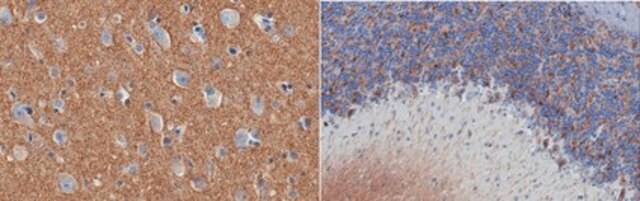
Immunofluorescence Analysis: A representative lot detected alpha-Synuclein, oligomers in brain cortices from Parkinson s disease (PD) and dementia with Lewy bodies (DLB) patients (Sengupta, U., et. al. (2015). Biol Psychiatry. 78(10):672-83).

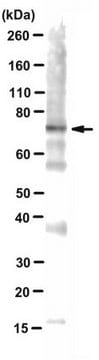
Western Blotting Analysis: A representative lot detected recombinant alpha-Synuclein, oligomers. (Sengupta, U., et. al. (2015). Biol Psychiatry. 78(10):672-83).

Western Blotting Analysis: A representative lot detected recombinant alpha-Synuclein, oligomer. (Courtesy of Dr. Rakez Kayed′s laboratory at University of Texas Medical Branch, Galveston).

ELISA Analysis: A representative lot detected alpha-Synuclein, oligomers in ELISA application (Sengupta, U., et. al. (2015). Biol Psychiatry. 78(10):672-83).

Inhibition Analysis: A representative lot inhibited cytotoxicity exerted alpha-synuclein oligomers in human neuroblastoma SH-SY5Y cells measured by MTT-based assay (Sengupta, U., et. al. (2015). Biol Psychiatry. 78(10):672-83).
Research Category
Apoptosis & Cancer

Biochem/physiol Actions

This rabbit polyclonal antibody specifically recognizes aggregated form of alpha-synuclein.

Physical form

Format: Purified
Protein A purified
Purified rabbit polyclonal antibody in PBS.

Preparation Note

Stable for 1 year at -20°C from date of receipt. Handling Recommendations: Upon receipt and prior to removing the cap, centrifuge the vial and gently mix the solution. Aliquot into microcentrifuge tubes and store at -20°C. Avoid repeated freeze/thaw cycles, which may damage IgG and affect product performance.

Analysis Note

Evaluated by Western Blotting in Alpha Synuclein aggregate.

Western Blotting Analysis: A 1:500 dilution of this antibody detected alpha-Synuclein in alpha Synuclein aggregates.

Other Notes

Concentration: Please refer to lot specific datasheet.

Disclaimer

Unless otherwise stated in our catalog or other company documentation accompanying the product(s), our products are intended for research use only and are not to be used for any other purpose, which includes but is not limited to, unauthorized commercial uses, in vitro diagnostic uses, ex vivo or in vivo therapeutic uses or any type of consumption or application to humans or animals.
Ta strona może zawierać tekst przetłumaczony maszynowo.

Porównaj podobne pozycje

Wyświetl pełne porównanie

Pokaż różnice

1 of 1

Ta pozycja
MABN2419ABN2265MABN905
antibody form

purified antibody

antibody form

purified immunoglobulin

antibody form

purified antibody

antibody form

affinity isolated antibody

biological source

rabbit

biological source

mouse

biological source

rabbit

biological source

rabbit

Quality Level

100

Quality Level

100

Quality Level

100

Quality Level

-

UniProt accession no.

P37840

UniProt accession no.

P37840

UniProt accession no.

P37840

UniProt accession no.

P37840

Gene Information

human ... SNCA(6622)

Gene Information

human ... SNCA(6622)

Gene Information

human ... SNCA(6622)

Gene Information

human ... SNCA(6622)

species reactivity

human

species reactivity

human, mouse

species reactivity

human

species reactivity

human, mouse, rat


Still not finding the right product?

Explore all of our products under

lub

Wypróbuj nasze narzędzie Narzędzie selektora produktów, aby zawęzić opcje.


Klasa składowania

12 - Non Combustible Liquids

wgk

WGK 1

flash_point_f

Not applicable

flash_point_c

Not applicable


Certyfikaty analizy (CoA)

Poszukaj Certyfikaty analizy (CoA), wpisując numer partii/serii produktów. Numery serii i partii można znaleźć na etykiecie produktu po słowach „seria” lub „partia”.

Masz już ten produkt?

Dokumenty związane z niedawno zakupionymi produktami zostały zamieszczone w Bibliotece dokumentów.

Odwiedź Bibliotekę dokumentów


Sukrit Promtang et al.
ACS chemical neuroscience, 15(11), 2182-2197 (2024-05-10)
Aggregative α-synuclein and incurring oxidative stress are pivotal cascading events, leading to dopaminergic (DAergic) neuronal loss and contributing to clinical manifestations of Parkinson's disease (PD). Our previous study demonstrated that 2-butoxytetrahydrofuran (2-BTHF), isolated from Holothuria scabra (H. scabra), could inhibit
Cemile Elif Özçelik et al.
ACS chemical neuroscience, 14(19), 3609-3621 (2023-08-28)
Peptide therapeutics are robust and promising molecules for treating diverse disease conditions. These molecules can be developed from naturally occurring or mimicking native peptides, through rational design and peptide libraries. We developed a new platform for the rapid screening of
Tommaso Schirinzi et al.
Annals of neurology, 93(1), 196-204 (2022-10-12)
The objective of this study was to outline the dynamics of prokineticin-2 pathway in relation to clinical-pathological features of Parkinson's disease by examining olfactory neurons of patients. Thirty-eight patients (26 de novo, newly diagnosed) and 31 sex/age-matched healthy controls underwent


Numer pozycji handlu globalnego

SKUNUMER GTIN
ABN226504054839362880

Questions

Reviews

No rating value

Active Filters