
05-765

Przeciwciało anty-MLL/HRX, CT, klon 9-12
clone 9-12, Upstate®, from mouse
Synonim(y):
N-metylotransferaza histon-lizyna 2A, N-metylotransferaza lizyny 2A, ALL-1, białko palca cynkowego typu CXXC 7, białaczka szpikowa/limfoidalna lub mieszana, białko białaczki szpikowej/limfoidalnej lub mieszanej 1, białko podobne do Trithorax, białko palca cynkowego HR
Wybierz wielkość
| Gabaryty przesyłki | SKU | Dostępność | Cena netto |
|---|---|---|---|
| 200 μg | Przewidywany termin wysyłki20 maja 2026zKuehne + Nagel Sp. z o.o. | 2500,00 zł |
Informacje o tej pozycji
biological source
mouse
Quality Level
conjugate
unconjugated
antibody form
purified immunoglobulin
antibody product type
primary antibodies
clone
9-12, monoclonal
species reactivity
mouse, human
manufacturer/tradename
Upstate®
technique(s)
ChIP: suitable, immunofluorescence: suitable, immunoprecipitation (IP): suitable, western blot: suitable
isotype
IgG1
NCBI accession no.
UniProt accession no.
shipped in
wet ice
target post-translational modification
unmodified
Gene Information
human ... KMT2A(4297)
General description
Immunogen
Application
Analiza immunoprecypitacji chromatyny (ChIP): Reprezentatywna partia wykryła zajęcie MLL w promotorach Hoxa10 i Meis w mysich komórkach białaczki MLL-AF10 (Gallo, M., et al. (2013). Cancer Res. 73(1):417-427).
Analiza immunoprecypitacji chromatyny (ChIP): Reprezentatywna partia wykryła zwiększone zajęcie MLL w locus Ink4a 8-miesięcznych niż 2-miesięcznych wysepek myszy bEzTG. To samo zależne od wieku wzbogacenie locus Ink4a zaobserwowano w przypadku H3K4me3, podczas gdy odwrotny trend zaobserwowano w przypadku wzbogacenia Ezh i H3K27me3 w tym samym locus (Zhou, J.X., et al. (2013). J. Clin. Invest. 123(11):4849-4858).
Analiza immunoprecypitacji chromatyny (ChIP): Reprezentatywna partia wykryła zajęcie MLL w regionie promotora HOXA10 w G179NS i G411NS ludzkich nerwowych komórkach macierzystych glejaka (Gallo, M., et al. (2013). Cancer Res. 73(1):417-427).
Analiza immunoprecypitacji chromatyny (ChIP): Reprezentatywna partia wykryła zajęcie MLL w miejscu pochodzenia replikacji DNA (RD), jak również w eksonie 1b i wspólnym eksonie 2 p16INK4a/p19ARF w mysich fibroblastach embrionalnych (MEF). Zwiększone wzbogacenie MLL w tych miejscach zaobserwowano w starzejących się i zmutowanych mutantach Polycomb MEF (Agherbi, H., et al. (2009). PLoS One. 4(5):e5622).
Analiza immunoprecypitacji chromatyny (ChIP): Reprezentatywna partia wykryła zajęcie MLL w regionie Hoxa9 AB przy użyciu preparatu chromatyny mysich zarodkowych fibroblastów (MEF) (Erfurth, F.E., et al. (2008). Proc. Natl. Acad. Sci. U.S.A. 105(21):7517-7522).
Analiza immunoprecypitacji: Reprezentatywna partia koimmunoprecypitowała JmjD3 i RbBP5, ale nie Dnmt3a, z MLL z ekstraktu komórek mysiego insulinoma Min6 (Zhou, J.X., et al. (2013). J. Clin. Invest. 123(11):4849-4858).
Analiza Western Blotting: Reprezentatywna partia wykryła wyższy poziom MLL w hodowanych neuronalnych komórkach macierzystych glejaka (GNS) niż neuronalnych komórkach macierzystych (NS), jak również wzbogacenie MLL we frakcji CD15+ świeżo wyciętych komórek glejaka (GBM) (Gallo, M., et al. (2013). Cancer Res. 73(1):417-427).
Analiza Western Blotting: Reprezentatywna partia wykryła zawierający domenę SET C-końcowy fragment podjednostki enzymatycznej kompleksu MLL (C180; MLLC) w immunoprecypitacie anty-FLAG z komórek HeLaS stabilnie wyrażających znakowane FLAG hDPY-30 (Cho, Y.W., et al. (2007). J. Biol. Chem. 282(28):20395-20406).
Epigenetyka i funkcje jądrowe
Histony
Biochem/physiol Actions
Physical form
Preparation Note
Analysis Note
Ekstrakt jądrowy K562
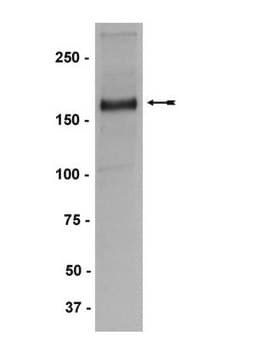
Western Blotting Analysis: 0.1-1 µg/mL of this antibody detected MLL C-terminal fragment (C180; MLLC) in K562 nuclear extract.
Other Notes
Legal Information
Disclaimer
1 of 1
Ta pozycja | |||
|---|---|---|---|
| antibody form purified immunoglobulin | antibody form affinity purified immunoglobulin | antibody form affinity purified immunoglobulin | antibody form affinity isolated antibody |
| species reactivity mouse, human | species reactivity mouse, human | species reactivity human | species reactivity human, mouse |
| biological source mouse | biological source mouse | biological source rabbit | biological source rabbit |
| clone 9-12, monoclonal | clone N4.4, monoclonal | clone polyclonal | clone polyclonal |
| conjugate unconjugated | conjugate unconjugated | conjugate unconjugated | conjugate unconjugated |
| Gene Information human ... KMT2A(4297) | Gene Information human ... KMT2A(4297) | Gene Information rabbit ... MLL1(4297) | Gene Information human ... KMT2D(8085) |

Still not finding the right product?
Wypróbuj nasze narzędzie Narzędzie selektora produktów, aby zawęzić opcje.
Klasa składowania
10 - Combustible liquids
wgk
WGK 1
Certyfikaty analizy (CoA)
Poszukaj Certyfikaty analizy (CoA), wpisując numer partii/serii produktów. Numery serii i partii można znaleźć na etykiecie produktu po słowach „seria” lub „partia”.
Masz już ten produkt?
Dokumenty związane z niedawno zakupionymi produktami zostały zamieszczone w Bibliotece dokumentów.
Powiązane treści
Cancer is a complex disease manifestation. At its core, it remains a disease of abnormal cellular proliferation and inappropriate gene expression. In the early days, carcinogenesis was viewed simply as resulting from a collection of genetic mutations that altered the gene expression of key oncogenic genes or tumor suppressor genes leading to uncontrolled growth and disease (Virani, S et al 2012). Today, however, research is showing that carcinogenesis results from the successive accumulation of heritable genetic and epigenetic changes. Moreover, the success in how we predict, treat and overcome cancer will likely involve not only understanding the consequences of direct genetic changes that can cause cancer, but also how the epigenetic and environmental changes cause cancer (Johnson C et al 2015; Waldmann T et al 2013). Epigenetics is the study of heritable gene expression as it relates to changes in DNA structure that are not tied to changes in DNA sequence but, instead, are tied to how the nucleic acid material is read or processed via the myriad of protein-protein, protein-nucleic acid, and nucleic acid-nucleic acid interactions that ultimately manifest themselves into a specific expression phenotype (Ngai SC et al 2012, Johnson C et al 2015). This review will discuss some of the principal aspects of epigenetic research and how they relate to our current understanding of carcinogenesis. Because epigenetics affects phenotype and changes in epigenetics are thought to be key to environmental adaptability and thus may in fact be reversed or manipulated, understanding the integration of experimental and epidemiologic science surrounding cancer and its many manifestations should lead to more effective cancer prognostics as well as treatments (Virani S et al 2012).