Przejdź do zawartości
Merck

Przejdź do

MABS2283

Anti-PIP2 Antibody, clone KT10

Synonim(y):

Phosphatidylinositol 4;5-bisphosphate;PtdIns(4;5)P2

Zaloguj się, aby wyświetlić ceny organizacyjne i kontraktowe.

Wybierz wielkość

Zmień widok
Do Państwa/SKUDostępnośćCena netto
25 μg

Przewidywany termin wysyłki25 maja 2026zKuehne + Nagel Sp. z o.o.

692,00 zł
100 μg

Przewidywany termin wysyłki25 maja 2026zKuehne + Nagel Sp. z o.o.

1770,00 zł

Informacje o tej pozycji

NACRES:
NA.43
UNSPSC Code:
12352203
Conjugate:
unconjugated
Clone:
KT10, monoclonal
Application:
ELISA, FACS, ICC, inhibition assay
Citations:
-

692,00 zł


Przewidywany termin wysyłki25 maja 2026Szczegóły


Zamów zamówienie zbiorcze
Pomoc techniczna
Potrzebujesz pomocy? Nasz zespół doświadczonych naukowców chętnie Ci pomoże.
Pozwól nam pomóc


biological source

mouse

Quality Segment

conjugate

unconjugated

antibody form

purified antibody

antibody product type

primary antibodies

clone

KT10, monoclonal

mol wt

calculated mol wt 1.042 kDa

purified by

using Protein A

species reactivity

rat, mouse, human

species reactivity (predicted by homology)

bovine

packaging

antibody small pack of 100 μg

technique(s)

ELISA: suitable, flow cytometry: suitable, immunocytochemistry: suitable, inhibition assay: suitable

isotype

IgG2a

epitope sequence

Unknown

Protein ID accession no.

UniProt accession no.

shipped in

ambient

target post-translational modification

unmodified

Gene Information

mouse ... Stag1(20842)

General description

PI(4,5)P2 (PIP2) is synthesized mainly by the phosphorylation of PI by PI 4- kinases that produce phosphatidylinositol 4-phosphate (PI4P), which is then phosphorylated by PI4P 5-kinase (PIP5K). Some PIP2 can also be generated through dephosphorylation of PI(3,4,5)P3 by PTEN. Phosphoryl transfer to positions 4 and 5 in PIP2 requires ATP and the cofactor Mg2+. Although most protein kinases achieve maximal active state at low-micromolar intracellular concentrations of ATP, lipid kinases generally require much higher concentrations of ATP to support their activity. Following its synthesis, PIP2 modulates the functions of various proteins including actin-regulating proteins and ion channels. It also serves as a substrate for phospholipase C (PLC) and a source for second messengers, inositol 1,4,5-trisphosphate (IP3) and diacylglycerol (DAG) that are involved in activation and membrane localization of protein kinase C and in the modulation of ion channel activity in endothelial cells and smooth muscle cells. G-protein (Gq) activation that can result in rapid activation of PLC, can reduce PIP2 levels in cells within seconds. The hydrolysis of PIP2 is shown to be enhanced in cells transformed by oncogenes and tumor viruses. Clone KT10 binds to PIP2 even at picogram levels; however, it does not react with PIP or PI even at microgram levels. It is shown to inhibit the proliferation of Src- and erbB-transformed cells but do not affect the proliferation of untransformed cells. It is also reported to abolish PDGF-induced mitogenesis in both untransformed and ras-transformed cells but does not affect the basal level of mitogenesis. (Ref.: Yoneda, A., et al. (2020). Biochem. Biophys. Res. Commun. 527(4); 1050-1056; Harraz, OF., et al. (2020). Proc. Natl. Acad. Sci. USA. 117(34); 20378-20389; Fukami, K., et al. (1988). Proc. Natl. Acad. Sci. USA. 85(23); 9057-9061).

Immunogen

Liposomes containing dimyristoyl phosphatidylcholine, cholesterol, PIP2 from bovine spinal cord, and lipid A.

Application

Quality Control Testing

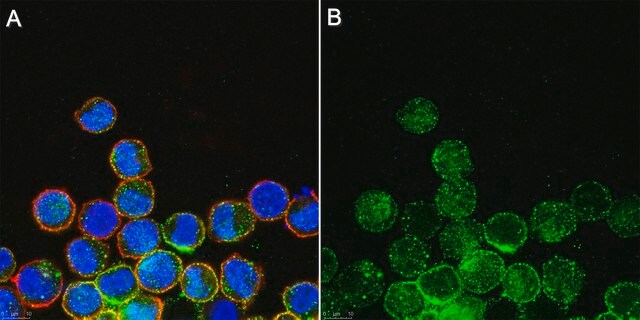
Evaluated by Immunocytochemistry in K562 cells.

Immunocytochemistry Analysis: A 1:100 dilution of this antibody detected PI(4,5)P2 (PIP2) in K562 cells.

Tested Applications

ELISA Analysis: A representative lot detected PIP2 in ELISA applications (Fukami, K. et al. (1988). Proc Natl Acad Sci USA. 85(23): 9057-61).

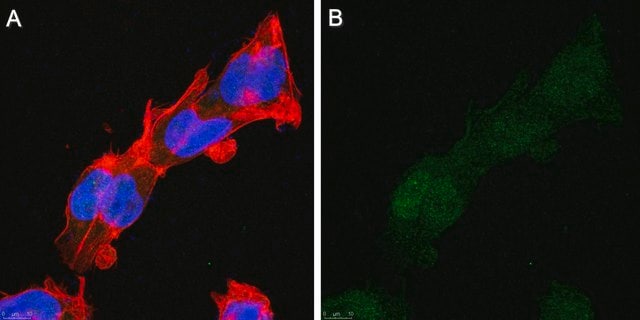
Immunocytochemistry Analysis: A representative lot detected PIP2 in Immunocytochemistry applications (Yoneda, A., et al. (2020). Biochem Biophys Res Commun. 527(4): 1050-1056).

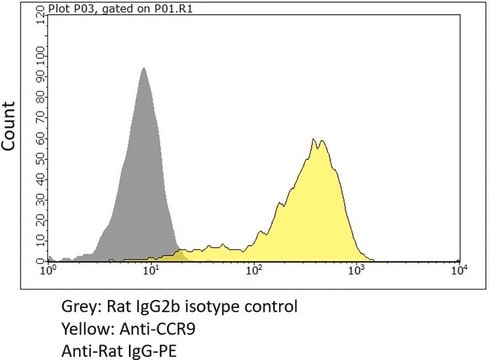
Flow Cytometry Analysis: Analysis: A representative lot detected PIP2 in Flow Cytometry applications (Yoneda, A., et al. (2020). Biochem Biophys Res Commun. 527(4): 1050-1056).

Inhibition Assay: A representative lot of this antibody inhibited intracellular breakdown of PIP2 and also blocked the proliferation of Src- and erbB-transformed cells. (Fukami, K. et al. (1988). Proc Natl Acad Sci USA. 85(23): 9057-61).

Note: Actual optimal working dilutions must be determined by end user as specimens, and experimental conditions may vary with the end user
Anti-PIP2, clone KT10, Cat. No. MABS2283, is a mouse monoclonal antibody that detects phosphatidylinositol 4,5-bisphosphate (PIP2) and is tested for use in ELISA, Flow Cytometry, Immunocytochemistry, and Inhibition Assay.

Biochem/physiol Actions

Clone KT10 is a mouse monoclonal antibody that specifically detects PI(4,5)P2 (PIP2).

Physical form

Purified mouse monoclonal antibody IgG2a in buffer containing 0.1 M Tris-Glycine (pH 7.4), 150 mM NaCl with 0.05% sodium azide.

Preparation Note

Recommended storage: +2°C to +8°C.

Other Notes

Concentration: Please refer to the Certificate of Analysis for the lot-specific concentration.

Disclaimer

Unless otherwise stated in our catalog or other company documentation accompanying the product(s), our products are intended for research use only and are not to be used for any other purpose, which includes but is not limited to, unauthorized commercial uses, in vitro diagnostic uses, ex vivo or in vivo therapeutic uses or any type of consumption or application to humans or animals.
Ta strona może zawierać tekst przetłumaczony maszynowo.

Porównaj podobne pozycje

Wyświetl pełne porównanie

Pokaż różnice

1 of 1

Ta pozycja
MABF2302MABF2791MABE1982
antibody form

purified antibody

antibody form

purified antibody

antibody form

purified antibody

antibody form

purified antibody

biological source

mouse

biological source

mouse

biological source

rat

biological source

mouse

species reactivity

rat, mouse, human

species reactivity

human

species reactivity

mouse, human

species reactivity

chicken, human, mouse

clone

KT10, monoclonal

clone

MAB243 (also referenced as L2), monoclonal

clone

7E7, monoclonal

clone

12C11, monoclonal

conjugate

unconjugated

conjugate

unconjugated

conjugate

unconjugated

conjugate

-

mol wt

calculated mol wt 1.042 kDa

mol wt

calculated mol wt 53.01 kDa

mol wt

calculated mol wt 41.91 kDa

mol wt

calculated mol wt 170 kDa, observed mol wt ~170 kDa


Still not finding the right product?

Wypróbuj nasze narzędzie Narzędzie selektora produktów, aby zawęzić opcje.


Klasa składowania

12 - Non Combustible Liquids

wgk

WGK 1

flash_point_f

Not applicable

flash_point_c

Not applicable


Certyfikaty analizy (CoA)

Poszukaj Certyfikaty analizy (CoA), wpisując numer partii/serii produktów. Numery serii i partii można znaleźć na etykiecie produktu po słowach „seria” lub „partia”.

Masz już ten produkt?

Dokumenty związane z niedawno zakupionymi produktami zostały zamieszczone w Bibliotece dokumentów.

Odwiedź Bibliotekę dokumentów


Questions

Reviews

No rating value

Active Filters