Przejdź do zawartości
Merck

MABS197

Anti-PTP1B Antibody, clone FG6-1G

clone FG6-1G, from mouse

Synonim(y):

Tyrosine-protein phosphatase non-receptor type 1, Protein-tyrosine phosphatase 1B, PTP-1B

Zaloguj się, aby wyświetlić ceny organizacyjne i kontraktowe.

Wybierz wielkość

100 μG

1900,00 zł

1900,00 zł


Przewidywana wysyłka DZISIAJSzczegóły


Informacje o tej pozycji

UNSPSC Code:
12352203
NACRES:
NA.41
eCl@ss:
32160702
Conjugate:
unconjugated
Clone:
FG6-1G, monoclonal
Application:
IP, WB
Citations:
11

Przejdź do

Pomoc techniczna
Potrzebujesz pomocy? Nasz zespół doświadczonych naukowców chętnie Ci pomoże.
Pozwól nam pomóc

biological source

mouse

Quality Level

conjugate

unconjugated

antibody form

purified immunoglobulin

antibody product type

primary antibodies

clone

FG6-1G, monoclonal

species reactivity

human

technique(s)

immunoprecipitation (IP): suitable, western blot: suitable

isotype

IgG2aκ

NCBI accession no.

UniProt accession no.

shipped in

wet ice

target post-translational modification

unmodified

Gene Information

human ... PTPN1(5770)

Porównaj podobne pozycje

Wyświetl pełne porównanie

Pokaż różnice

1 of 4

Ta pozycja
AV45360HPA012542MABS1753
biological source

mouse

biological source

rabbit

biological source

rabbit

biological source

mouse

species reactivity

human

species reactivity

horse, mouse, dog, bovine, rat, guinea pig, human

species reactivity

human

species reactivity

human

Gene Information

human ... PTPN1(5770)

Gene Information

human ... PTPN1(5770)

Gene Information

human ... PTPN1(5770)

Gene Information

human ... PTPN2(5771)

antibody form

purified immunoglobulin

antibody form

affinity isolated antibody

antibody form

affinity isolated antibody

antibody form

purified antibody

clone

FG6-1G, monoclonal

clone

polyclonal

clone

polyclonal

clone

9E9.1, monoclonal

Quality Level

100

Quality Level

100

Quality Level

100

Quality Level

100

General description

PTP1B is the prototypic member of the protein tyrosine phosphatase (PTP) family, which comprises at least 37 proteins. The family is characterized by a catalytic phosphatase domain of approximately 240 amino acids, and includes both transmembrane and cytosolic enzymes. The PTPs have high substrate specificity for phosphotyrosyl proteins. At the primary sequence level, PTPs share little similarity with the protein serine phosphatases, protein threonine phosphatases, or the acid and alkaline phosphatases. PTP1B is a negative regulator of insulin and leptin signal transduction and may be a potential therapeutic target for diabetes and obesity. Insulin also influences the expression of splice variants of PTP1B.
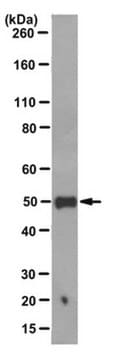
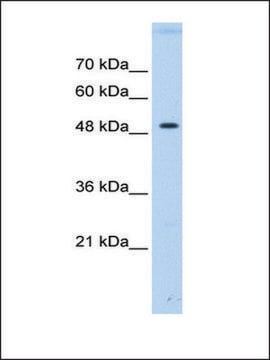
~50 kDa observed

Immunogen

Epitope: Catalytic domain
Recombinant protein corresponding to the catalytic domain of human PTP1B.

Application

Anti-PTP1B Antibody, clone FG6-1G is an antibody against PTP1B for use in Western Blotting, Immunoprecipitation.
Research Category
Signaling
Research Sub Category
Cytoskeletal Signaling
Western Blot Analysis: A representative lot was used to detect PTP1B in Jurkat cell lysate.

Immunoprecipitation Analysis: A representative lot from an independent laboratory detected PTP1B in A431 cell lysate (Gulati, P. et al. (2004). EMBO Rep. 5(8):812-817.).

Biochem/physiol Actions

This antibody recognizes the catalytic domain of PTP1B.

Physical form

Format: Purified
Protein G Purified
Purified mouse monoclonal IgG2aκ in buffer containing 0.1 M Tris-Glycine (pH 7.4), 150 mM NaCl with 0.05% sodium azide.

Preparation Note

Stable for 1 year at 2-8°C from date of receipt.

Analysis Note

Control
TF-1 cell lysate
Evaluated by Western Blot in TF-1 cell lysate.

Western Blot Analysis: 1 µg/mL of this antibody detected PTP1B in 10 µg of TF-1 cell lysate.

Other Notes

Concentration: Please refer to the Certificate of Analysis for the lot-specific concentration.
Replaces: 04-1140

Disclaimer

Unless otherwise stated in our catalog or other company documentation accompanying the product(s), our products are intended for research use only and are not to be used for any other purpose, which includes but is not limited to, unauthorized commercial uses, in vitro diagnostic uses, ex vivo or in vivo therapeutic uses or any type of consumption or application to humans or animals.
Ta strona może zawierać tekst przetłumaczony maszynowo.

Nie możesz znaleźć właściwego produktu?  

Wypróbuj nasz Narzędzie selektora produktów.

Klasa składowania

12 - Non Combustible Liquids

wgk

WGK 1

flash_point_f

Not applicable

flash_point_c

Not applicable


Certyfikaty analizy (CoA)

Poszukaj Certyfikaty analizy (CoA), wpisując numer partii/serii produktów. Numery serii i partii można znaleźć na etykiecie produktu po słowach „seria” lub „partia”.

Masz już ten produkt?

Dokumenty związane z niedawno zakupionymi produktami zostały zamieszczone w Bibliotece dokumentów.

Odwiedź Bibliotekę dokumentów

Jennifer J Schwarz et al.
Life science alliance, 4(11) (2021-09-17)
B cell antigen receptor (BCR) signaling is initiated by protein kinases and limited by counteracting phosphatases that currently are less well studied in their regulation of BCR signaling. Here, we used the B cell line Ramos to identify and quantify
Malena Zahn et al.
Carcinogenesis, 42(4), 517-527 (2021-01-01)
The neoplastic Hodgkin/Reed-Sternberg (HRS) cells of classical Hodgkin lymphoma (cHL) depend on chronic activation of the Janus kinase (JAK)/signal transducer and activator of transcription (STAT) signalling pathways to maintain survival and proliferation. Accumulating reports highlight the importance of the inactivation
Giampaolo Minetti et al.
The Biochemical journal, 377(Pt 2), 489-497 (2003-10-07)
One of the most intensively studied post-translational modifications of erythrocyte proteins is the phosphorylation of tyrosine residues of band 3, which is strictly regulated in vivo by PTKs (protein-tyrosine kinases) and PTPs (protein-phosphotyrosine phosphatases). Two PTKs (p72(syk) and p56/53(lyn)) and
Panae Noomuna et al.
FASEB journal : official publication of the Federation of American Societies for Experimental Biology, 36(6), e22360-e22360 (2022-05-21)
Although both protein tyrosine phosphatases and kinases are constitutively active in healthy human red blood cells (RBCs), the preponderance of phosphatase activities maintains the membrane proteins in a predominantly unphosphorylated state. We report here that unlike healthy RBCs, proteins in
Fawaz G Haj et al.
The Journal of biological chemistry, 278(2), 739-744 (2002-11-09)
Receptor tyrosine kinases (RTKs) are key regulators of cellular homeostasis. Based on in vitro and ex vivo studies, protein tyrosine phosphatase-1B (PTP1B) was implicated in the regulation of several RTKs, yet mice lacking PTP1B show defects mainly in insulin and

Powiązane treści

New Products: Antibodies, Assays, Small Molecules, Inhibitors, and Proteins

Numer pozycji handlu globalnego

SKUNUMER GTIN
MABS19704053252689826

Questions

Reviews

No rating value

Active Filters

Nasz zespół naukowców ma doświadczenie we wszystkich obszarach badań, w tym w naukach przyrodniczych, materiałoznawstwie, syntezie chemicznej, chromatografii, analityce i wielu innych dziedzinach.

Skontaktuj się z zespołem ds. pomocy technicznej