
ABF117

Anti-IFIT1/p56 Antibody
serum, from rabbit
Synonim(y):
Interferon-induced protein with tetratricopeptide repeats 1, IFIT-1, Glucocorticoid-attenuated response gene 16 protein, GARG-16, Interferon-induced 56 kDa protein, IFI-56K, P56
Wybierz wielkość
| Gabaryty przesyłki | SKU | Dostępność | Cena netto |
|---|---|---|---|
| 100 μL | Przewidywany termin wysyłki11 maja 2026zKuehne + Nagel Sp. z o.o. | 1840,00 zł |
Informacje o tej pozycji
biological source
rabbit
Quality Level
conjugate
unconjugated
antibody form
serum
antibody product type
primary antibodies
clone
polyclonal
species reactivity
human, mouse
technique(s)
flow cytometry: suitable, immunocytochemistry: suitable, western blot: suitable
NCBI accession no.
UniProt accession no.
shipped in
wet ice
target post-translational modification
unmodified
Gene Information
human ... IFIT1(3434)
General description
Immunogen
Application
Inflammation & Immunology
Inflammation & Autoimmune Mechanisms
Western Blotting Analysis: A representative lot from an independent laboratory detected IFIT-1/p56 in HT1080 cell lysates transfected with mouse p56 vector and not in HT1080 cell lysates transfected with empty vector (Terenzi, F., et al. (2007). J Virol. 81(16):8656-8665.).
Western Blotting Analysis: A representative lot from an independent laboratory detected IFIT-1/p56 in IFN-Beta treated wild type Stat1 MEF cell lysates and not in IFN-beta treated Stat1 knockdown MEF cell lsyates (Fensterl, V., et al. (2008). J Virol. 82(22):11045-11053.).
Western Blotting Analysis: A representative lot from an independent laboratory detected IFIT-1/p56 in IFN-Beta treated wild type p56 MEF cell lysates and not in IFN-Beta treated p56 knockdown MEF cell lysates (Fensterl, V., et al. (2012). PLoS Pathog. 8(5):e1002712.).
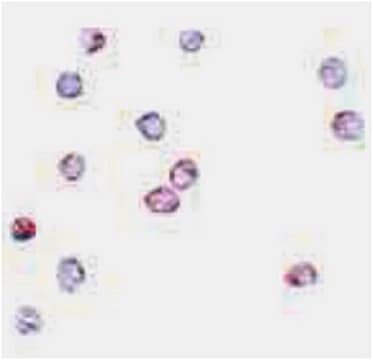
Immunocytochemistry Analysis: A representative lot from an independent laboratory detected IFIT-1/p56 in IFN-Beta treated MEF cell lysates (Terenzi, F., et al. (2007). J Virol. 81(16):8656-8665.).
Flow Cytometry Analysis: A representative lot from an independent laboratory detected IFIT-1/p56 in bone marrow cells and splenocyotes upon injection with dsRNA, IFN-alpha, and VSV (Terenzi, F., et al. (2007). J Virol. 81(16):8656-8665.).
Flow Cytometry Analysis: A representative lot from an independent laboratory detected IFIT-1/p56 in IFN-Beta treated CD3+ mature T cells, and in IFN-Beta treated myeloid Dendritic cells, but not in IFN-Beta treated plasmacytoid Dendritic cells (Fensterl, V., et al. (2008). J Virol. 82(22):11045-11053.).
Physical form
Preparation Note
Handling Recommendations: Upon receipt and prior to removing the cap, centrifuge the vial and gently mix the solution. Aliquot into microcentrifuge tubes and store at -20°C. Avoid repeated freeze/thaw cycles, which may damage IgG and affect product performance.
Analysis Note
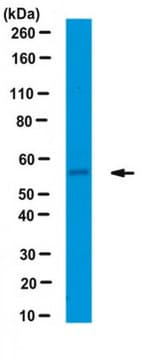
Western Blotting Analysis: A 1:1,000 dilution of this antibody detected IFIT1/p56 in 10 µg of mouse ovary tissue lysate.
Disclaimer
1 of 1
Ta pozycja | |||
|---|---|---|---|
| antibody form serum | antibody form affinity isolated antibody | antibody form affinity isolated antibody | antibody form affinity isolated antibody |
| conjugate unconjugated | conjugate unconjugated | conjugate unconjugated | conjugate unconjugated |
| biological source rabbit | biological source rabbit | biological source rabbit | biological source rabbit |
| Quality Level 100 | Quality Level 100 | Quality Level 100 | Quality Level - |
| Gene Information human ... IFIT1(3434) | Gene Information human ... IFIT3(3437) | Gene Information human ... IFITM1(8519) | Gene Information human ... IFITM1(8519) |
| technique(s) flow cytometry: suitable, western blot: suitable, immunocytochemistry: suitable | technique(s) immunohistochemistry: suitable, western blot: suitable | technique(s) immunocytochemistry: suitable, immunofluorescence: suitable, western blot: suitable | technique(s) indirect ELISA: suitable, western blot: suitable |


Still not finding the right product?
Wypróbuj nasze narzędzie Narzędzie selektora produktów, aby zawęzić opcje.
Klasa składowania
10 - Combustible liquids
wgk
WGK 1
Certyfikaty analizy (CoA)
Poszukaj Certyfikaty analizy (CoA), wpisując numer partii/serii produktów. Numery serii i partii można znaleźć na etykiecie produktu po słowach „seria” lub „partia”.
Masz już ten produkt?
Dokumenty związane z niedawno zakupionymi produktami zostały zamieszczone w Bibliotece dokumentów.
Powiązane treści
"Apoptosis & Autophagy in Cancer: Cell Survival by Eluding Cell Death The ability of tumor cells to elude programmed cell death, also known as apoptosis, is a hallmark of most types of cancer. Similary, autophagy is a highly regulated, homeostatic degradative process where cells destroy their own components via the lysosomal machinery and recycle them for prolonged cell survival. Via extensive crosstalk with pro-apoptotic signaling pathways, autophagy can also contribute to cell death and greatly influence general cell health. Elucidating the correlation between autophagy and apoptotic cell death has become the focus of a great deal of research, particularly in tumor biology. On one hand, autophagy may induce cell death by degrading essential components; on the other hand, it may facilitate survival of cancer cells under unfavorable metabolic conditions."