
AB9864R

Anti-NMDAR1 Antibody, clone 1.17.2.6, rabbit monoclonal
clone 1.17.2.6, from rabbit, unconjugated
Synonim(y):
N-methyl-D-aspartate receptor channel, subunit zeta-1, N-methyl-D-aspartate receptor subunit NR1, NMDA receptor 1, glutamate [NMDA] receptor subunit zeta 1, glutamate receptor, ionotropic, N-methyl D-aspartate 1
Wybierz wielkość
| Gabaryty przesyłki | SKU | Dostępność | Cena netto |
|---|---|---|---|
| 100 μL | Przewidywany termin wysyłki20 maja 2026zKuehne + Nagel Sp. z o.o. | 1960,00 zł |
Informacje o tej pozycji
biological source
rabbit
Quality Level
conjugate
unconjugated
antibody form
purified immunoglobulin
antibody product type
primary antibodies
clone
1.17.2.6, monoclonal
species reactivity
rat, mouse
species reactivity (predicted by homology)
human (based on 100% sequence homology)
technique(s)
immunohistochemistry: suitable, western blot: suitable
isotype
IgG
NCBI accession no.
UniProt accession no.
shipped in
wet ice
target post-translational modification
unmodified
Gene Information
human ... GRIN1(2902)
mouse ... Grin1(14810)
rat ... Grin1(24408)
General description
Immunogen
Application
Neuroscience
Neurotransmitters & Receptors
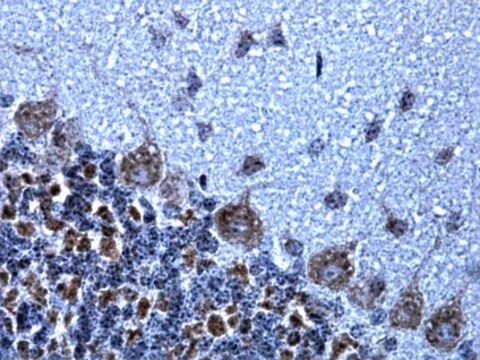
Immunohistochemistry Analysis: 1:250 dilution of this antibody from a previous lot detected NMDAR1 in rat cerebellum tissue.
Physical form
Preparation Note
Handling Recommendations: Upon receipt and prior to removing the cap, centrifuge the vial and gently mix the solution. Aliquot into microcentrifuge tubes and store at -20°C. Avoid repeated freeze/thaw cycles, which may damage IgG and affect product performance.
Note: Variability in freezer temperatures below -20°C may cause glycerol containing solutions to become frozen during storage.
Analysis Note
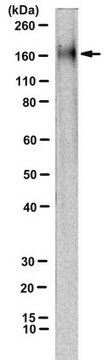
Rat brain tissue lysate
Western Blot Analysis: 0.1 µg/mL of this antibody detected NMDAR1 on 10 µg of rat brain tissue lysate.
Other Notes
Disclaimer
1 of 1
Ta pozycja | |||
|---|---|---|---|
| species reactivity rat, mouse | species reactivity rat | species reactivity rat, human, mouse, fish | species reactivity mouse, human, rat |
| clone 1.17.2.6, monoclonal | clone polyclonal | clone polyclonal | clone 11D1, monoclonal |
| conjugate unconjugated | conjugate - | conjugate unconjugated | conjugate unconjugated |
| Gene Information human ... GRIN1(2902) | Gene Information human ... GRIN1(2902) | Gene Information human ... GRIN2A(2903) | Gene Information human ... GRIN2B(2904) |
| biological source rabbit | biological source rabbit | biological source rabbit | biological source mouse |
| antibody form purified immunoglobulin | antibody form affinity isolated antibody | antibody form affinity purified immunoglobulin | antibody form purified immunoglobulin |


Still not finding the right product?
Wypróbuj nasze narzędzie Narzędzie selektora produktów, aby zawęzić opcje.
Klasa składowania
12 - Non Combustible Liquids
wgk
WGK 1
flash_point_f
Not applicable
flash_point_c
Not applicable
Certyfikaty analizy (CoA)
Poszukaj Certyfikaty analizy (CoA), wpisując numer partii/serii produktów. Numery serii i partii można znaleźć na etykiecie produktu po słowach „seria” lub „partia”.
Masz już ten produkt?
Dokumenty związane z niedawno zakupionymi produktami zostały zamieszczone w Bibliotece dokumentów.
Powiązane treści
Glutamate is an excitatory neurotransmitter found in the synaptic vesicles of glutamatergic synapses. The post-synaptic neurons in these synapses contain ionotropic and metabotropic glutamate receptors. Glutamate binds to AMPA (α-amino-3-hydroxy-5- methylisoxazole-4-propionic acid) subtype glutamate receptors, leading to sodium influx into the post-synaptic cell and resulting in neuronal excitability and synaptic transmission. The NMDA (N-methyl-d-aspartate) subtype glutamate receptors, on the other hand, regulate synaptic plasticity, and can influence learning and memory. The metabotropic g-protein coupled mGluRs modulate downstream calcium signaling pathways and indirectly influence the synapse’s excitability. The synaptic architecture includes intracellular scaffolding proteins (PSD-95, GRIP), intercellular cell adhesion molecules (NCAMs, N-Cadherins), and a variety of signaling proteins (CaMKII/PKA, PP1/PP2B). Processes critical for synaptic transmission and plasticity are influenced by these molecules and their interactions. When the function of these molecules is disrupted, it leads to synaptic dysfunction and degeneration, and can contribute to dementia as seen in Alzheimer’s disease.
Numer pozycji handlu globalnego
| SKU | NUMER GTIN |
|---|---|
| AB9864R | 04053252552380 |