Przejdź do zawartości
Merck

Przejdź do

426205

β-Lactamase, Bacillus cereus 569/H9

Synonim(y):

β-Lactamase, Bacillus cereus 569/H9, Penicillinase

Zaloguj się, aby wyświetlić ceny organizacyjne i kontraktowe.

Wybierz wielkość

Zmień widok
Gabaryty przesyłkiSKUDostępnośćCena netto
500 U

Dostępne do wysyłki DZISIAJzKuehne + Nagel Sp. z o.o.

556,00 zł

Informacje o tej pozycji

Numer CAS:
Numer WE:
UNSPSC Code:
12352202
NACRES:
NA.54
MDL number:
Biological source:
Bacillus sp. (Bacillus cereus)

556,00 zł


Dostępne do wysyłki DZISIAJSzczegóły


Pomoc techniczna
Potrzebujesz pomocy? Nasz zespół doświadczonych naukowców chętnie Ci pomoże.
Pozwól nam pomóc


biological source

Bacillus sp. (Bacillus cereus)

Quality Level

description

Merck USA index - 14, 7093

form

lyophilized

packaging

vial of ≥50 units β-lactamase II, vial of ≥500 units β-lactamase I

manufacturer/tradename

Calbiochem®

storage condition

OK to freeze

solubility

sterile distilled water: soluble

shipped in

ambient

storage temp.

−20°C

General description

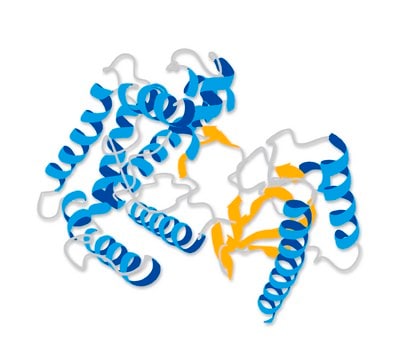
β-Lactamase produced by bacteria shares sequence homology to penicillin-binding proteins.[1] This enzyme is found in Gram-negative bacteria.[2] β-Lactamases have four molecular classes, named A, B, C, and D. A, C, and D form an acyl-enzyme via active site serine residue. Class B β-lactamases are metalloenzymes, which have a zinc ion at their active site for β-lactam hydrolysis.[3]

Biochem/physiol Actions

β-Lactamase hydrolyzes β-lactum antibiotics and is the chief cause of resistance to β-lactam antibiotics development by bacteria.[1][3] Mutations in the β-lactamases are associated with extended-spectrum β-lactamases (ESBLs).[4]

Preparation Note

Following reconstitution, store in the refrigerator (4°C). Stock solutions are stable for up to 1 month at 4°C.

Other Notes

One unit is defined as the amount of enzyme that will hydrolyze 1.0 µmol benzyl penicillin and 1.0 µmol of cephalosporin C, respectively, per min at 25°C.

Legal Information

CALBIOCHEM is a registered trademark of Merck KGaA, Darmstadt, Germany

Disclaimer

Toxicity: Harmful (C)
Ta strona może zawierać tekst przetłumaczony maszynowo.

Porównaj podobne pozycje

Wyświetl pełne porównanie

Pokaż różnice

1 of 1

Ta pozycja
P038991274P4524
biological source

Bacillus sp. (Bacillus cereus)

biological source

Bacillus sp. (Bacillus cereus)

biological source

-

biological source

bacterial (Enterobacter cloacae)

form

lyophilized

form

lyophilized powder

form

liquid

form

lyophilized powder

solubility

sterile distilled water: soluble

solubility

-

solubility

-

solubility

-

storage condition

OK to freeze

storage condition

-

storage condition

-

storage condition

-

shipped in

ambient

shipped in

wet ice

shipped in

-

shipped in

-

storage temp.

−20°C

storage temp.

2-8°C

storage temp.

2-8°C

storage temp.

2-8°C


pictograms

Health hazard

signalword

Danger

hcodes

Hazard Classifications

Resp. Sens. 1 - Skin Sens. 1

Klasa składowania

11 - Combustible Solids

wgk

WGK 3

flash_point_f

Not applicable

flash_point_c

Not applicable


Certyfikaty analizy (CoA)

Poszukaj Certyfikaty analizy (CoA), wpisując numer partii/serii produktów. Numery serii i partii można znaleźć na etykiecie produktu po słowach „seria” lub „partia”.

Masz już ten produkt?

Dokumenty związane z niedawno zakupionymi produktami zostały zamieszczone w Bibliotece dokumentów.

Odwiedź Bibliotekę dokumentów


Sibhghatulla Shaikh et al.
Saudi journal of biological sciences, 22(1), 90-101 (2015-01-07)
Antibiotic resistance is a problem of deep scientific concern both in hospital and community settings. Rapid detection in clinical laboratories is essential for the judicious recognition of antimicrobial resistant organisms. Production of extended-spectrum β-lactamases (ESBLs) is a significant resistance-mechanism that
Karen Bush et al.
Antimicrobial agents and chemotherapy, 54(3), 969-976 (2009-12-10)
Two classification schemes for beta-lactamases are currently in use. The molecular classification is based on the amino acid sequence and divides beta-lactamases into class A, C, and D enzymes which utilize serine for beta-lactam hydrolysis and class B metalloenzymes which
Karen Bush
Antimicrobial agents and chemotherapy, 62(10) (2018-08-01)
β-Lactamases, the major resistance determinant for β-lactam antibiotics in Gram-negative bacteria, are ancient enzymes whose origins can be traced back millions of years ago. These well-studied enzymes, currently numbering almost 2,800 unique proteins, initially emerged from environmental sources, most likely


Numer pozycji handlu globalnego

SKUNUMER GTIN
426205-500U07790788050184

Questions

Reviews

No rating value

Active Filters