
F2518

Human Fibronectin
from human foreskin fibroblasts, powder, suitable for cell culture
Sinonimo/i:
Fibronectin
Scegli un formato
| Taglio della confezione | SKU | Disponibilità | Prezzo |
|---|---|---|---|
| 0.5 mg | Per informazioni sulla disponibilità, contatta il Servizio Clienti. | 913,00 € |
Informazioni su questo articolo
913,00 €
Nome del prodotto
Fibronectina, lyophilized powder, suitable for cell culture
biological source
human foreskin fibroblasts
Quality Segment
product line
BioReagent
form
lyophilized powder
mol wt
~550 kDa
packaging
pkg of 0.5 mg
technique(s)
cell culture | mammalian: suitable
surface coverage
1‑5 μg/cm2
impurities
Human Source, none detected (HCV), Human Source, none detected (HIV), Human Source, none detected (HTLV), Human Source, none detected (HbSAg), Microbial Contamination, passes test
solubility
H2O: 1 mg/mL at 37 °C (Store reconstituted solution in working aliquots at -20°C or lower.)
NCBI accession no.
UniProt accession no.
binding specificity
Peptide Source: Collagen
shipped in
ambient
storage temp.
−20°C
Gene Information
human ... FN1(2335)
General description
Application
Biochem/physiol Actions
Features and Benefits
- Fibronectin is isolated from human foreskin fibroblasts maintained in serum-free medium.
- It can be used as a cell attachment factor for various cell types, including epithelial, mesenchymal, neuronal, neural crest, endothelial cells, and fibroblasts.
- The starting material is tested and found negative for HIV and HBsAg.
- The product is soluble in sterile water, yielding a clear, colorless solution.
- It can be stored at -20°C for at least three years.
Physical form
Preparation Note
Analysis Note
Disclaimer
1 of 1
Questo articolo | |||
|---|---|---|---|
| biological source human foreskin fibroblasts | biological source human fibroblasts | biological source human plasma | biological source rat plasma |
| technique(s) cell culture | mammalian: suitable | technique(s) cell culture | mammalian: suitable | technique(s) cell culture | mammalian: suitable | technique(s) cell culture | mammalian: suitable |
| Quality Level 200 | Quality Level 200 | Quality Level 200 | Quality Level 200 |
| mol wt ~550 kDa | mol wt 31 kDa | mol wt 450 kDa | mol wt - |
| form lyophilized powder | form solution | form lyophilized powder | form powder |
| storage temp. −20°C | storage temp. −20°C | storage temp. −20°C | storage temp. −20°C |

Still not finding the right product?
Explore all of our products under Fibronectina
Classe di stoccaggio
11 - Combustible Solids
wgk
WGK 3
flash_point_f
Not applicable
flash_point_c
Not applicable
ppe
Eyeshields, Gloves, type N95 (US)
Scegli una delle versioni più recenti:
Possiedi già questo prodotto?
I documenti relativi ai prodotti acquistati recentemente sono disponibili nell’Archivio dei documenti.
Protocolli
Dilute fibronectin for cell attachment, varying per cell type. Coating protocol, products, and FAQs provided.
Articoli
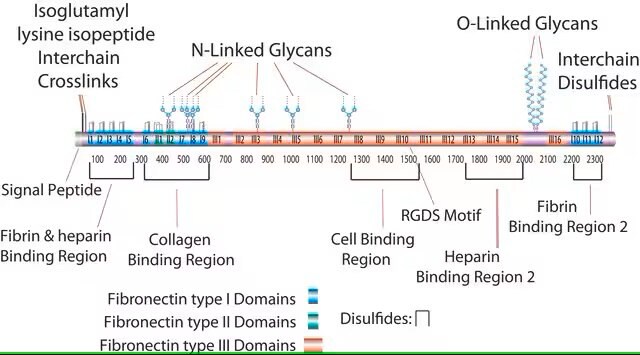
Fibronectin (FN) plays crucial roles in extracellular matrix fibril assembly and cellular interactions.
Cancer stem cell media, spheroid plates and cancer stem cell markers to culture and characterize CSC populations.
Extracellular matrix proteins such as laminin, collagen, and fibronectin can be used as cell attachment substrates in cell culture.
Contenuto correlato
Instructions
Numero articolo commerciale globale
| SKU | GTIN |
|---|---|
| F2518-.5MG | 04061833612934 |