
06-207

Anti-Lyn Antibody
serum, Upstate®
Scegli un formato
| Taglio della confezione | SKU | Disponibilità | Prezzo |
|---|---|---|---|
| 250 μL | Spedizione prevista il03 giugno 2026daMerck S.p.A | 368,00 € |
Informazioni su questo articolo
368,00 €
Spedizione prevista il03 giugno 2026Dettagli
biological source
rabbit
Quality Level
conjugate
unconjugated
antibody form
serum
antibody product type
primary antibodies
clone
polyclonal
species reactivity
human
manufacturer/tradename
Upstate®
technique(s)
immunoprecipitation (IP): suitable, western blot: suitable
isotype
IgG
NCBI accession no.
UniProt accession no.
shipped in
dry ice
target post-translational modification
unmodified
Gene Information
human ... LYN(4067)
General description
Immunogen
Application
Biochem/physiol Actions
Physical form
Analysis Note
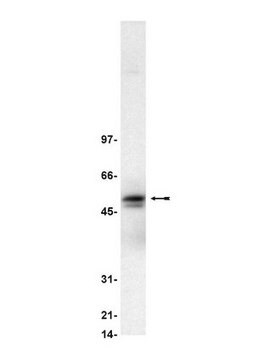
Positive Antigen Control: Catalog #12-301, non-stimulated A431 cell lysate. Add 2.5µL of 2-mercaptoethanol/100µL of lysate and boil for 5 minutes to reduce the preparation. Load 20µg of reduced lysate per lane for minigels.
Legal Information
1 of 1
Questo articolo | |||
|---|---|---|---|
| biological source rabbit | biological source rabbit | biological source mouse | biological source rabbit |
| conjugate unconjugated | conjugate unconjugated | conjugate unconjugated | conjugate unconjugated |
| clone polyclonal | clone polyclonal | clone polyclonal | clone polyclonal |
| antibody form serum | antibody form purified immunoglobulin | antibody form purified immunoglobulin | antibody form affinity isolated antibody |
| species reactivity human | species reactivity mouse, human | species reactivity human | species reactivity mouse |
| technique(s) immunoprecipitation (IP): suitable, western blot: suitable | technique(s) western blot: 1 μg/mL | technique(s) indirect immunofluorescence: suitable, western blot: 1 μg/mL | technique(s) western blot: suitable |


Still not finding the right product?
Provate il nostro Motore di ricerca dei prodotti per restringere le opzioni.
Classe di stoccaggio
12 - Non Combustible Liquids
wgk
WGK 2
flash_point_f
Not applicable
flash_point_c
Not applicable
Certificati d'analisi (COA)
Cerca il Certificati d'analisi (COA) digitando il numero di lotto/batch corrispondente. I numeri di lotto o di batch sono stampati sull'etichetta dei prodotti dopo la parola ‘Lotto’ o ‘Batch’.
Possiedi già questo prodotto?
I documenti relativi ai prodotti acquistati recentemente sono disponibili nell’Archivio dei documenti.
Numero articolo commerciale globale
| SKU | GTIN |
|---|---|
| 06-207 | 04053252589003 |