Direkt zum Inhalt
Merck

Fortfahren mit

SCT240

BioTracker Blue TFCH Oxidative Stress Probe

Synonym(e):

Live Cell Imaging Probe

Anmelden zur Ansicht der Organisations- und Vertragspreise.

Größe auswählen

Ansicht ändern
PackungsgrößeSKUVerfügbarkeitPreis

Über diesen Artikel

NACRES:
NA.47
UNSPSC Code:
41106514
Preise und Verfügbarkeit sind derzeit nicht verfügbar.
Technischer Dienst
Benötigen Sie Hilfe? Unser Team von erfahrenen Wissenschaftlern ist für Sie da.
Unterstützung erhalten


biological source

human

Quality Segment

mol wt

calculated mol wt 280.63 kDa

packaging

vial of 1 mg

manufacturer/tradename

Millipore

growth mode

N/A

technique(s)

cell based assay: suitable, flow cytometry: suitable, immunofluorescence: suitable

detection method

fluorometric

shipped in

dry ice

storage temp.

−20°C

General description

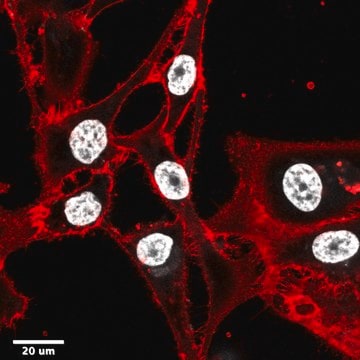
Nephrotoxicity, or drug-induced kidney injury, is a critical consideration when developing new therapeutics. Screening methods currently used to detect and/or assess nephrotoxicity or other cytotoxicity secondary to candidate compounds may not have the molecular specificity to inform results of screening, as traditional toxicity screens are often limited to simple cell viability, morphology, and mitochondrial function readouts. Common screening assays may furthermore lack sensitivity, detecting only severe nephrotoxicity induced by high doses of or long exposures to tested compounds. Mild toxicity in a cell model may present very differently in vivo, necessitating kidney toxicity assays that are sensitive and specific enough to ensure therapeutic safety.One approach to enhancing the utility of toxicity screening assays is to measure oxidative stress, which is often more sensitive to mild drug injury. While certain indicators of oxidative stress such as increases in reactive oxygen species (ROS) or depletion of reductants are transient, one durable change to kidney (and other) cells is the post-injury carbonylation of cellular biomolecules. 4-trifluoromethyl-7-hydrazinyl-2H-chromen-2-one (TFCH) is intended to enhance sensitivity to cell injury induced by nephrotoxic or cytotoxic substances in renal system applications including in vivo and in vitro models such as Madin-Darby Canine Kidney (MDCK) cells.Spectral Properties Fluorescence images were obtained by λex = 405 nm and emission at 550 to 650 nm.ReferenceMukherjee, et al. "A Novel Fluorogenic Assay for the Detection of Nephrotoxin-induced Oxidative Stress in Live Cells and Renal Tissue." ACS Sensors 6 (2021): 2523-2528.

Application

Purity: > 98% confirmed by HPLC. Identification confirmed by HNMR, LC-MS and elemental analysis.

Features and Benefits

Fluorescent live cell probe for visualizing oxidative stress, cytotoxicity, nephrotoxicity from candidate compounds and other substances.

Physical form

Lyophilized. Yellow solid.

Preparation Note

Store at -20°C, desiccated and protected from light.Note: Centrifuge vial briefly to collect contents at bottom of vial before opening

Other Notes

Live cell fluorescent imaging

Legal Information

BioTracker is a trademark of Merck KGaA, Darmstadt, Germany

Disclaimer

Unless otherwise stated in our catalog or other company documentation accompanying the product(s), our products are intended for research use only and are not to be used for any other purpose, which includes but is not limited to, unauthorized commercial uses, in vitro diagnostic uses, ex vivo or in vivo therapeutic uses or any type of consumption or application to humans or animals.

Ähnliche Artikel vergleichen

Vollständigen Vergleich anzeigen

Unterschiede anzeigen

1 of 1

Dieser Artikel
SCT084SCT244SCT043
technique(s)

cell based assay: suitable, immunofluorescence: suitable, flow cytometry: suitable

technique(s)

cell based assay: suitable, flow cytometry: suitable

technique(s)

cell based assay: suitable, cell culture | stem cell: suitable, flow cytometry: suitable

technique(s)

cell based assay: suitable

shipped in

dry ice

shipped in

dry ice

shipped in

dry ice

shipped in

ambient

storage temp.

−20°C

storage temp.

−20°C

storage temp.

−20°C (−15°C to −25°C)

storage temp.

-10 to -25°C

Quality Level

100

Quality Level

100

Quality Level

100

Quality Level

-

biological source

human

biological source

-

biological source

-

biological source

-

growth mode

N/A

growth mode

N/A

growth mode

N/A

growth mode

-


pictograms

Exclamation mark

signalword

Warning

Hazard Classifications

Eye Irrit. 2 - Skin Irrit. 2 - STOT SE 3

target_organs

Respiratory system

Lagerklasse

11 - Combustible Solids

wgk

WGK 3


Analysenzertifikate (COA)

Suchen Sie nach Analysenzertifikate (COA), indem Sie die Lot-/Chargennummer des Produkts eingeben. Lot- und Chargennummern sind auf dem Produktetikett hinter den Wörtern ‘Lot’ oder ‘Batch’ (Lot oder Charge) zu finden.

Besitzen Sie dieses Produkt bereits?

In der Dokumentenbibliothek finden Sie die Dokumentation zu den Produkten, die Sie kürzlich erworben haben.

Die Dokumentenbibliothek aufrufen


Verwandter Inhalt


Global Trade Item Number

SKUGTIN
SCT24004065268102411

Questions

Reviews

No rating value

Active Filters