Direkt zum Inhalt
Merck

Fortfahren mit

P6246

Anti-PABP antibody, Mouse monoclonal

clone 10E10, purified from hybridoma cell culture

Synonym(e):

Anti-Poly(A)-Binding Protein

Anmelden zur Ansicht der Organisations- und Vertragspreise.

Größe auswählen

Ansicht ändern
PackungsgrößeSKUVerfügbarkeitPreis
200 μL
Warenkorb auf Verfügbarkeit prüfen
€ 625,00
€ 531,25

Über diesen Artikel

UNSPSC Code:
12352203
NACRES:
NA.41
MDL number:
Conjugate:
unconjugated
Clone:
10E10, monoclonal
Application:
ARR, ICC, IP, WB
Citations:
19

€ 531,25

Listenpreis€ 625,00Sparen Sie 15%
Aktion nur im Web

Warenkorb auf Verfügbarkeit prüfen
Für Ihr Target ist ein rekombinanter, konservierungsmittelfreier Antikörper verfügbar. Probieren Sie ZRB2815

Großbestellung anfragen
Technischer Dienst
Benötigen Sie Hilfe? Unser Team von erfahrenen Wissenschaftlern ist für Sie da.
Unterstützung erhalten


biological source

mouse

Quality Level

conjugate

unconjugated

antibody form

purified from hybridoma cell culture

antibody product type

primary antibodies

clone

10E10, monoclonal

form

buffered aqueous solution

mol wt

antigen ~69 kDa

species reactivity

hamster, canine, bovine, Xenopus, human, monkey

technique(s)

immunocytochemistry: suitable, immunoprecipitation (IP): suitable, microarray: suitable, western blot: 0.5-1 μg/mL using whole cell extracts of HEK 293T cells

isotype

IgG1

UniProt accession no.

shipped in

dry ice

storage temp.

−20°C

target post-translational modification

unmodified

Gene Information

human ... PABPC1(26986)

General description

Monoclonal Anti-PABP (mouse IgG1 isotype) is derived from the 10E10 hybridoma produced by the fusion of mouse myeloma cells (SP2/0) and splenocytes from BALB/c mice immunized with recombinant human PABP. Poly(A) binding protein (PABP) is highly conserved between different organisms especially at the amino-terminal region of the protein that contains four RNA-binding domains (RBDs).
Poly(A) binding protein (PABP) possesses RNA recognition motifs (RRMs), a proline-rich region and a PABP C-terminal domain. The gene encoding this protein is localized on human chromosome 8q22.3.

Immunogen

recombinant human PABP.

Application

Monoclonal Anti-PABP antibody produced in mouse has been used in:
  • Immunoblotting
  • Immunostaining[1]
  • Immunoprecipitation
  • Enzyme linked immunosorbent assay(ELISA)
  • Immunocytochemistry

Monoclonal Anti-PABP antibody produced in mouse has been used for immunofluorescence.

Biochem/physiol Actions

Poly(A) binding protein (PABP) has a role in mRNA translation and stability. It modulates gene expression. The protein binds to the poly(A) tail, bridges the ends of mRNA and forms a closed loop. This might help in translation initiation by promoting ribosome recruitment.
Poly(A) binding protein (PABP) is found in excess, relative to the amount of cytoplasmic poly(A) (three fold) and binds to its poly(A) target at high affinity (Kd of 7nM). The eukaryotic initiation factor, EIF4F complex, interacts with PABP indirectly via the PAIP-1 protein (PABP-interacting protein-1). As a consequence, an interaction between the 5′ and 3′ ends of mRNA occurs. This proximity between the mRNA ends contributes to its stability and enhances translation, since terminating ribosomes may start translation again.

Physical form

Solution in 0.01 M phosphate buffered saline, pH 7.4, and 15 mM sodium azide.

Disclaimer

Unless otherwise stated in our catalog or other company documentation accompanying the product(s), our products are intended for research use only and are not to be used for any other purpose, which includes but is not limited to, unauthorized commercial uses, in vitro diagnostic uses, ex vivo or in vivo therapeutic uses or any type of consumption or application to humans or animals.

Ähnliche Artikel vergleichen

Vollständigen Vergleich anzeigen

Unterschiede anzeigen

1 of 1

Dieser Artikel
SAB4200552M9067A4480
antibody form

purified from hybridoma cell culture

antibody form

purified from hybridoma cell culture

antibody form

purified from hybridoma cell culture

antibody form

purified from hybridoma cell culture

conjugate

unconjugated

conjugate

unconjugated

conjugate

unconjugated

conjugate

unconjugated

biological source

mouse

biological source

mouse

biological source

mouse

biological source

mouse

species reactivity

hamster, canine, bovine, Xenopus, human, monkey

species reactivity

mouse, human

species reactivity

human

species reactivity

human, mouse

clone

10E10, monoclonal

clone

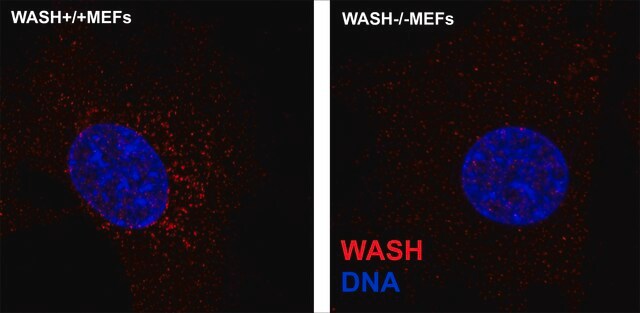
WASH1-27, monoclonal

clone

QCRL-1, monoclonal

clone

DX 54.10, monoclonal

Gene Information

human ... PABPC1(26986)

Gene Information

human ... WASH1(100287171)

Gene Information

human ... ABCC1(4363)

Gene Information

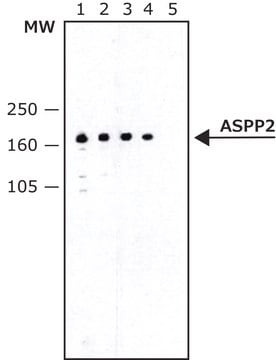
human ... TP53BP2(7159)
mouse ... Trp53bp2(209456)


Still not finding the right product?

Probieren Sie unser Produkt-Auswahlhilfe, um Ihre Auswahl einzugrenzen


Lagerklasse

10 - Combustible liquids

wgk

nwg

flash_point_f

Not applicable

flash_point_c

Not applicable


Hier finden Sie alle aktuellen Versionen:

Analysenzertifikate (COA)

Lot/Batch Number

Die passende Version wird nicht angezeigt?

Wenn Sie eine bestimmte Version benötigen, können Sie anhand der Lot- oder Chargennummer nach einem spezifischen Zertifikat suchen.

Besitzen Sie dieses Produkt bereits?

In der Dokumentenbibliothek finden Sie die Dokumentation zu den Produkten, die Sie kürzlich erworben haben.

Die Dokumentenbibliothek aufrufen


Verwandter Inhalt


Hun-Way Hwang et al.
Cell reports, 15(2), 423-435 (2016-04-07)
Accurate and precise annotation of 3' UTRs is critical for understanding how mRNAs are regulated by microRNAs (miRNAs) and RNA-binding proteins (RBPs). Here, we describe a method, poly(A) binding protein-mediated mRNA 3' end retrieval by crosslinking immunoprecipitation (PAPERCLIP), that shows
Poly (A)-binding proteins: multifunctional scaffolds for the post-transcriptional control of gene expression
Brook M and Gray NK
Genome Biology, 4(7), 223-223 (2003)
BTG2 bridges PABPC1 RNA-binding domains and CAF1 deadenylase to control cell proliferation
Stupfler B, et al.
Nature Communications, 7, 10811-10811 (2016)


Global Trade Item Number

SKUGTIN
P6246-200UL04061838106933

Questions

Reviews

No rating value

Active Filters