Saltar al contenido
Merck

C0979

Anti-Catalase antibody ,Mouse monoclonal

clone CAT-505, purified from hybridoma cell culture

Sinónimos:

Anti-CAT

Iniciar sesión para ver los precios por organización y contrato.

Seleccione un Tamaño

En este momento no podemos mostrarle ni los precios ni la disponibilidad

Acerca de este artículo

UNSPSC Code:
12352203
NACRES:
NA.41
MDL number:
Conjugate:
unconjugated
Clone:
CAT-505, monoclonal
Application:
ARR, ELISA (i), ICC, IHC, WB
Citations:
83

Saltar a

Servicio técnico
¿Necesita ayuda? Nuestro equipo de científicos experimentados está aquí para ayudarle.
Permítanos ayudarle

biological source

mouse

Quality Level

conjugate

unconjugated

antibody form

purified from hybridoma cell culture

antibody product type

primary antibodies

clone

CAT-505, monoclonal

form

buffered aqueous solution

mol wt

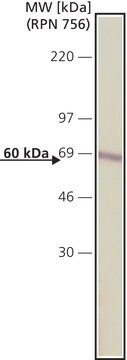
antigen 60 kDa

species reactivity

human, mouse, bovine, rat

concentration

~2 mg/mL

technique(s)

immunocytochemistry: suitable, immunohistochemistry: suitable, indirect ELISA: suitable, microarray: suitable, western blot: 0.5-1 μg/mL using a whole extract of HepG2 cells

isotype

IgG1

UniProt accession no.

shipped in

dry ice

storage temp.

−20°C

target post-translational modification

unmodified

Gene Information

human ... CAT(847)
mouse ... Cat(12359)
rat ... Cat(24248)

Comparar elementos similares

Ver comparación completa

Mostrar Diferencias

1 of 4

Este artículo
A8481H4538G8795
Gene Information

human ... CAT(847)
mouse ... Cat(12359)
rat ... Cat(24248)

Gene Information

bovine ... ACTG1(404122)
chicken ... ACTG1(415296)
human ... ACTG1(71)
mouse ... Actg1(11465)

Gene Information

human ... HDAC5(10014)
mouse ... Hdac5(15184)
rat ... Hdac5(84580)

Gene Information

human ... GAPDH(2597)
mouse ... Gapdh(14433)
rat ... Gapdh(24383)

antibody form

purified from hybridoma cell culture

antibody form

purified from hybridoma cell culture

antibody form

purified from hybridoma cell culture

antibody form

purified from hybridoma cell culture, purified immunoglobulin

conjugate

unconjugated

conjugate

unconjugated

conjugate

unconjugated

conjugate

unconjugated

biological source

mouse

biological source

mouse

biological source

mouse

biological source

mouse

species reactivity

human, mouse, bovine, rat

species reactivity

mouse, chicken, canine, bovine, human, hamster

species reactivity

rat, mouse, human

species reactivity

bovine, turkey, canine, chicken, monkey, mink, mouse, human, rabbit, rat, hamster

clone

CAT-505, monoclonal

clone

2-2.1.14.17, monoclonal

clone

HDAC5-35, monoclonal

clone

GAPDH-71.1, monoclonal

General description

Catalase is one of the most efficient and common enzyme found in nearly all living organisms exposed to oxygen. It is a very important enzyme in protecting the cell from oxidative damage by reactive oxygen species (ROS). In most mammalian cell types catalase is localized in peroxisomes which is a tertrameric haemin-enzyme consisting of 4 identical tetrahedrally arranged subunits of 60kDa. It contains four ferriprotoporphyrin groups per molecule having a molecular mass of 240kDa.

Immunogen

human erythrocyte catalase

Application

Applications in which this antibody has been used successfully, and the associated peer-reviewed papers, are given below.
Western Blotting (5 papers)
Monoclonal Anti-Catalase antibody produced in mouse is suitable for the following:
  • Immunocytochemistry
  • Immunohistochemistry
  • Indirect ELISA
  • Microarray
  • Western blotting at a concentration of 0.5-1μg/mL using whole extract of HepG2 cells
  • Immunofluorescence

Biochem/physiol Actions

Catalase reacts with hydrogen peroxide, a reactive oxygen species, activating its decomposition into water and molecular oxygen and it reacts with hydrogen donors. It functions as a natural anti-oxidant, protecting cells against oxidative damage of proteins, lipids and nucleic acids. Catalase also plays a role in gene expression and apoptosis. Antioxidants have been identified in association with a variety of diverse cellular functions including growth control, proliferation, differentiation, immune response, tumor promotion, apoptosis and activation of viruses.

Physical form

Solution in 0.01 M phosphate buffered saline, pH7.4, containing 15 mM sodium azide

Preparation Note

Purified from culture supernatant of hybridoma cells grown in a bioreactor.

Disclaimer

Unless otherwise stated in our catalog or other company documentation accompanying the product(s), our products are intended for research use only and are not to be used for any other purpose, which includes but is not limited to, unauthorized commercial uses, in vitro diagnostic uses, ex vivo or in vivo therapeutic uses or any type of consumption or application to humans or animals.

¿No encuentra el producto adecuado?  

Pruebe nuestro Herramienta de selección de productos.

Clase de almacenamiento

12 - Non Combustible Liquids

wgk

nwg

flash_point_f

Not applicable

flash_point_c

Not applicable


Elija entre una de las versiones más recientes:

Certificados de análisis (COA)

Lot/Batch Number

¿No ve la versión correcta?

Si necesita una versión concreta, puede buscar un certificado específico por el número de lote.

¿Ya tiene este producto?

Encuentre la documentación para los productos que ha comprado recientemente en la Biblioteca de documentos.

Visite la Librería de documentos

E C Kaal et al.
Journal of neuroscience research, 54(6), 778-786 (1998-12-18)
Evidence is growing that reactive oxygen species (ROS), by-products of (normal) cellular aerobic metabolism, are involved in the pathogenesis of neurodegenerative diseases. One of these diseases is amyotrophic lateral sclerosis (ALS), in which motoneurons die, leading to paralysis and death.
S Lapointe et al.
Biology of reproduction, 58(3), 747-753 (1998-03-25)
Hydrogen peroxide (H2O2) is a reactive oxygen species that at low concentration is toxic to sperm. H2O2 inhibits not only sperm viability but also the acrosome reaction, sperm-egg binding, and oocyte penetration. Catalase activates the decomposition of H2O2 into water
J M Matés et al.
Frontiers in bioscience : a journal and virtual library, 4, D339-D345 (1999-03-17)
Aerobic organisms possess antioxidant defense systems that deal with reactive oxygen species (ROS) produced as a consequence of aerobic respiration. Reactive oxygen is related to both, the arrest of growth and the start of cell differentiation. Low concentrations of reactive
Kisuk Min et al.
Skeletal muscle, 7(1), 21-21 (2017-10-20)
The mitogen-activated protein kinases (MAPKs) have been shown to be involved in regulating myofiber survival. In skeletal muscle, p38 MAPK and JNK are negatively regulated by MAPK phosphatase-5 (MKP-5). During muscle regeneration, MKP-5 is downregulated, thereby promoting p38 MAPK/JNK signaling
K Aoshiba et al.
Journal of immunology (Baltimore, Md. : 1950), 162(3), 1692-1700 (1999-02-11)
Neutrophils constitutively undergo apoptosis at both normal and inflamed sites: an important process that limits the toxic potential of the neutrophil. However, the signal pathway for neutrophil apoptosis is currently unknown. In this study, we evaluated the role of p38-mitogen-activated

Número de artículo de comercio global

SKUGTIN
C0979-.2ML04061833452820

Preguntas

Revisiones

Sin puntuación

Filtros activos

Nuestro equipo de científicos tiene experiencia en todas las áreas de investigación: Ciencias de la vida, Ciencia de los materiales, Síntesis química, Cromatografía, Analítica y muchas otras.

Póngase en contacto con el Servicio técnico