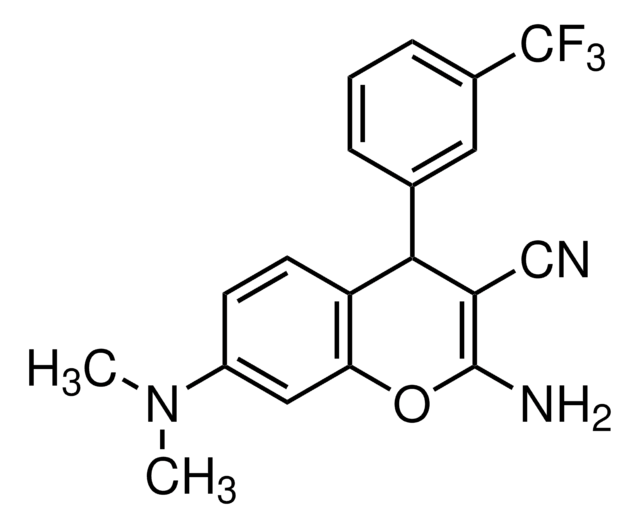
Chromeceptin binds to multifunctional protein 2 (MFP-2); inhibits Insulin-like growth factor 2 (IGF2) signaling.
Chromeceptin inhibits Insulin-like growth factor 2 (IGF2) signaling by a process that begins with chromeceptin binding to multifunctional protein 2 (MFP-2). This interaction stimulates the expression of IGF binding protein 1 (IGFBP-1) and suppressor of cytokine signaling-3 (SOCS-3), both of which activate signal transducers and activators of transcription 6 (STAT6) to attenuate IGF signals.
Features and Benefits
This compound is featured on the InsR page of the Handbook of Receptor Classification and Signal Transduction. To browse other handbook pages, click here.
Stemness factors control microRNA expression in cancer stem cells. Downregulation of miR-100 and miR-125b is associated with tumor progression and prognosis of various cancers. Comparing miRNA profiling of patient-derived tumorsphere (TS) and adherent (2D) hepatocellular carcinoma cells, miR-100 and miR-125b
Insulin-like growth factor 2 (IGF2) is a potent mitogen whose deregulation plays a role in developing liver, breast, and prostate cancers. Here, we take a small-molecule approach to investigate molecular pathways that modulate IGF2 signaling, by using chromeceptin, a synthetic
The Journal of biological chemistry, 278(9), 7320-7324 (2002-12-24)
An important step in the postgenomic drug discovery is the construction of high quality chemical libraries that generate bioactive molecules at high rates. Here we report a cell-based approach to composing a focused library of biologically active compounds. A collection