Saltar al contenido
Merck

Saltar a

05-253

Anti-ZAP-70 Antibody, clone 2F3.2

clone 2F3.2, Upstate®, from mouse

Sinónimos:

Anti-ADMIO2, Anti-SRK, Anti-STCD, Anti-STD, Anti-TZK, Anti-ZAP-70

Iniciar sesión para ver los precios por organización y contrato.

Seleccione un Tamaño

Cambiar Vistas
Tamaño de envaseSKUDisponibilidadPrecio
250 μg
Póngase en contacto con nuestro Servicio de Atención al Cliente para disponibilidad
388,00 €

Acerca de este artículo

UNSPSC Code:
12352203
NACRES:
NA.41
eCl@ss:
32160702
Conjugate:
unconjugated
Clone:
2F3.2, monoclonal
Application:
FACS, IHC, IP, WB
Citations:
53

388,00 €


Póngase en contacto con nuestro Servicio de Atención al Cliente para disponibilidad
Está disponible un anticuerpo recombinante y sin conservantes para su diana. Pruebe ZRB2144

Solicite una orden a granel
Servicio técnico
¿Necesita ayuda? Nuestro equipo de científicos experimentados está aquí para ayudarle.
Permítanos ayudarle


biological source

mouse

Quality Level

conjugate

unconjugated

antibody form

purified immunoglobulin

antibody product type

primary antibodies

clone

2F3.2, monoclonal

species reactivity

human

manufacturer/tradename

Upstate®

technique(s)

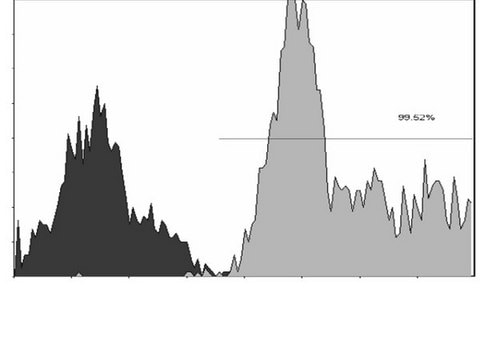
flow cytometry: suitable, immunohistochemistry: suitable, immunoprecipitation (IP): suitable, western blot: suitable

isotype

IgG2a

NCBI accession no.

UniProt accession no.

shipped in

dry ice

target post-translational modification

unmodified

Gene Information

human ... ZAP70(7535)

General description

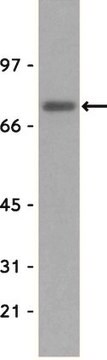
70 kDa
Note: This product is for research use only. It is not manufacured for diagnostic or therapeutic use in humans or animals.
Zeta-chain-associated protein kinase 70. A member of the protein tyrosine kinase family, ZAP-70 is normally expressed in T cells and natural killer cells and has a critical role in the initiation of T-cell signaling. ZAP-70 is expressed in T cells and tumors of T-cell lineage. A high level of ZAP-70 expression appears restricted to T-cell proliferative diseases and a subgroup of chronic lymphocytic leukemia (CLL). The ZAP-70 gene is in chromosome 2q12.

Immunogen

GST-fusion to tandem SH2 domains of human ZAP-70 corresponding to residues 1-254

Application

For testing in IHC, please see the following link (PDF): http://www.propathlab.com/pdf/focus_dec_2003.pdf
Research Category
Signaling
Research Sub Category
Immunological Signaling
This Anti-ZAP-70 Antibody, clone 2F3.2 is validated for use in FC, IH, IP, WB for the detection of ZAP-70.

Biochem/physiol Actions

Recognizes human ZAP-70, does not recognize murine ZAP-70.

Physical form

Format: Purified
Protein G Purified
Protein G Purified immunoglobulin in Protein G Purified immunoglobulin in 30% glycerol, 0.07M Tris-glycine, pH 7.4, 0.105 M NaCl, 0.035% sodium azide as a preservative.

Preparation Note

Maintain for 2 years at -20°C from date of shipment. Aliquot to avoid repeated freezing and thawing. For maximum recovery of product, centrifuge the original vial after thawing and prior to removing the cap.

Analysis Note

Control
Positive Antigen Control: Catalog #12-303, Jurkat cell lysate.
routinely evaluated on RIPA lysates prepared from Jurkat cells or Hut-78 cells

Other Notes

Concentration: Please refer to the Certificate of Analysis for the lot-specific concentration.

Legal Information

UPSTATE is a registered trademark of Merck KGaA, Darmstadt, Germany

Disclaimer

Unless otherwise stated in our catalog or other company documentation accompanying the product(s), our products are intended for research use only and are not to be used for any other purpose, which includes but is not limited to, unauthorized commercial uses, in vitro diagnostic uses, ex vivo or in vivo therapeutic uses or any type of consumption or application to humans or animals.

Comparar elementos similares

Ver comparación completa

Mostrar Diferencias

1 of 1

Este artículo
16-210WH0007535M1SAB4700528
clone

2F3.2, monoclonal

clone

2F3.2, monoclonal

clone

2F6, monoclonal

clone

ZAP-03, monoclonal

species reactivity

human

species reactivity

human, rat

species reactivity

human

species reactivity

human

antibody form

purified immunoglobulin

antibody form

purified immunoglobulin

antibody form

purified immunoglobulin

antibody form

purified immunoglobulin

biological source

mouse

biological source

mouse

biological source

mouse

biological source

mouse

conjugate

unconjugated

conjugate

FITC conjugate

conjugate

unconjugated

conjugate

unconjugated

UniProt accession no.

P43403

UniProt accession no.

P43403

UniProt accession no.

P43403

UniProt accession no.

P43403


Still not finding the right product?

Explore all of our products under

o

Pruebe nuestra Herramienta de selección de productos para limitar sus opciones


Clase de almacenamiento

12 - Non Combustible Liquids

wgk

WGK 1

flash_point_f

Not applicable

flash_point_c

Not applicable


Certificados de análisis (COA)

Busque Certificados de análisis (COA) introduciendo el número de lote del producto. Los números de lote se encuentran en la etiqueta del producto después de las palabras «Lot» o «Batch»

¿Ya tiene este producto?

Encuentre la documentación para los productos que ha comprado recientemente en la Biblioteca de documentos.

Visite la Librería de documentos


Nir Shani et al.
Blood, 113(15), 3530-3541 (2008-10-22)
The default pathway of cell-surface T-cell receptor (TCR) complex formation, and the subsequent transport to the membrane, is thought to entail endoplasmic reticulum (ER) localization followed by proteasome degradation of the unassembled chains. We show herein an alternative pathway: short
C Silvin et al.
The Journal of biological chemistry, 276(24), 21450-21457 (2001-04-03)
Wiskott-Aldrich syndrome protein (WASP) plays a key role in cytoskeletal rearrangement and transcriptional activation in T-cells. Recent evidence links WASP and related proteins to actin polymerization by the Arp2/3 complex. To study whether the role of WASP in actin polymerization
Eva Calpe et al.
PloS one, 8(12), e81221-e81221 (2013-12-07)
ZAP-70 in chronic lymphocytic leukemia (CLL) is associated with enhanced response to microenvironmental stimuli. We analyzed the functional consequences of ZAP-70 ectopic expression in malignant B-cells in a xenograft mouse model of disseminated B-cell leukemia. Mice injected with B-cells expressing


Número de artículo de comercio global

SKUGTIN
05-25304053252330896

Preguntas

Revisiones

Sin puntuación

Filtros activos