Accéder au contenu
Merck

Passer à

05-583

Anti-CFTR Antibody, clone M3A7

clone M3A7, Upstate®, from mouse

Synonyme(s) :

ATP-binding cassette sub-family C, member 7, ATP-binding cassette transporter sub-family C member 7, cAMP-dependent chloride channel, cystic fibrosis transmembrane conductance regulator, cystic fibrosis transmembrane conductance regulator (ATP-binding ca

Se connecter pour consulter les tarifs organisationnels et contractuels.

Sélectionner une taille de conditionnement

Changer de vue
ConditionnementRéférenceDisponibilitéPrix

A propos de cet article

UNSPSC Code:
12352203
NACRES:
NA.41
eCl@ss:
32160702
Conjugate:
unconjugated
Clone:
M3A7, monoclonal
Application:
IHC, IP, WB
Citations:
30
Le tarif et la disponibilité ne sont pas disponibles actuellement.
Service technique
Besoin d'aide ? Notre équipe de scientifiques expérimentés est là pour vous.
Laissez-nous vous aider


biological source

mouse

Quality Level

conjugate

unconjugated

antibody form

purified immunoglobulin

antibody product type

primary antibodies

clone

M3A7, monoclonal

species reactivity

human

manufacturer/tradename

Upstate®

technique(s)

immunohistochemistry: suitable, immunoprecipitation (IP): suitable, western blot: suitable

isotype

IgG1

NCBI accession no.

UniProt accession no.

shipped in

dry ice

target post-translational modification

unmodified

Gene Information

human ... CFTR(1080)

General description

170 kDa
CFTR (Cystic Fibrosis Transmembrane Regulator) is an integral membrane protein shown to be involved in the transport of chloride ions. It is found on the surface of the epithelial cells lining the lungs and other organs. CFTR defects are the cause of cystic fibrosis. Cystic Fibrosis (CF) is a common lethal genetic disease caused by mutations of the gene coding for the cystic fibrosis transmembrane conductance factor, a cAMP regulated chloride channel. Approximately 70% of all CF cases share the deletion of a phenylalanine at position 508 (delta F508), which results in abnormal chloride transport. Since the CF mutation is lethal, most often by lung and liver disease, it raises the question of why this genetic disease remains as common as it is.

Immunogen

Epitope: a.a. 1365-1395
GST-fusion protein corresponding to residues 1197-1480 of human cystic fibrosis transmembrane conductance regulator (CFTR). The epitope maps within amino acids 1365-1395. Clone M3A7.

Application

Detect CFTR using this Anti-CFTR Antibody, clone M3A7 validated for use in IH, IP & WB.
Immunoprecipitation:
This antibody has been reported to immunoprecipitate CFTR. (Kartner, N., 1998.)

Immunohistochemistry:
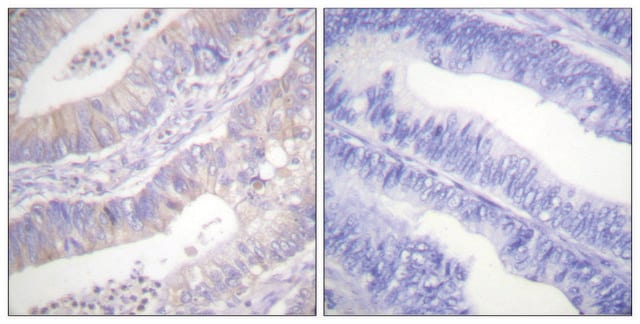
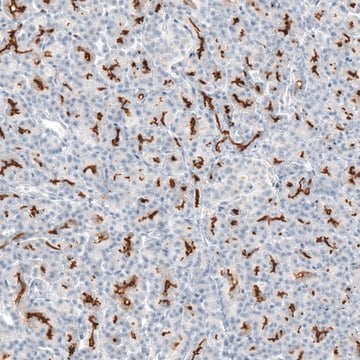
This antibody has been reported to immunostain CFTR in human pancreatic tissue sections. (Kartner, N., 1998.)
Research Category
Neuroscience
Research Sub Category
Ion Channels & Transporters

Biochem/physiol Actions

Other species not tested.
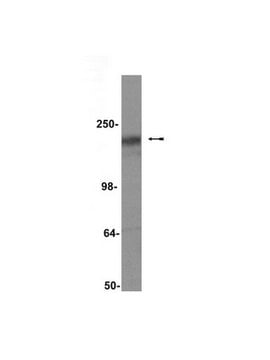
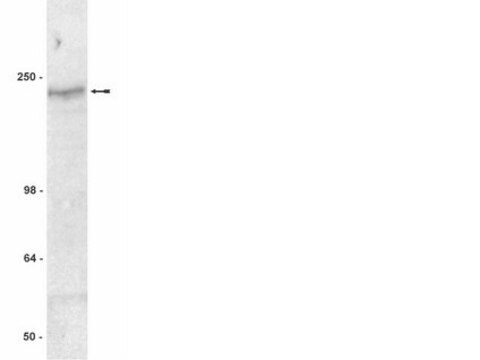
This antibody recognizes CFTR, Mr 170 kDa.

Physical form

Format: Purified
Protein G Purified
Purified mouse monoclonal IgG1 in buffer containing 0.1 M Tris-glycine, pH 7.4, 0.15 M NaCl, 0.05% sodium azide and 30% glycerol.

Preparation Note

Stable for 1 year at -20°C from date of receipt.

Handling Recommendations:
Upon receipt, and prior to removing the cap, centrifuge the vial and gently mix the solution. Aliquot into microcentrifuge tubes and store at -20°C. Avoid repeated freeze/thaw cycles, which may damage IgG and affect product performance. Note: Variability in freezer temperatures below -20°C may cause glycerol-containing solutions to become frozen during storage.

Analysis Note

Control
T84 cell lysate.
Routinely evaluated by western blot on human T84 colon carcinoma epithelial RIPA cell lysates or from CFTR-transfected BHK2.

Western Blot Analysis:
0.5-2 µg/mL of this lot detected CFTR from 20-50 µg of human T84 colon carcinoma epithelial RIPA cell lysates. 0.5-2 µg/mL of a previous lot detected CFTR from CFTR-transfected BHK (Haardt, M., 1999).
Note: Do not boil the lysate. Instead incubate at 37°C for 30 minutes. CFTR can run as a diffuse protein on SDS-PAGE.

Other Notes

Concentration: Please refer to the Certificate of Analysis for the lot-specific concentration.

Legal Information

UPSTATE is a registered trademark of Merck KGaA, Darmstadt, Germany

Disclaimer

Unless otherwise stated in our catalog or other company documentation accompanying the product(s), our products are intended for research use only and are not to be used for any other purpose, which includes but is not limited to, unauthorized commercial uses, in vitro diagnostic uses, ex vivo or in vivo therapeutic uses or any type of consumption or application to humans or animals.

Comparer avec des articles similaires

Voir la comparaison complète

Montrer les différences

1 of 1

Cet article
05-581SAB4501942HPA021939
clone

M3A7, monoclonal

clone

MM13-4, monoclonal

clone

polyclonal

clone

polyclonal

conjugate

unconjugated

conjugate

unconjugated

conjugate

unconjugated

conjugate

unconjugated

antibody form

purified immunoglobulin

antibody form

purified antibody

antibody form

affinity isolated antibody

antibody form

affinity isolated antibody

biological source

mouse

biological source

mouse

biological source

rabbit

biological source

rabbit

species reactivity

human

species reactivity

human

species reactivity

rat, mouse, human

species reactivity

human

shipped in

dry ice

shipped in

wet ice

shipped in

wet ice

shipped in

wet ice


Still not finding the right product?

Essayez notre Outil de sélection de produits pour affiner vos choix.


Classe de stockage

10 - Combustible liquids

wgk

WGK 1


Certificats d'analyse (COA)

Recherchez un Certificats d'analyse (COA) en saisissant le numéro de lot du produit. Les numéros de lot figurent sur l'étiquette du produit après les mots "Lot" ou "Batch".

Déjà en possession de ce produit ?

Retrouvez la documentation relative aux produits que vous avez récemment achetés dans la Bibliothèque de documents.

Consulter la Bibliothèque de documents


Mechanosensitive Cl- secretion in biliary epithelium mediated through TMEM16A.
Dutta, AK; Woo, K; Khimji, AK; Kresge, C; Feranchak, AP
American Journal of Physiology: Gastrointestinal and Liver Physiology null
Mark R Woodford et al.
Nature communications, 7, 12037-12037 (2016-06-30)
Heat shock protein-90 (Hsp90) is an essential molecular chaperone in eukaryotes involved in maintaining the stability and activity of numerous signalling proteins, also known as clients. Hsp90 ATPase activity is essential for its chaperone function and it is regulated by
Miquéias Lopes-Pacheco et al.
Chembiochem : a European journal of chemical biology, 17(6), 493-505 (2016-02-13)
We evaluated whether small molecule correctors could rescue four nucleotide-binding domain 1 (NBD1) mutations in the cystic fibrosis transmembrane conductance regulator (CFTR) gene (A455E, S492F, ΔI507, and R560T). We first transfected Cos-7 cells (green monkey kidney cells) with A455E, S492F, ΔI507


Numéro d'article de commerce international

RéférenceGTIN
05-58304053252332548

Questions

Reviews

No rating value

Active Filters