Skip to Content
MilliporeSigma

Skip To

T1428

apo-Transferrin bovine

BioReagent, suitable for cell culture, ≥98%

Synonym(s):

Human serotransferrin

Sign In to View Organizational & Contract Pricing.

Select a Size

Change View
Pack SizeSKUAvailabilityPrice

About This Item

CAS Number:
UNSPSC Code:
12352202
EC Number:
234-318-8
NACRES:
NA.83
MDL number:
eCl@ss:
34058011
Form:
powder
Assay:
≥98%
Biological source:
bovine
Pricing and availability is not currently available.
Technical Service
Need help? Our team of experienced scientists is here for you.
Let Us Assist


biological source

bovine

Quality Level

product line

BioReagent

assay

≥98%

form

powder

technique(s)

cell culture | mammalian: suitable

impurities

iron, essentially free

solubility

H2O: 10 mg/mL

UniProt accession no.

storage temp.

2-8°C

Gene Information

bovine ... TF(280705)

General description

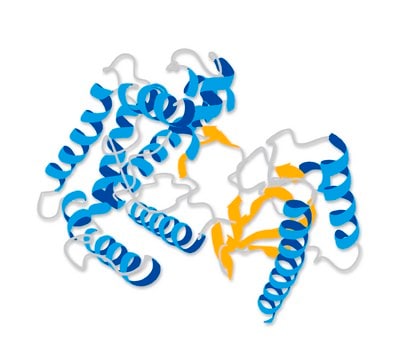
apo-Transferrin is an iron-free form of transferrin that is present in circulation.[1]

Application

All cells require iron for the proper uptake of oxygen from their environment. Transferrin, a protein isolated from serum, causes the uptake and transport of iron from culture medium to the cells. This allows proper oxygen uptake and also stimulates growth-related enzyme activity. Iron-saturated transferrin (holo transferrin) is continually recycled after releasing iron and becomes iron-deficient transferrin (apo-transferrin). Choosing which form to use depends upon the culture conditions. In media such as Dulbecco′s Modified Eagle′s Medium/Ham′s Nutrient Mixture F12 (DMEM/F12) that contain high levels of iron salt, using apo-transferrin is preferred.
apo-Transferrin bovine has been used as a component of:
  • basal medium for culturing bovine mammary epithelial cells[2][3]
  • minimum essential medium α (MEM-α) for spermatogonial stem cells (SSCs) culture[4]
  • induction medium for mesenchymal stem cell culture[5]

Biochem/physiol Actions

apo-Transferrin (apoTf) aids in preventing iron accumulation in tissues, especially in non-transfusion dependent β-thalassemia.[6]

Compare Similar Items

View Full Comparison

Show Differences

1 of 1

This Item
T1283T2036178481
biological source

bovine

biological source

-

biological source

-

biological source

-

assay

≥98%

assay

97-100% (agarose gel electrophoresis)

assay

≥98% (agarose gel electrophoresis)

assay

≥95% (SDS-PAGE)

technique(s)

cell culture | mammalian: suitable

technique(s)

cell culture | mammalian: suitable

technique(s)

cell culture | mammalian: suitable

technique(s)

-

form

powder

form

powder

form

powder

form

lyophilized solid

impurities

iron, essentially free

impurities

endotoxin, tested

impurities

HIV and HBsAg, source material tested negative, endotoxin, tested

impurities

<0.1 EU/mg Endotoxins

UniProt accession no.

Q29443

UniProt accession no.

Q29443

UniProt accession no.

P02787

UniProt accession no.

-


Still not finding the right product?

Explore all of our products under apo-Transferrin bovine


Storage Class

11 - Combustible Solids

wgk

WGK 3

flash_point_f

Not applicable

flash_point_c

Not applicable

ppe

Eyeshields, Gloves, type N95 (US)


Choose from one of the most recent versions:

Certificates of Analysis (COA)

Lot/Batch Number

Don't see the Right Version?

If you require a particular version, you can look up a specific certificate by the Lot or Batch number.

Already Own This Product?

Find documentation for the products that you have recently purchased in the Document Library.

Visit the Document Library


Einar Vargas-Bello-Pérez et al.
Animal nutrition (Zhongguo xu mu shou yi xue hui), 5(2), 202-208 (2019-06-14)
The objective of this study was to determine how cytosolic triacylglycerols (TAG) are stored in mammary cells and whether this depends on the individual chemical configuration of fatty acids (FA). This objective was accomplished by addition of different FA to
Keita Abe et al.
Zeitschrift fur Naturforschung. C, Journal of biosciences, 63(1-2), 154-156 (2008-04-05)
We have investigated the mechanism of manganese ion uptake by apo-transferrin using a capillary electrophoresis method, and obtained clear evidence that oxidation state +3 and the binuclear unit of a manganese chelate are essential factors for the facile uptake by
Monique P Gelderman et al.
Haematologica, 100(5), 611-622 (2015-01-27)
Intermediate beta-thalassemia has a broad spectrum of sequelae and affected subjects may require occasional blood transfusions over their lifetime to correct anemia. Iron overload in intermediate beta-thalassemia results from a paradoxical intestinal absorption, iron release from macrophages and hepatocytes, and


Global Trade Item Number

SKUGTIN
T1428-500MG04061837337444
T1428-10G04061831169461
T1428-5G04061833361306
T1428-50MG04061833274392
T1428-100MG04061833274378

Questions

Reviews

No rating value

Active Filters