Direkt zum Inhalt
Merck

MABT401

Anti-Lubricin Antibody/Proteoglycan 4, clone 9G3

clone 9G3, from mouse

Synonym(e):

Proteoglycan 4, Lubricin, Megakaryocyte-stimulating factor, Superficial zone proteoglycan, Proteoglycan 4 C-terminal part

Anmelden zur Ansicht der Organisations- und Vertragspreise.

Größe auswählen

Preise und Verfügbarkeit sind derzeit nicht verfügbar.

Über diesen Artikel

UNSPSC Code:
12352203
NACRES:
NA.41
eCl@ss:
32160702
Conjugate:
unconjugated
Clone:
9G3, monoclonal
Application:
IHC, WB
Citations:
22

Fortfahren mit

Technischer Dienst
Benötigen Sie Hilfe? Unser Team von erfahrenen Wissenschaftlern ist für Sie da.
Unterstützung erhalten

biological source

mouse

conjugate

unconjugated

antibody form

purified immunoglobulin

antibody product type

primary antibodies

clone

9G3, monoclonal

species reactivity

rat, human

technique(s)

immunohistochemistry: suitable (paraffin), western blot: suitable

isotype

IgG1κ

NCBI accession no.

UniProt accession no.

shipped in

wet ice

target post-translational modification

unmodified

Quality Level

Gene Information

human ... PRG4(10216)

Verwandte Kategorien

Ähnliche Artikel vergleichen

Vollständigen Vergleich anzeigen

Unterschiede anzeigen

1 of 4

Dieser Artikel
MABT400AB5320BAB5320C3
Gene Information

human ... PRG4(10216)

Gene Information

human ... PRG4(10216)

Gene Information

human ... CSPG4(1464)
mouse ... Cspg4(121021)
rat ... Cspg4(81651)
rhesus monkey ... Cspg4(713086)

Gene Information

human ... CSPG4(1464)
mouse ... Cspg4(121021)
rat ... Cspg4(81651)
rhesus monkey ... Cspg4(713086)

biological source

mouse

biological source

mouse

biological source

rabbit

biological source

rabbit

species reactivity

rat, human

species reactivity

canine, bovine, goat, rat, porcine, human, guinea pig

species reactivity

rat

species reactivity

rat

clone

9G3, monoclonal

clone

5C11, monoclonal

clone

polyclonal

clone

polyclonal

antibody form

purified immunoglobulin

antibody form

purified antibody

antibody form

purified antibody

antibody form

purified antibody

UniProt accession no.

Q92954

UniProt accession no.

Q92954

UniProt accession no.

Q6UVK1

UniProt accession no.

Q6UVK1

General description

The protein called Lubricin/Proteoglycan 4 is an important secreted protein in the joint critical for joint function and thus is also a focus of research in joint diseases as well. Lubricin/Proteoglycan 4 plays a role in boundary lubrication and prevents the deposition of cartilage from the synovial fluid by controlling the synovial growth of the synovial cells and inhibiting the adhesion of the cells to the cartilage surface. During development, Lubricin/Proteoglycan 4 also acts as a growth factor for hematopoietic and endothelial cell lineages, and Lubricin/Proteoglycan 4 appears important for proper barrier and lubrication development in tissues like the eye. Lubricin/Proteoglycan 4 is highly expressed in joints and near joint boundaries but can also be found in the brain, heart, lung, kidney and other tissues. Lubricin/Proteoglycan 4 has several isoforms that differ in their cell and tissue expression. Isoform C and D are the most widely expressed forms. Finally because of its effects on surfaces, Lubricin/Proteoglycan 4 is being examined in tissue engineering and artificial cartilage development as a treatment for joint diseases.
~220 kDa observed. The calculated molecular weight of this protein is 151 kDa with many isoforms observed around 145 kDa and it can run higher due to glycosylation.

Immunogen

Recombinant protein corresponding to human Lubricin/Proteoglycan 4.

Application

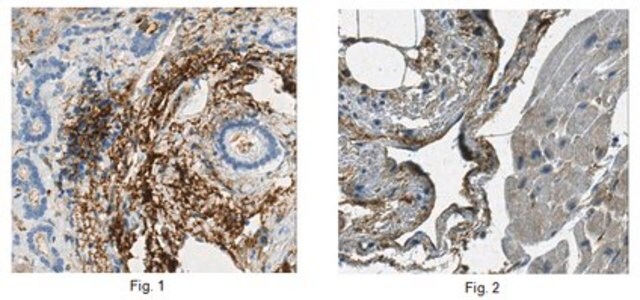
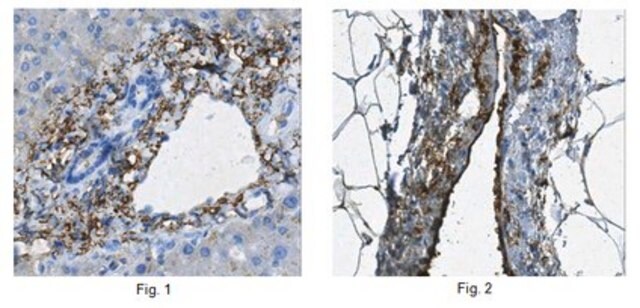
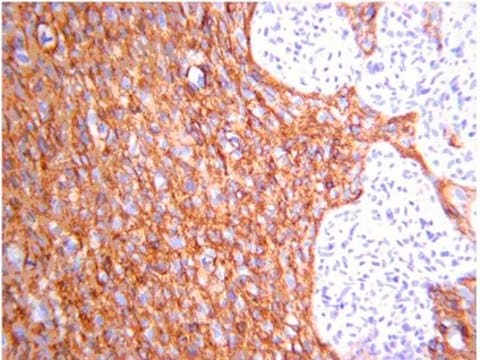
Immunohistochemistry Analysis: A 1:1,000 dilution from a representative lot detected Lubricin/Proteoglycan 4 in human liver and human heart tissue.
Immunohistochemistry Analysis: A representative lot detected Lubricin/Proteoglycan 4 in articular cartilage tissue (Elsaid, K.A, et al. (2012). Osteoarthritis and Cartilage. 20:940-948).
Immunohistochemistry Analysis: A representative lot detected Lubricin/Proteoglycan 4 in rat arterial cartilage tissue (Jay, G.D, et al. (2012). Arthritis & Rheumatism. 64(4):940-948).
Immunohistochemistry Analysis: A representative lot detected Lubricin/Proteoglycan 4 in articular cartilage from rat
(Manuscript in preparation).
Western Blotting Analysis: A representative lot detected Lubricin/Proteoglycan 4 in lubricin purified from synovial fluid of patients (Manuscript in preparation).
This Anti-Lubricin Antibody/Proteoglycan 4, clone 9G3 is validated for use in Western Blotting and Immunohistochemistry (Paraffin) for the detection of Lubricin/Proteoglycan 4.

Physical form

Format: Purified

Analysis Note

Evaluated by Western Blotting in Lubricin purified protein.

Western Blotting Analysis: 0.02 µg/mL of this antibody detected Lubricin/Proteoglycan 4 in 1 µg of Lubricin purified protein.

Other Notes

Concentration: Please refer to lot specific datasheet.

Sie haben nicht das passende Produkt gefunden?  

Probieren Sie unser Produkt-Auswahlhilfe. aus.

related product

Lagerklasse

12 - Non Combustible Liquids

wgk

WGK 1

flash_point_f

Not applicable

flash_point_c

Not applicable


Analysenzertifikate (COA)

Suchen Sie nach Analysenzertifikate (COA), indem Sie die Lot-/Chargennummer des Produkts eingeben. Lot- und Chargennummern sind auf dem Produktetikett hinter den Wörtern ‘Lot’ oder ‘Batch’ (Lot oder Charge) zu finden.

Besitzen Sie dieses Produkt bereits?

In der Dokumentenbibliothek finden Sie die Dokumentation zu den Produkten, die Sie kürzlich erworben haben.

Die Dokumentenbibliothek aufrufen

Elizabeth Feeney et al.
Journal of orthopaedic research : official publication of the Orthopaedic Research Society, 37(5), 1071-1079 (2019-03-13)
The objective of this study was to examine temporal variations in synovial fluid composition and lubrication following articular fracture. Post-traumatic osteoarthritis (PTOA) was induced by creating an osteochondral fracture in the middle carpal joint of four horses while the contralateral
Tryptase I? regulation of joint lubrication and inflammation via proteoglycan-4 in osteoarthritis.
Das, et al.
Nature Communications, 14, 1910-1910 (2023)
R M Irwin et al.
Osteoarthritis and cartilage, 28(4), 492-501 (2020-02-28)
Viscosupplementation has been used for decades to treat mild to moderate osteoarthritis, yet it is unknown if the lubricating function of different pathological synovial fluids (SF) vary, or if they respond differentially to viscosupplementation. The objectives of this study were
Zhong Li et al.
Advanced science (Weinheim, Baden-Wurttemberg, Germany), 9(21), e2105909-e2105909 (2022-04-19)
Diseases of the knee joint such as osteoarthritis (OA) affect all joint elements. An in vitro human cell-derived microphysiological system capable of simulating intraarticular tissue crosstalk is desirable for studying etiologies/pathogenesis of joint diseases and testing potential therapeutics. Herein, a
Amanda Watkins et al.
BMC veterinary research, 17(1), 189-189 (2021-05-14)
Lameness is a debilitating condition in equine athletes that leads to more performance limitation and loss of use than any other medical condition. There are a limited number of non-terminal experimental models that can be used to study early inflammatory

Questions

Reviews

No rating value

Active Filters

Unser Team von Wissenschaftlern verfügt über Erfahrung in allen Forschungsbereichen einschließlich Life Science, Materialwissenschaften, chemischer Synthese, Chromatographie, Analytik und vielen mehr..

Setzen Sie sich mit dem technischen Dienst in Verbindung