
ABE441

Przeciwciało przeciw dimetylowemu histonowi H4 (Arg3), asymetryczne
from rabbit, purified by affinity chromatography
Synonim(y):
Histone H4
Informacje o tej pozycji
Przejdź do
Nazwa produktu
Przeciwciało przeciw dimetylowemu histonowi H4 (Arg3), asymetryczne, from rabbit, purified by affinity chromatography
biological source
rabbit
antibody form
affinity isolated antibody
antibody product type
primary antibodies
clone
polyclonal
purified by
affinity chromatography
species reactivity
human
technique(s)
dot blot: suitable
immunocytochemistry: suitable
western blot: suitable
NCBI accession no.
UniProt accession no.
shipped in
wet ice
target post-translational modification
dimethylation (Arg3)
Gene Information
human ... HIST2H4B(554313)
1 of 4
Ta pozycja | ABE328 | SAB5700108 | SAB5700174 |
|---|---|---|---|
| biological source rabbit | biological source rabbit | biological source rabbit | biological source rabbit |
| antibody form affinity isolated antibody | antibody form affinity isolated antibody | antibody form affinity isolated antibody | antibody form affinity isolated antibody |
| Quality Level 100 | Quality Level 100 | Quality Level 100 | Quality Level 100 |
| clone polyclonal | clone polyclonal | clone polyclonal | clone polyclonal |
| species reactivity human | species reactivity human | species reactivity human, mouse, rat | species reactivity human, rat, mouse |
| technique(s) dot blot: suitable, western blot: suitable, immunocytochemistry: suitable | technique(s) dot blot: suitable, western blot: suitable | technique(s) ChIP: 1:20-1:100, immunofluorescence: 1:50-1:200, immunohistochemistry: 1:50-1:200, western blot: 1:200-1:2000 | technique(s) ChIP: 1:20-1:100, immunofluorescence: 1:50-1:200, immunohistochemistry: 1:50-1:200, immunoprecipitation (IP): 1:50-1:200, western blot: 1:500-1:2000 |

Application
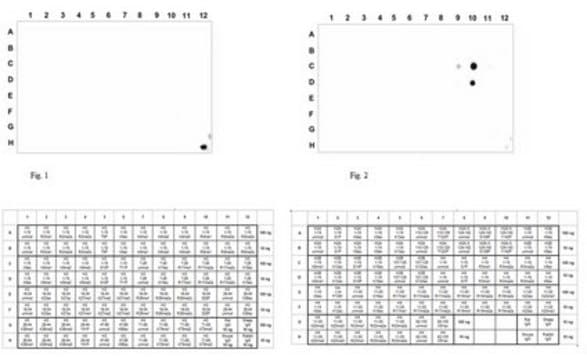
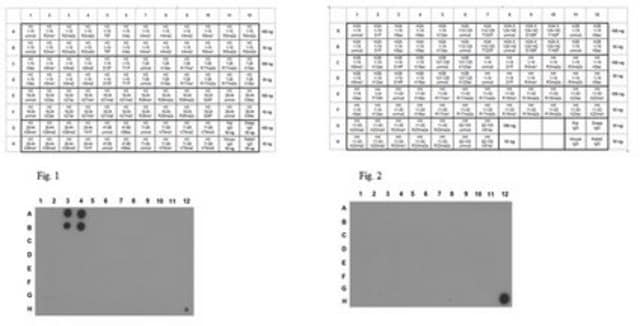
Analiza Dot Blot (specyficzność): Rozcieńczenie 1:10 000 z reprezentatywnej partii wykryło dimetyl Histone H4 (Arg3), Asymmetric w Absurance Histone H3 Antibody Specificity Array (nr kat. 16-667) i Absurance Histone H2A, H2B, H4 Antibody Specificity Array (nr kat. 16-665).
DyLight jest zastrzeżonym znakiem towarowym firmy Thermo Fisher Scientific.
Epigenetics & Nuclear Function
Histones
General description
Immunogen
Physical form
Preparation Note
Analysis Note
Western Blotting Analysis: A 1:50,000 dilution of this antibody detected dimethyl Histone H4 (Arg3), Asymmetric in 0.5 µg of CARM1 treated recombinant Histone H4.
Disclaimer
Nie możesz znaleźć właściwego produktu?
Wypróbuj nasz Narzędzie selektora produktów.
Klasa składowania
12 - Non Combustible Liquids
wgk
WGK 1
flash_point_f
Not applicable
flash_point_c
Not applicable
Certyfikaty analizy (CoA)
Poszukaj Certyfikaty analizy (CoA), wpisując numer partii/serii produktów. Numery serii i partii można znaleźć na etykiecie produktu po słowach „seria” lub „partia”.
Masz już ten produkt?
Dokumenty związane z niedawno zakupionymi produktami zostały zamieszczone w Bibliotece dokumentów.
Powiązane treści
Cancer is a complex disease manifestation. At its core, it remains a disease of abnormal cellular proliferation and inappropriate gene expression. In the early days, carcinogenesis was viewed simply as resulting from a collection of genetic mutations that altered the gene expression of key oncogenic genes or tumor suppressor genes leading to uncontrolled growth and disease (Virani, S et al 2012). Today, however, research is showing that carcinogenesis results from the successive accumulation of heritable genetic and epigenetic changes. Moreover, the success in how we predict, treat and overcome cancer will likely involve not only understanding the consequences of direct genetic changes that can cause cancer, but also how the epigenetic and environmental changes cause cancer (Johnson C et al 2015; Waldmann T et al 2013). Epigenetics is the study of heritable gene expression as it relates to changes in DNA structure that are not tied to changes in DNA sequence but, instead, are tied to how the nucleic acid material is read or processed via the myriad of protein-protein, protein-nucleic acid, and nucleic acid-nucleic acid interactions that ultimately manifest themselves into a specific expression phenotype (Ngai SC et al 2012, Johnson C et al 2015). This review will discuss some of the principal aspects of epigenetic research and how they relate to our current understanding of carcinogenesis. Because epigenetics affects phenotype and changes in epigenetics are thought to be key to environmental adaptability and thus may in fact be reversed or manipulated, understanding the integration of experimental and epidemiologic science surrounding cancer and its many manifestations should lead to more effective cancer prognostics as well as treatments (Virani S et al 2012).
Active Filters
Nasz zespół naukowców ma doświadczenie we wszystkich obszarach badań, w tym w naukach przyrodniczych, materiałoznawstwie, syntezie chemicznej, chromatografii, analityce i wielu innych dziedzinach.
Skontaktuj się z zespołem ds. pomocy technicznej