Skip to Content
MilliporeSigma

Skip To

06-702

Anti-phospho-Smad1 (Ser463/465) Antibody

Upstate®, from rabbit

Sign In to View Organizational & Contract Pricing.

About This Item

UNSPSC Code:
12352203
NACRES:
NA.41
eCl@ss:
32160702
Clone:
polyclonal
Species reactivity:
human, Xenopus, rat, mouse
Application:
WB
Citations:
29


biological source

rabbit

Quality Level

antibody form

purified immunoglobulin

antibody product type

primary antibodies

clone

polyclonal

species reactivity

human, Xenopus, rat, mouse

manufacturer/tradename

Upstate®

technique(s)

western blot: suitable

isotype

IgG

NCBI accession no.

UniProt accession no.

shipped in

dry ice

target post-translational modification

phosphorylation (pSer463/pSer465)

Gene Information

human ... SMAD1(4086)

General description

65 kDa
Smad proteins, the mammalian homologs of the Drosophila Mothers against dpp (Mad), function downstream of TGF-β receptor Serine/Threonine kinases and undergo serine phosphorylation in response to receptor activation. Following BMP (bone morphogenic protein) or TGF-β binding to the targeted surface receptors, Smad1 (also designated Madr1 or JV4-1) becomes phosphorylated at Ser 463 and Ser 465. Activated Smad1 associates with Smad4 and translocates to the nucleus, where the Smad1/Smad4 complex recruits DNA-binding proteins to activate specific gene transcription. BMP binding induces phosphorylation of Smad1, which enhances the binding of Smad1 to CBP to stimulate Smad1-dependent transcription. In addition, ALK1 and ALK2 specifically phosphorylate Smad1 on residues located in the MH2 domain and induces Smad1-dependent pathways.

Immunogen

peptide corresponding to (CGGSPHNPISpSVpSGG) corresponding to amino acids 455-465 of human Smad1 protein

Application

Detect phospho-Smad1 (Ser463/465) with Anti-phospho-Smad1 (Ser463/465) Antibody (Rabbit Polyclonal Antibody), that has been shown to work in WB.

Biochem/physiol Actions

Recognizes the dual serine phosphorylated Smad1 (Ser463/465).

Physical form

Format: Purified

Analysis Note

Control
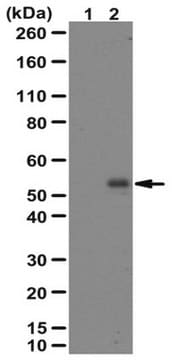
BMP-4-treated HeLa or NIH/3T3 cells
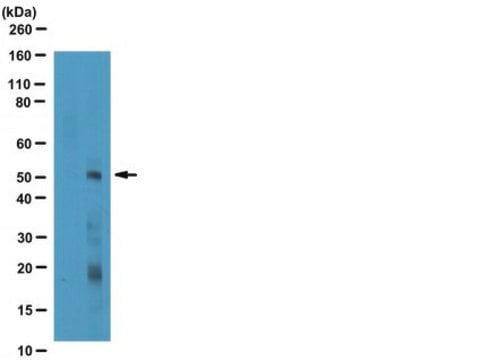
routinely evaluated by immunoblot on RIPA lysates from P19 (mouse embryonal carcinoma) cells treated with BMP4

Other Notes

Concentration: Please refer to the Certificate of Analysis for the lot-specific concentration.

Legal Information

UPSTATE is a registered trademark of Merck KGaA, Darmstadt, Germany

Compare Similar Items

View Full Comparison

Show Differences

1 of 1

This Item
AB3849-I07-138904-953
clone

polyclonal

clone

polyclonal

clone

polyclonal

clone

A5S, monoclonal

biological source

rabbit

biological source

rabbit

biological source

rabbit

biological source

rabbit

antibody form

purified immunoglobulin

antibody form

affinity isolated antibody

antibody form

unpurified

antibody form

culture supernatant

species reactivity

human, Xenopus, rat, mouse

species reactivity

human

species reactivity

mouse, mink

species reactivity

human, zebrafish, mouse, canine

technique(s)

western blot: suitable

technique(s)

western blot: suitable

technique(s)

western blot: suitable

technique(s)

western blot: suitable

shipped in

dry ice

shipped in

wet ice

shipped in

wet ice

shipped in

dry ice


Still not finding the right product?

Try our Product Selector Tool to narrow your options


Storage Class

10 - Combustible liquids

wgk

WGK 1


Certificates of Analysis (COA)

Search for Certificates of Analysis (COA) by entering the products Lot/Batch Number. Lot and Batch Numbers can be found on a product’s label following the words ‘Lot’ or ‘Batch’.

Already Own This Product?

Find documentation for the products that you have recently purchased in the Document Library.

Visit the Document Library


Peiwen Wu et al.
American journal of physiology. Renal physiology, 312(6), F1090-F1100 (2017-03-17)
Collagen IV (Col IV) is a major component of expanded glomerular extracellular matrix in diabetic nephropathy and Smad1 is a key molecule regulating Col IV expression in mesangial cells (MCs). The present study was conducted to determine if Smad1 pathway
TGFbeta-mediated activation of Smad1 in B-cell non-Hodgkin's lymphoma and effect on cell proliferation.
Munoz, O; Fend, F; de Beaumont, R; Husson, H; Astier, A; Freedman, AS
Leukemia null
Interaction between Smad1 and p97/VCP in rat testis and epididymis during the postnatal development.
Sevil Cayli,Fikret Erdemir,Seda Ocakli,Bahadir Ungor,Hakan Kesici,Tamer Yener,Huseyin Aslan
Reproductive Sciences null


Questions

Reviews

No rating value

Active Filters