
LSKMAGS15

PureProteome Magnetic Stand, 15 mL
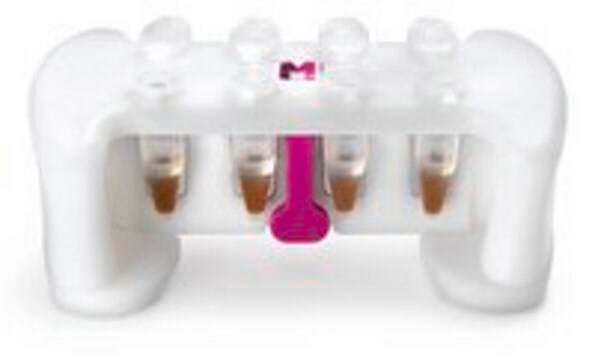
The PureProteome Magnetic Stand, 15 mL is designed for use with PureProteome Magnetic Beads in affinity purifications (e. g., His-tag purifications or immunoprecipitations).
Synonim(y):
Magnetic Stand for 15 mL Tubes, Magnetic Stand for PureProteome Magnetic Beads
Wybierz wielkość
2660,00 zł
2660,00 zł
Dostępne do wysyłki DZISIAJSzczegóły
Informacje o tej pozycji
Przejdź do
material
self-standing
feature
binder
manufacturer/tradename
PureProteome
technique(s)
RNA purification: suitable (with magnetic beads), protein purification: suitable
shipped in
ambient
Powiązane kategorie
1 of 4
Ta pozycja | LSKMAGL10 | LSKMAGS08 | LSKMAGG |
|---|---|---|---|
| feature binder | feature - | feature binder | feature - |
| manufacturer/tradename PureProteome | manufacturer/tradename PureProteome | manufacturer/tradename PureProteome | manufacturer/tradename PureProteome |
| material self-standing | material - | material self-standing | material - |
| technique(s) RNA purification: suitable (with magnetic beads) | technique(s) depletion: suitable (serum), protein purification: suitable | technique(s) RNA purification: suitable (with magnetic beads), protein purification: suitable | technique(s) depletion: suitable (serum), immunoprecipitation (IP): suitable, protein purification: suitable |
| shipped in ambient | shipped in wet ice | shipped in ambient | shipped in wet ice |


General description
Application
- purification with magnetic beads
- protein purification
- in the purification of the heat shock protein 90 (Hsp90)/ Cdc37 (cell division cycle 37)/ Cyclin-dependent kinase 4 (Cdk4) complex to incubate and wash the beads with 10 bed volumes of lysis buffer[1]
Other Notes
Certyfikaty analizy (CoA)
Poszukaj Certyfikaty analizy (CoA), wpisując numer partii/serii produktów. Numery serii i partii można znaleźć na etykiecie produktu po słowach „seria” lub „partia”.
Masz już ten produkt?
Dokumenty związane z niedawno zakupionymi produktami zostały zamieszczone w Bibliotece dokumentów.
Powiązane treści
Read an automated protocol for protein purification using PureProteome™ nickel magnetic beads on the AAW™ automated assay workstation and see results comparing manual vs automated runs.
Purification of recombinant proteins expressed in E.coli requires many time-consuming steps. To liberate the protein of interest, traditional bacterial lysis relies on the addition of lysozyme and a combination of sonication and repeated freeze/thaw cycles to break the bacterial cell wall. Disruption of the cell is accompanied by an increase in the viscosity of the suspension, due to the release of DNA. An endonuclease is added to digest the DNA, thus reducing the viscosity of the lysate. Finally, to render the lysate compatible with traditional purification methods, insoluble cell debris must be removed by centrifugation.
Traditionally, protein purification from E. coli consists of four distinct phases: harvest, bacterial cell lysis, lysate clarification and protein purification. Bacterial lysis typically requires several time-consuming, hands-on steps, such as freeze/thaw cycles and sonication. These harsh lysis techniques may negatively impact protein quality and contribute to sample-to-sample variability. To maintain protein activity and integrity, detergent-based lysis buffers are routinely used to avoid mechanical protein extraction methods. Regardless of the lysis method used, centrifugation is traditionally required to pellet unwanted cell debris and permit recovery of the clarified lysate. The final step, purification, is frequently performed using affinity media specific for expressed epitope tags. Agarose-based media have typically been used, either as a slurry in microcentrifuge tubes or packed into gravity-driven or spin columns. While easier to manipulate, columns are greatly affected by lysate consistency and carryover of cell debris, which can lead to clogging of the column frits.
Immunoprecipitation (IP) is a powerful technique for proteomic screening, biomarker discovery, and signaling network elucidation. It is frequently used to enrich target proteins from complex samples such as cell lysates or extracts. Traditional IP protocols use Protein A, Protein G or a mixture of Protein A and G coupled to a solid support resin, such as agarose beads, to capture an antigen/antibody complex in solution. As the number of samples increase, the traditional, manual IP method can be time-consuming. Processing of multiple IP reactions in parallel can introduce complexity, variability and pipetting errors, which may affect reproducibility.
Active Filters
Nasz zespół naukowców ma doświadczenie we wszystkich obszarach badań, w tym w naukach przyrodniczych, materiałoznawstwie, syntezie chemicznej, chromatografii, analityce i wielu innych dziedzinach.
Skontaktuj się z zespołem ds. pomocy technicznej