
CP35

Anti-PSD-95 (Ab-2) Mouse mAb (7E3-1B8)
liquid, clone 7E3-1B8, Calbiochem®
Zaloguj się, aby wyświetlić ceny organizacyjne i kontraktowe.
Wybierz wielkość
Zmień widok
Informacje o tej pozycji
NACRES:
NA.43
UNSPSC Code:
12352203
Clone:
7E3-1B8, monoclonal
Species reactivity:
rat
Application:
—
Citations:
15
Pomoc techniczna
Potrzebujesz pomocy? Nasz zespół doświadczonych naukowców chętnie Ci pomoże.
Pozwól nam pomócbiological source
mouse
Quality Level
antibody form
purified antibody
antibody product type
primary antibodies
clone
7E3-1B8, monoclonal
form
liquid
contains
≤0.1% sodium azide as preservative
species reactivity
rat
manufacturer/tradename
Calbiochem®
storage condition
OK to freeze, avoid repeated freeze/thaw cycles
dilution
(Immunoblotting (1:2000)
Immunofluorescence (1:200, indirect)
Immunoprecipitation )
isotype
IgG2a
shipped in
wet ice
storage temp.
−20°C
target post-translational modification
unmodified
Gene Information
rat ... Dlg4(29495)
General description
Purified mouse monoclonal antibody generated by immunizing BALB/c mice with the specified immunogen and fusing splenocytes with HL-1 mouse myeloma cells (see application references). Recognizes the ~95 kDa PSD-95 protein.
Recognizes the ~95 kDa PSD95 protein.
This Anti-PSD-95 (Ab-2) Mouse mAb (7E3-1B8) is validated for use in Immunoblotting, Immunofluorescence, Immunoprecipitation for the detection of PSD-95 (Ab-2).
Immunogen
Rat
recombinant, rat PSD95
Application
Immunoblotting (1:2000)
Immunofluorescence (1:200, indirect)
Immunoprecipitation (see comments)
Packaging
Please refer to vial label for lot-specific concentration.
Physical form
In PBS.
Preparation Note
Following initial thaw, aliquot and freeze (-20°C).
Other Notes
Brakeman, P.R., et al. 1997. Nature386, 284.
Hualing, D., et al. 1997. Nature386, 279.
Kennedy, M.B. 1997. Trends in Neurosci.20, 264.
Sanes, J. 1997. Curr. Opin. Neurobiol.7, 93.
Cho., K.-O., et al. 1992. Neuron9, 929.
Hualing, D., et al. 1997. Nature386, 279.
Kennedy, M.B. 1997. Trends in Neurosci.20, 264.
Sanes, J. 1997. Curr. Opin. Neurobiol.7, 93.
Cho., K.-O., et al. 1992. Neuron9, 929.
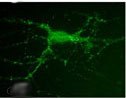
Immunofluorescent staining of rat hippocampal cells shows a staining pattern coincident with NMDA receptor staining at synaptic sites consistent with PSD-95′s proposed role in receptor clustering. This antibody has also been reported to work for immunoprecipitation. Fixation with cold methanol is recommended for immunofluorescence. Antibody should be titrated for optimal results in individual systems.
Legal Information
CALBIOCHEM is a registered trademark of Merck KGaA, Darmstadt, Germany
Disclaimer
Toxicity: Standard Handling (A)
Ta strona może zawierać tekst przetłumaczony maszynowo.
Still not finding the right product?
Wypróbuj nasze narzędzie Narzędzie selektora produktów, aby zawęzić opcje.
Klasa składowania
11 - Combustible Solids
wgk
WGK 1
flash_point_f
Not applicable
flash_point_c
Not applicable
Certyfikaty analizy (CoA)
Poszukaj Certyfikaty analizy (CoA), wpisując numer partii/serii produktów. Numery serii i partii można znaleźć na etykiecie produktu po słowach „seria” lub „partia”.
Masz już ten produkt?
Dokumenty związane z niedawno zakupionymi produktami zostały zamieszczone w Bibliotece dokumentów.
Hanyu Fu et al.
Acta physiologica (Oxford, England), 239(1), e14009-e14009 (2023-06-18)
General anesthesia can induce cognitive deficits in both humans and rodents, correlating with pathological alterations in the hippocampus. However, whether general anesthesia affects olfactory behaviors remains controversial as clinical studies have produced inconsistent results. Therefore, we aimed to investigate how
Sabrina Reinehr et al.
International journal of molecular sciences, 20(10) (2019-05-30)
Studies have suggested an involvement of the immune system in glaucoma. Hence, a rat experimental autoimmune glaucoma model (EAG) was developed to investigate the role of the immune response. Here, we transferred this model into mice. Either 0.8 mg/mL of
Natalie Wagner et al.
Biomolecules, 12(7) (2022-07-28)
The pathological events of age-related macular degeneration are characterized by degenerative processes involving the photoreceptor cells, retinal pigment epithelium (RPE), and the Bruch's membrane as well as choroidal alterations. To mimic in vivo interactions between photoreceptor cells and RPE cells
Numer pozycji handlu globalnego
| SKU | NUMER GTIN |
|---|---|
| CP35-100UL | 04055977220988 |