Przejdź do zawartości
Merck

ABS2210

Anti-ANO6/TMEM16F

Zaloguj się, aby wyświetlić ceny organizacyjne i kontraktowe.

Wybierz wielkość

ABS2210-25UL

717,00 zł

ABS2210-100UL

1820,00 zł

717,00 zł


Przewidywany termin wysyłki19 marca 2026Szczegóły


Informacje o tej pozycji

NACRES:
NA.41
UNSPSC Code:
12352203
Conjugate:
unconjugated
Clone:
polyclonal
Application:
WB
Citations:
-

Przejdź do

Pomoc techniczna
Potrzebujesz pomocy? Nasz zespół doświadczonych naukowców chętnie Ci pomoże.
Pozwól nam pomóc

biological source

rabbit

Quality Level

conjugate

unconjugated

antibody form

purified antibody, serum

antibody product type

primary antibodies

clone

polyclonal

mol wt

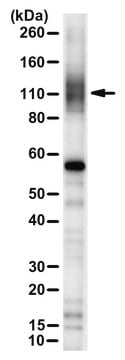
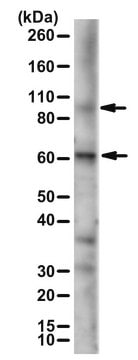
calculated mol wt 55.73 and 106.26 kDa, observed mol wt ~58 and 110 kDa

purified by

(Unpurified)

species reactivity

mouse

packaging

antibody small pack of 100 μL

technique(s)

western blot: suitable

isotype

IgG

epitope sequence

C-terminal half

Protein ID accession no.

UniProt accession no.

shipped in

dry ice

target post-translational modification

unmodified

Gene Information

Porównaj podobne pozycje

Wyświetl pełne porównanie

Pokaż różnice

1 of 4

Ta pozycja
ABC1411MABN641SAB3500318
biological source

rabbit

biological source

rabbit

biological source

mouse

biological source

rabbit

Quality Level

200

Quality Level

200

Quality Level

100

Quality Level

100

conjugate

unconjugated

conjugate

unconjugated

conjugate

-

conjugate

unconjugated

antibody form

purified antibody, serum

antibody form

purified antibody, serum

antibody form

purified antibody

antibody form

affinity isolated antibody

Gene Information

mouse ... Ano6(105722)

Gene Information

human ... RUNX1T1(862)

Gene Information

human ... ANO2(57101)

Gene Information

human ... ANO1(55107)

UniProt accession no.

Q6P9J9

UniProt accession no.

Q06455

UniProt accession no.

Q9NQ90

UniProt accession no.

Q5XXA6

General description

Anoctamin-6 (UniProt: Q6P9J9; also known as Small-conductance calcium-activated nonselective cation channel, SCAN channel, Transmembrane protein 16F) is encoded by the Ano6 (also known as Tmem16f) gene (Gene ID: 105722) in murine species. ANO6/TMEM16F is a multi-pass membrane glycoprotein with six cytoplasmic domains, ten transmembrane domains, and four extracellular domains. It is predominant expressed in epithelial tissues and is also found in skeletal system where it is primarily expressed in osteoblasts. It serves as a small-conductance calcium-activated nonselective cation (SCAN) channel that acts as a regulator of phospholipid scrambling in platelets, osteoblasts and fetal thymocytes. Phospholipid scrambling results in surface exposure of phosphatidylserine which in platelets is essential to trigger the clotting system. In osteoblasts it is essential for the deposition of hydroxyapatite during bone mineralization. ANO6/TMEM16F displays calcium-dependent phospholipid scramblase activity whereby it scrambles phosphatidylserine, phosphatidylcholine, and galactosylceramide. It is shown to be a key component of the plasma membrane repair mechanism triggered by pore-forming agents, such as bacterial toxins. This is achieved by activation of ANO6/TMEM16F by an increase in intracellular calcium resulting from flux of extracellular calcium ion. ANO6/TMEM16F is also shown to generate outwardly rectifying chloride channel currents in airway epithelial cells and Jurkat cells . (Ref.: Wu, N., et al. (2020). Cell Rep. 30(4); 1129-1140).

Immunogen

GST-tagged recombinant fragment corresponding to 65 amino acids from the C-terminal region of murine Anoctamin-6 (TMEM16F).

Application

Quality Control Testing

Evaluated by Western Blotting in Mouse thymus tissue lysate.

Western Blotting Analysis: A 1:1,000 dilution of this antibody detected ANO6/TMEM16F in Mouse thymus tissue lysate.

Tested Applicaitons

Western Blotting Analysis: A representative lot detected ANO6/TMEM16F in Western Blotting applications (Wu, N., et. al. (2020). Cell Rep. 30(4):1129-1140.e5).

Note: Actual optimal working dilutions must be determined by end user as specimens, and experimental conditions may vary with the end user
Anti-ANO6/TMEM16F, Cat. No. ABS2210, is a rabbit polyclonal antibody that detects Anoctamin-6 and is tested for use in Western Blotting.

Biochem/physiol Actions

This rabbit polyclonal antibody detects Anoctamin-6 (TMEM16F) in murine species. It targets and epitope within the C-terminal region and detects both isoforms 1 and 2.

Physical form

Rabbit polyclonal antibody in serum with 0.05% sodium azide.

Preparation Note

Store at -10°C to -25°C. Handling Recommendations: Upon receipt and prior to removing the cap, centrifuge the vial and gently mix the solution. Aliquot into microcentrifuge tubes and store at -20°C. Avoid repeated freeze/thaw cycles, which may damage IgG and affect product performance.

Other Notes

Concentration: Please refer to the Certificate of Analysis for the lot-specific concentration.

Disclaimer

Unless otherwise stated in our catalog or other company documentation accompanying the product(s), our products are intended for research use only and are not to be used for any other purpose, which includes but is not limited to, unauthorized commercial uses, in vitro diagnostic uses, ex vivo or in vivo therapeutic uses or any type of consumption or application to humans or animals.
Ta strona może zawierać tekst przetłumaczony maszynowo.

Nie możesz znaleźć właściwego produktu?  

Wypróbuj nasz Narzędzie selektora produktów.

Klasa składowania

10 - Combustible liquids

wgk

WGK 1

flash_point_f

Not applicable

flash_point_c

Not applicable


Certyfikaty analizy (CoA)

Poszukaj Certyfikaty analizy (CoA), wpisując numer partii/serii produktów. Numery serii i partii można znaleźć na etykiecie produktu po słowach „seria” lub „partia”.

Masz już ten produkt?

Dokumenty związane z niedawno zakupionymi produktami zostały zamieszczone w Bibliotece dokumentów.

Odwiedź Bibliotekę dokumentów

Questions

Reviews

No rating value

Active Filters

Nasz zespół naukowców ma doświadczenie we wszystkich obszarach badań, w tym w naukach przyrodniczych, materiałoznawstwie, syntezie chemicznej, chromatografii, analityce i wielu innych dziedzinach.

Skontaktuj się z zespołem ds. pomocy technicznej