

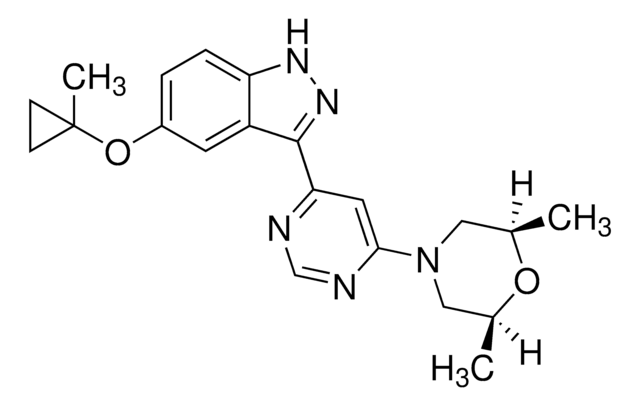
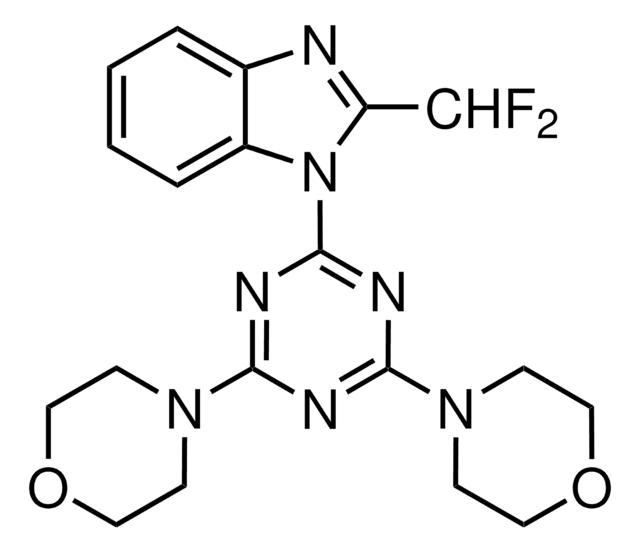
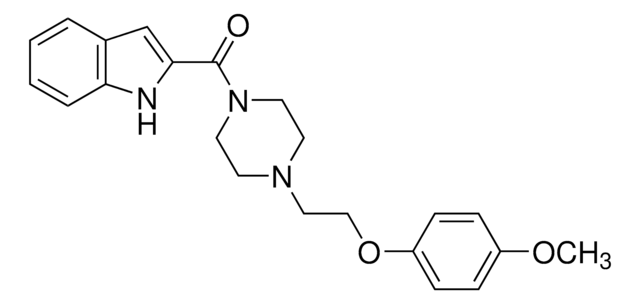
A recent review of the effects of PIKFYVE inhibitors on selectively terminating autophagy-dependent cancer cells points out that all of these inhibitors have secondary targets, but those of WX8 allow it to selectively kill PIKFYVE-dependent cancer cells (PMID: 38994949, PMCID: PMC11240546, DOI: 10.3390/cells13131096). Based on their chemical structures, PIKFYVE inhibitors can be categorized into four groups. At low concentrations, they all suppress cell proliferation by inhibiting PIKFYVE. At higher concentrations, they all increase the level of endoplasmic reticulum stress which triggers non-canonical apoptosis by inhibiting both PIKFYVE and their secondary targets (Table 1).
PIKFYVE inhibitors such as WX8 (group A) target PIKFYVE-dependent cells at both low and high concentrations, whereas PIKFYVE inhibitors such as PY201636, APY0201 and ESK981 (groups B, C and D) target PIKFYVE-dependent cells at low concentrations, but both PIKFYVE-dependent cells and ‘normal’ non-malignant cells at higher concentrations. These distinctions result from their ability to suppress synthesis of phosphatidylinositol 4,5-bisphosphate (PIP2) and phosphatidylinositol 3,4,5-trisphosphate (PIP3). The PIP2 phosphoinositide is essential for lysosome homeostasis and autophagy. The PIP3 phosphoinositide promotes cell growth, proliferation, differentiation, migration and survival.
In ‘normal’ cells, two pathways exist for biosynthesis of PIP2 and PIP3 (Fig. 1). PIP2 biosynthesis occurs predominantly by conversion of phosphatidylinositol (PI) into PI4P which is then converted into PIP2 predominantly by the PIP5K1C phosphoinositide kinase. PIP3 is then synthesized from PIP2 by PIK3C phosphoinositide kinases. A minor pathway also exists in which PI is converted into PIP2 by the actions of PIKFYVE and PIP4K2C. However, PIKFYVE-dependent cancer cells depend on both PIKFYVE and PIP4K2C for synthesis of PIP2, because they are deficient in PIP5K1C (PMID: 36803256, PMCID: PMC10392749, DOI: 10.1080/15548627.2023.2182594). Thus, WX8 (group A) selectively kills cells that depend on PIKFYVE and PIP4K2C for PIP2 biosynthesis; it does not interfere with biosynthesis of either PIP2 or PIP3 in normal cells. In contrast, higher concentrations of APY0201 (group B) and YM201636 (group C) target PIK3C as well as PIKFYVE. Therefore, higher concentrations they will inhibit PIP3 biosynthesis in normal cells as well as cancer cells. Similarly, higher concentrations of ESK981 (group D) target PIP5K1C as well as PIKFYVE. Therefore, higher concentrations will inhibit biosynthesis of both PIP2 and PIP3 in normal cells as well as cancer cells.
SML3288

WX8
≥98% (HPLC)
Sinónimos:
1H-Indole-3-carbaldehyde [4-anilino-6-(4-morpholinyl)-1,3,5-triazin-2-yl]hydrazone, 1H-Indole-3-carboxaldehyde, [4-(4-morpholinyl)-6-(phenylamino)-1,3,5-triazin-2-yl]hydrazone, Ro 91-4714, Ro-91-4714
Seleccione un Tamaño
| Talla/SKU | Disponibilidad | Precio |
|---|---|---|
5 mg | Póngase en contacto con nuestro Servicio de Atención al Cliente para disponibilidad | 58,00 € |
25 mg | Póngase en contacto con nuestro Servicio de Atención al Cliente para disponibilidad | 235,00 € |
Acerca de este artículo
58,00 €
Quality Segment
assay
≥98% (HPLC)
form
powder
color
white to beige
solubility
DMSO: 2 mg/mL, clear
storage temp.
2-8°C
SMILES string
C1(NC2=CC=CC=C2)=NC(N/N=C/C3=CNC4=C3C=CC=C4)=NC(N5CCOCC5)=N1
InChI key
NJIKLALXAPYTCW-BUVRLJJBSA-N
Biochem/physiol Actions
1 of 1
Este artículo | |||
|---|---|---|---|
| description ≥98% (HPLC) | description ≥98% (HPLC) | description ≥98% (HPLC) | description ≥98% (HPLC) |
| form powder | form powder | form powder | form powder |
| assay ≥98% (HPLC) | assay ≥98% (HPLC) | assay ≥98% (HPLC) | assay ≥98% (HPLC) |
| Quality Level 100 | Quality Level 100 | Quality Level 100 | Quality Level 100 |
| storage temp. 2-8°C | storage temp. 2-8°C | storage temp. −20°C | storage temp. 2-8°C |
| solubility DMSO: 2 mg/mL, clear | solubility DMSO: 2 mg/mL, clear (warmed) | solubility DMSO: 2 mg/mL, clear (warmed) | solubility DMSO: 2 mg/mL, clear |
| color white to beige | color white to beige | color white to beige | color white to beige |
Clase de almacenamiento
11 - Combustible Solids
wgk
WGK 3
flash_point_f
Not applicable
flash_point_c
Not applicable
Elija entre una de las versiones más recientes:
¿Ya tiene este producto?
Encuentre la documentación para los productos que ha comprado recientemente en la Biblioteca de documentos.
Filtros activos
-
WX8 Selectively Kills PIKFYVE-Dependent Cancer Cells
Traducir con Google- Recibió un incentivo para escribir esta reseña
- No
Recomienda este productoSí¿Le ha resultado útil?

