Saltar al contenido
Merck

P1495

Anti-Phosphatidylserine Receptor antibody produced in rabbit

1-1.5 mg/mL, affinity isolated antibody, buffered aqueous solution

Sinónimos:

Anti-PSR

Iniciar sesión para ver los precios por organización y contrato.

Seleccione un Tamaño

En este momento no podemos mostrarle ni los precios ni la disponibilidad

Acerca de este artículo

UNSPSC Code:
12352203
NACRES:
NA.41
MDL number:

Saltar a

Servicio técnico
¿Necesita ayuda? Nuestro equipo de científicos experimentados está aquí para ayudarle.
Permítanos ayudarle

Nombre del producto

Anti-Phosphatidylserine Receptor antibody produced in rabbit, 1-1.5 mg/mL, affinity isolated antibody, buffered aqueous solution

biological source

rabbit

conjugate

unconjugated

antibody form

affinity isolated antibody

antibody product type

primary antibodies

clone

polyclonal

form

buffered aqueous solution

mol wt

antigen 50-70 kDa

species reactivity

mouse, human

concentration

1-1.5 mg/mL

technique(s)

immunoprecipitation (IP): suitable
microarray: suitable
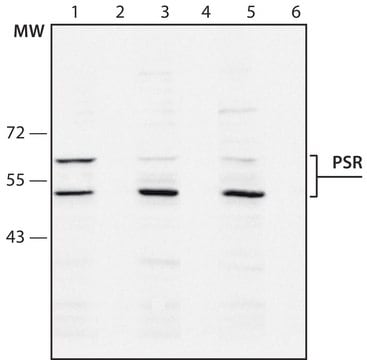
western blot: 1:1,000 using whole extracts of human HeLa or A549 cells
western blot: 1:500 using whole extracts of mouse NIH3T3 cells

UniProt accession no.

shipped in

dry ice

storage temp.

−20°C

target post-translational modification

unmodified

Quality Level

Gene Information

human ... JMJD6(23210)
mouse ... Jmjd6(107817)

Comparar elementos similares

Ver comparación completa

Mostrar Diferencias

1 of 4

Este artículo
P0497R8656P5367
conjugate

unconjugated

conjugate

unconjugated

conjugate

unconjugated

conjugate

unconjugated

Quality Level

200

Quality Level

200

Quality Level

200

Quality Level

200

antibody form

affinity isolated antibody

antibody form

affinity isolated antibody

antibody form

affinity isolated antibody

antibody form

IgG fraction of antiserum

biological source

rabbit

biological source

rabbit

biological source

rabbit

biological source

rabbit

species reactivity

mouse, human

species reactivity

human, mouse, rat

species reactivity

rat, human, mouse

species reactivity

human, rat, mouse

clone

polyclonal

clone

polyclonal

clone

polyclonal

clone

polyclonal

Application

Anti-Phosphatidylserine Receptor antibody is sutiable for use in immunoprecipitation and immunoblotting (~50-70 kDa) applications.

Biochem/physiol Actions

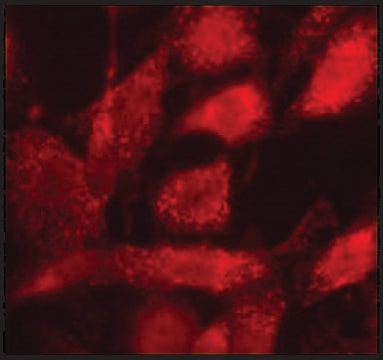
Anti-Phosphatidylserine Receptor (PSR) recognizes human and mouse phosphatidylserine receptor (PSR). Detection of the phosphatidylserine receptor by immunoblotting is specifically inhibited by the immunizing peptide, a synthetic peptide corresponding to amino acid residues 363-381 of the human phosphatidylserine receptor, conjugated to maleimide-activated KLH as immunogen.
Phosphatidylserine receptor (PSR) is very susceptible to cleavage by protease or elastase. PSR engagement plays an important role in macro-pinocytosis and uptake of tethered apoptotic cells. Cooperation with other receptors and their ligands may also be needed for ingestion of apoptotic cells. PSR is involved in suppression of inflammatory and immune responses.

Disclaimer

Unless otherwise stated in our catalog or other company documentation accompanying the product(s), our products are intended for research use only and are not to be used for any other purpose, which includes but is not limited to, unauthorized commercial uses, in vitro diagnostic uses, ex vivo or in vivo therapeutic uses or any type of consumption or application to humans or animals.

General description

Phosphatidylserine Receptor (PSR) is an evolutionarily conserved glycoprotein that is widely expressed in cells and tissues. It is very susceptible to cleavage by protease or elastase. PSR engagement plays an important role in macro-pinocytosis and uptake of tethered apoptotic cells. Cooperation with other receptors and their ligands may also be needed for ingestion of apoptotic cells. PSR is involved in suppression of inflammatory and immune responses.
Phosphatidylserine receptor belongs to the group of Jumonji domain containing protein 6 (JMJD6). It is known to be localized to the phagocytes. PSR is an evolutionarily conserved glycoprotein that is widely expressed in cells and tissues.

Immunogen

synthetic peptide corresponding to amino acid residues 363-381 of the human phosphatidylserine receptor conjugated to maleimide-activated KLH. The corresponding sequence in mouse differs by one amino acid.

Physical form

Solution in 0.01 M phosphate buffered saline, pH 7.4, containing 1% bovine serum albumin and 15 mm sodium azide.

¿No encuentra el producto adecuado?  

Pruebe nuestro Herramienta de selección de productos.

Clase de almacenamiento

12 - Non Combustible Liquids

wgk

nwg

flash_point_f

Not applicable

flash_point_c

Not applicable


Elija entre una de las versiones más recientes:

Certificados de análisis (COA)

Lot/Batch Number

¿No ve la versión correcta?

Si necesita una versión concreta, puede buscar un certificado específico por el número de lote.

¿Ya tiene este producto?

Encuentre la documentación para los productos que ha comprado recientemente en la Biblioteca de documentos.

Visite la Librería de documentos

Differential effects of apoptotic versus lysed cells on macrophage production of cytokines: role of proteases
Fadok VA, et al.
Journal of immunology (Baltimore, Md. : 1950), 166(11), 6847-6854 (2001)
Eva Pallinger et al.
Scientific reports, 8(1), 4662-4662 (2018-03-20)
Earlier evidence suggests, that the embryo signals to the maternal immune system. Extracellular vesicles (EVs) are produced by all types of cells, and because they transport different kinds of molecules from one cell to the other, they can be considered
Phosphatidylserine, a death knell
Schlegel RA and Williamson P
Cell Death and Differentiation, 8(6), 551-551 (2001)
JMJD6 promotes hepatocellular carcinoma carcinogenesis by targeting CDK4
Wan J, et al.
International Journal of Cancer. Journal International Du Cancer, 144(10), 2489-2500 (2019)
Bianca Cioni et al.
Molecular cancer research : MCR, 21(6), 614-627 (2023-03-04)
Breast cancer is the most common type of cancer in women worldwide, with the luminal subtype being the most widespread. Although characterized by better prognosis compared with other subtypes, luminal breast cancer is still considered a threatening disease due to

Contenido relacionado

Instructions

Preguntas

Revisiones

Sin puntuación

Filtros activos

Nuestro equipo de científicos tiene experiencia en todas las áreas de investigación: Ciencias de la vida, Ciencia de los materiales, Síntesis química, Cromatografía, Analítica y muchas otras.

Póngase en contacto con el Servicio técnico