


Cells are thawed and expanded in RPMI-1640 (Product No. R0883), 10% FBS (Product No. ES-009-B), 1X L-Glutamine (Product No. TMS-002-C), 1X non-essential amino acids (Product No. TMS-001-C), 1X HEPES Buffer Solution (Product No. TMS003-C) and 0.0054X β-Mercaptoethanol (Product No. ES-007-E).
SCC142M

DC2.4 Mouse Dendritic Cell Line
Mouse
Sinónimos:
DC 2.4 Cell Line
Iniciar sesión para ver los precios por organización y contrato.
Seleccione un Tamaño
Cambiar Vistas
| A ustedes/SKU | Disponibilidad | Precio |
|---|---|---|
1 vial | Póngase en contacto con nuestro Servicio de Atención al Cliente para disponibilidad | 1650,00 € |
Acerca de este artículo
UNSPSC Code:
41106514
NACRES:
NA.81
eCl@ss:
32011203
Biological source:
mouse
1650,00 €
Póngase en contacto con nuestro Servicio de Atención al Cliente para disponibilidad
Servicio técnico
¿Necesita ayuda? Nuestro equipo de científicos experimentados está aquí para ayudarle.
Permítanos ayudarleNombre del producto
DC2.4 Mouse Dendritic Cell Line, DC2.4 dendritic cell line can be used to study dendritic cell biology and immune response.
biological source
mouse
Quality Segment
technique(s)
cell culture | mammalian: suitable
General description
Listen to an Audio Overview
Dendritic cells (DC) are the antigen presenting cells of the immune system and are found in most tissues, particularly those that are in contact with the external environment (e.g., skin and the inner linings of the nose, lungs, stomach and intestine). First described in 1973 , one of the primary functions of DCs is to phagocytose foreign pathogens and present the processed antigens to naïve T cells to regulate adaptive immune responses. DCs also express Toll-like receptors and help regulate the innate immune responses. Despite their distribution in most tissues, DC are present at low numbers in vivo and are difficult to maintain in vitro. These difficulties have limited the studies of dendritic cells.
Dendritic cells (DC) are the antigen presenting cells of the immune system and are found in most tissues, particularly those that are in contact with the external environment (e.g., skin and the inner linings of the nose, lungs, stomach and intestine). First described in 1973 , one of the primary functions of DCs is to phagocytose foreign pathogens and present the processed antigens to naïve T cells to regulate adaptive immune responses. DCs also express Toll-like receptors and help regulate the innate immune responses. Despite their distribution in most tissues, DC are present at low numbers in vivo and are difficult to maintain in vitro. These difficulties have limited the studies of dendritic cells.
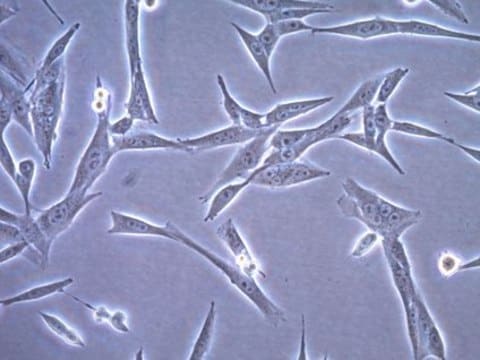
.4 are immortalized murine dendritic cells created by transducing bone marrow isolates of C57BL/6 mice with retrovirus vectors expressing murine granulocyte-macrophage CSF (GM-CSF) and the myc and raf oncogenes . DC2.4 exhibits characteristic features of dendritic cells including cell morphology and the expression of dendritic cell-specific markers and the ability to phagocytose and present exogenous antigens on both MHC class I and class II molecules .
Application
Research Category
Immune Response
Inflammation & Immunology
Immune Response
Inflammation & Immunology
Subject to local law, this product is intended to be sold for internal in vitro research use only subject to terms and conditions found here: www.sigmaaldrich.com/restrictedcelluse. This product may not be: re-engineered or copied; used to make derivatives, modifications or functional equivalents; used to obtain patents or other IP claiming use of the product; used to develop, test, or manufacturer a commercial product; used as a component in a commercial product; resold or licensed; used in any clinical applications or trials; or used in humans. A license or limited commercial use agreement is required for use by any for-profit entity, use in services, and use in sponsored academic research. For information regarding any such use, please contact licensing@milliporesigma.com.
Biochem/physiol Actions
Dendritic Cell Line
Preparation Note
Store in liquid nitrogen. The cells can be cultured for at least 10 passages after initial thawing without significantly affecting the cell marker expression and functionality.
Analysis Note
• Each vial contains ≥ 1X10⁶ viable cells.
• Cells are tested negative for infectious diseases by a Mouse Essential CLEAR panel by Charles River Animal Diagnostic Services.
• Cells are verified to be of mouse origin and negative for inter-species contamination from rat, chinese hamster, Golden Syrian hamster, human and non-human primate (NHP) as assessed by a Contamination Clear panel by Charles River Animal Diagnostic Services.
• Cells are negative for mycoplasma contamination.
• Cells are tested negative for infectious diseases by a Mouse Essential CLEAR panel by Charles River Animal Diagnostic Services.
• Cells are verified to be of mouse origin and negative for inter-species contamination from rat, chinese hamster, Golden Syrian hamster, human and non-human primate (NHP) as assessed by a Contamination Clear panel by Charles River Animal Diagnostic Services.
• Cells are negative for mycoplasma contamination.
1 of 1
Este artículo | |||
|---|---|---|---|
| description DC2.4 dendritic cell line can be used to study dendritic cell biology and immune response. | description CT-2A mouse glioma cell line is a valuable mouse model for therapeutic research on brain malignancies. | description CT-2A-Luc mouse glioma cell line is a valuable mouse model for therapeutic research on brain malignancies. | description - |
| biological source mouse | biological source mouse | biological source mouse | biological source mouse |
| technique(s) cell culture | mammalian: suitable | technique(s) cell culture | mammalian: suitable | technique(s) cell culture | mammalian: suitable | technique(s) cell culture | mammalian: suitable |
| Quality Level 100 | Quality Level - | Quality Level - | Quality Level - |
Clase de almacenamiento
12 - Non Combustible Liquids
wgk
WGK 1
flash_point_f
Not applicable
flash_point_c
Not applicable
Elija entre una de las versiones más recientes:
¿Ya tiene este producto?
Encuentre la documentación para los productos que ha comprado recientemente en la Biblioteca de documentos.
-
Hello, I wanted to know what culture media should be used for this cell line.
1 respuesta-
¿Le ha resultado útil?
-