Skip to Content
Merck

Skip To

MABE1885

Anti-Histone H1 Antibody, clone 1G6

clone 1G6, from mouse

Synonym(s):

H1

Sign In to View Organizational & Contract Pricing.

Select a Size

Change View
Size/SKUAvailabilityPrice
25 μg

Estimated to ship onJune 12, 2026fromAreál Kühne+Nagel spol. s r.o.

CZK 4,040.00
100 μg

Estimated to ship onJune 12, 2026fromAreál Kühne+Nagel spol. s r.o.

CZK 11,200.00

About This Item

UNSPSC Code:
12352203
NACRES:
NA.43
eCl@ss:
32160702
Conjugate:
unconjugated
Clone:
1G6, monoclonal
Application:
ChIP, IP, WB
Citations:
-

CZK 4,040.00


Estimated to ship onJune 12, 2026Details


Request a Custom Order
Technical Service
Need help? Our team of experienced scientists is here for you.
Let Us Assist


biological source

mouse

conjugate

unconjugated

antibody form

purified immunoglobulin

antibody product type

primary antibodies

clone

1G6, monoclonal

species reactivity

Drosophila

packaging

antibody small pack of 25 μg

technique(s)

ChIP: suitable (ChIP-seq), immunoprecipitation (IP): suitable, western blot: suitable

isotype

IgG1κ

NCBI accession no.

UniProt accession no.

target post-translational modification

unmodified

General description

Histone H1 (UniProt: P02255; also known as H1) is encoded by the His 1 gene (Gene ID: 318854) in Drosophila species. Histone H1 is a linker histone that is involved in the organization and maintenance of chromatin higher order structure and plays an active role in the control of DNA replication and cell proliferation. The linker histone H1 family members are a key component of chromatin and bind to the nucleosomal core particle around the DNA entry and exit sites. Histone H1 is essential for the condensation of nucleosome chains into higher-order structures. In metazoans, H1 histones are smaller in size with about 200 amino acids. They have a short N-terminal tail, a central globular domain, and a long basic C-terminal tail. The central globular domain is shown to be highly conserved among all H1 subtypes. Manipulating levels of H1 histone can lead to both up- and down-regulation of specific genes. Depletion of H1 results in a massively altered chromosome structure with loss of chromosome banding. In Drosophila, a 20% reduction in H1 content leads to cessation of growth beyond the larval stage. Histone H1 undergoes phosphorylation mainly in the tail region, especially the C-terminal tail, where several {(S/T)-P-X-(K/R)} motifs are located that are recognized by cyclin-dependent kinases (CDKs). Phosphorylation levels are reported to be lowest during the G1 phase of the cell cycle and increase during S phase and reach maximum levels in mitosis. (Ref.: Hergeth, SP., and Schneider, R (2015). EMBO Rep. 16(11); 1439-1453).
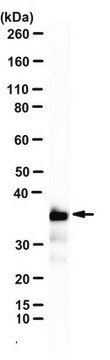
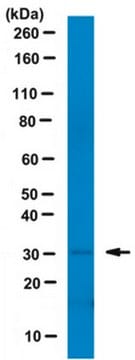
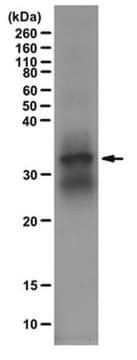
~35 kDa observed; 26.36 kDa calculated. Uncharacterized bands may be observed in some lysate(s).

Immunogen

GST-tagged recombinant fragment corresponding to 148 amino acids from the C-terminal half of Drosophila Histone H1.

Application

Anti-Histone H1, clone 1G6 Antibody, Cat. No. MABE1885, is a highly specific mouse monoclonal antibody that targets Drosophila Histone H1 and has been tested for use in Chromatin Immunoprecipitation (ChIP), ChIP-seq, Immunoprecipitation, and Western Blotting.
ChIP-seq Analysis: A representative lot detected Histone H1 in ChIP-seq applications (Iwasaki, Y.W., et. al. (2016). Mol Cell. 63(3):408-19).

Immunoprecipitation Analysis: A representative lot immunoprecipitated Histone H1 in Immunoprecipitation applications (Iwasaki, Y.W., et. al. (2016). Mol Cell. 63(3):408-19).

Chromatin Immunoprecipitation Analysis (ChIP): A representative lot immunoprecipitated Histone H1 in Chromatin Immunoprecipitation applications (Iwasaki, Y.W., et. al. (2016). Mol Cell. 63(3):408-19).

Biochem/physiol Actions

Clone 1G6 is a mouse monoclonal antibody that detects Histone H1 in Drosophila species.

Physical form

Format: Purified

Analysis Note

Evaluated by Western Blotting in Drosophila S2 cell lysate.

Western Blotting Analysis: A 1:500 dilution of this antibody detected Histone H1 in Drosophila S2 cell lysate.

Other Notes

Concentration: Please refer to lot specific datasheet.

Compare Similar Items

View Full Comparison

Show Differences

1 of 1

This Item
MABE446ABE446MABE952
species reactivity

Drosophila

species reactivity

mouse, bovine, Xenopus, human, rat

species reactivity

human

species reactivity

human, mouse

conjugate

unconjugated

conjugate

unconjugated

conjugate

-

conjugate

-

antibody form

purified immunoglobulin

antibody form

purified immunoglobulin

antibody form

affinity isolated antibody

antibody form

purified antibody

clone

1G6, monoclonal

clone

34, monoclonal

clone

polyclonal

clone

1D4F2, monoclonal

biological source

mouse

biological source

mouse

biological source

rabbit

biological source

rat

technique(s)

ChIP: suitable (ChIP-seq), western blot: suitable, immunoprecipitation (IP): suitable

technique(s)

flow cytometry: suitable, immunocytochemistry: suitable, immunohistochemistry: suitable, western blot: suitable

technique(s)

dot blot: suitable, immunoprecipitation (IP): suitable, western blot: suitable

technique(s)

ChIP: suitable (ChIP-seq), immunocytochemistry: suitable, immunoprecipitation (IP): suitable, western blot: suitable


Still not finding the right product?

Try our Product Selector Tool to narrow your options


Certificates of Analysis (COA)

Search for Certificates of Analysis (COA) by entering the products Lot/Batch Number. Lot and Batch Numbers can be found on a product’s label following the words ‘Lot’ or ‘Batch’.

Already Own This Product?

Find documentation for the products that you have recently purchased in the Document Library.

Visit the Document Library


Questions

Reviews

No rating value

Active Filters