Direkt zum Inhalt
Merck

RAB0019

Human Amphiregulin ELISA Kit

for serum, plasma, cell culture supernatant and urine

Synonym(e):

AR

Anmelden zur Ansicht der Organisations- und Vertragspreise.

Größe auswählen

1 KIT

€ 545,00

€ 545,00


Versand in der Regel in 1 Woche. (Bei Bestellungen außerhalb der USA und Europas rechnen Sie bitte zusätzlich 1-2 Wochen für die Lieferung ein)


Über diesen Artikel

NACRES:
NA.32
UNSPSC Code:
41116158
Gene information:
human ... AREG(374)
Input:
sample type plasma
sample type cell culture supernatant(s)
sample type urine
sample type serum
Species reactivity:
human
Storage temp.:
−20°C
Shipped in:
wet ice

Fortfahren mit

Technischer Dienst
Benötigen Sie Hilfe? Unser Team von erfahrenen Wissenschaftlern ist für Sie da.
Unterstützung erhalten

species reactivity

human

packaging

kit of 96 wells (12 strips x 8 wells)

technique(s)

ELISA: suitable, capture ELISA: suitable

input

sample type plasma
sample type cell culture supernatant(s)
sample type urine
sample type serum

assay range

inter-assay cv: <12%
intra-assay cv: <10%
sensitivity: 10 pg/mL
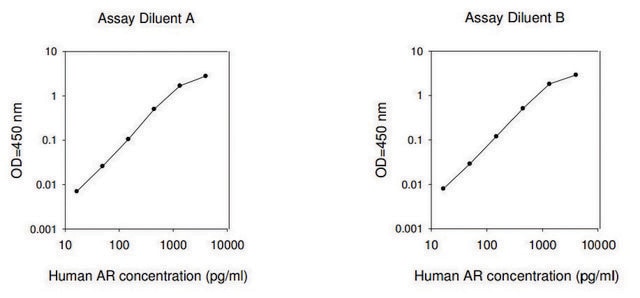
standard curve range: 16.46-4000 pg/mL

detection method

colorimetric

shipped in

wet ice

storage temp.

−20°C

Gene Information

human ... AREG(374)

Ähnliche Artikel vergleichen

Vollständigen Vergleich anzeigen

Unterschiede anzeigen

1 of 4

Dieser Artikel
RAB0020RAB0013RAB0130
species reactivity

human

species reactivity

mouse

species reactivity

human

species reactivity

human

Gene Information

human ... AREG(374)

Gene Information

mouse ... Areg(11839)

Gene Information

human ... ALCAM(214)

Gene Information

human ... CXCL5(6374)

assay range

inter-assay cv: <12%
intra-assay cv: <10%
sensitivity: 10 pg/mL
standard curve range: 16.46-4000 pg/mL

assay range

inter-assay cv: <12%
intra-assay cv: <10%
sensitivity: 2 pg/mL
standard curve range: 1.1-800 pg/mL

assay range

inter-assay cv: <12%
intra-assay cv: <10%
sensitivity: 15 pg/mL
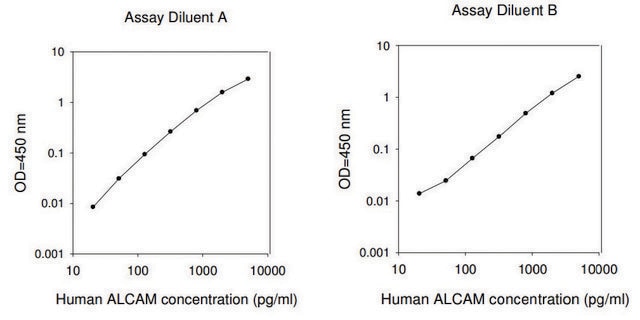
standard curve range: 20.48-5000 pg/mL

assay range

inter-assay cv: <12%
intra-assay cv: <10%
sensitivity: 10 pg/mL
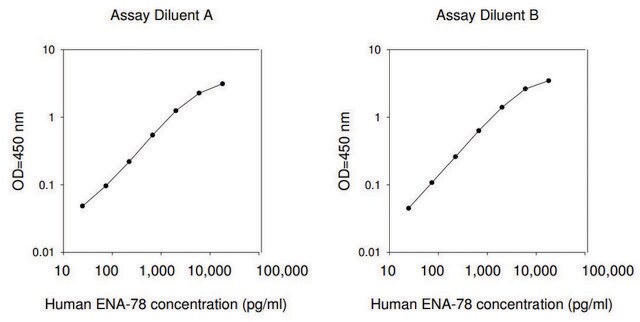
standard curve range: 24.69-18000 pg/mL

input

sample type plasma
sample type cell culture supernatant(s)
sample type urine
sample type serum

input

sample type plasma
sample type serum
sample type cell culture supernatant(s)

input

sample type serum
sample type cell culture supernatant(s)
sample type plasma
sample type urine

input

sample type urine
sample type plasma
sample type cell culture supernatant(s)
sample type serum

detection method

colorimetric

detection method

colorimetric

detection method

colorimetric

detection method

colorimetric

technique(s)

ELISA: suitable, capture ELISA: suitable

technique(s)

ELISA: suitable, capture ELISA: suitable

technique(s)

ELISA: suitable, capture ELISA: suitable

technique(s)

ELISA: suitable, capture ELISA: suitable

General description

The Human Amphiregulin (AR) ELISA (Enzyme-Linked Immunosorbent Assay) kit is an in vitro enzyme-linked immunosorbent assay for the quantitative measurement of human AR in serum, plasma, cell culture supernatants and urine.
The AREG (amphiregulin) gene codes for a shedding ectodomain, derived from a transmembrane precursor of 252 amino acids. The encoded protein is released into blood or cellular vicinity through autocrine and paracrine.[1][2] Areg is predominantly expressed in epithelial, mesenchymal cells and also by active immune cells.[1] The AREG gene is mapped to human chromosome 4q13.3.[2]

Immunogen

Recombinant Human Amphiregulin

Application

Please refer to the attached General ELISA KIT Procedure (sandwich, competitive & Indirect ELISA)
Human Amphiregulin ELISA Kit has been used to estimate the plasma concentration of amphiregulin by ELISA.[3]

Biochem/physiol Actions

Areg (amphiregulin) stimulates growth-signaling pathways via EGF (epidermal growth factor) receptors. Areg participates in the organogenesis of mammary gland. It is regarded as a pro-oncogenic factor and contributes to tumor progression. Upregulation of the AREG gene is observed in cancer and resists chemotherapy.[1] AREG reduces E-cadherin expression in order to promote invasion and progression of ovarian cancer.[4]

Other Notes

A sample Certificate of Analysis is available for this product.
Please type the word sample in the text box provided for lot number.

Kit-Komponenten auch einzeln erhältlich

Produkt-Nr.
Beschreibung
SDB

  • RABELADAELISA 1X Assay/Sample Diluent Buffer A (Item D1)SDB

  • RABELADBELISA 5X Assay/Sample Diluent Buffer B (Item E1)SDB

  • RABSTOP3ELISA Stop Solution (Item I)SDB

  • RABTMB3ELISA Colorimetric TMB Reagent (HRP Substrate, Item H)SDB

  • RABWASH420X Wash Buffer (Item B)SDB

pictograms

Corrosion

signalword

Warning

hcodes

Hazard Classifications

Met. Corr. 1

Lagerklasse

10 - Combustible liquids


Hier finden Sie alle aktuellen Versionen:

Analysenzertifikate (COA)

Lot/Batch Number

Die passende Version wird nicht angezeigt?

Wenn Sie eine bestimmte Version benötigen, können Sie anhand der Lot- oder Chargennummer nach einem spezifischen Zertifikat suchen.

Besitzen Sie dieses Produkt bereits?

In der Dokumentenbibliothek finden Sie die Dokumentation zu den Produkten, die Sie kürzlich erworben haben.

Die Dokumentenbibliothek aufrufen

Sprouty2 inhibits amphiregulin-induced down-regulation of E-cadherin and cell invasion in human ovarian cancer cells.
Cheng J C, et al.
Oncotarget, 7(49), 81645-81645 (2016)
Abnormal amphiregulin expression correlates with gastric cancer prognosis.
Wang B, et al.
Oncotarget, 7(47), 76684-76684 (2016)
Predictive blood plasma biomarkers for EGFR inhibitor-induced skin rash.
Hichert V, et al.
Oncotarget, 8(21), 35193-35193 (2017)
Correlation between Trop2 and amphiregulin coexpression and overall survival in gastric cancer.
Zhao W, et al.
Cancer Medicine, 6(5), 994-1001 (2017)
Masaru Karakawa et al.
Journal of cellular physiology, 229(12), 1935-1945 (2014-04-09)
The cutaneous T cell-attracting chemokine (CTACK)/CCL27 is indispensable in skin inflammation. CTACK/CCL27 is exclusively produced by epidermal keratinocytes to attract CCR10-expressing T lymphocytes to the skin. We investigated the mechanism of CTACK/CCL27 production from normal human epidermal keratinocytes (NHEKs) by

Verwandter Inhalt

Questions

Reviews

No rating value

Active Filters

Unser Team von Wissenschaftlern verfügt über Erfahrung in allen Forschungsbereichen einschließlich Life Science, Materialwissenschaften, chemischer Synthese, Chromatographie, Analytik und vielen mehr..

Setzen Sie sich mit dem technischen Dienst in Verbindung