Direkt zum Inhalt
Merck

Fortfahren mit

ABS2231

Anti-phospho RyR2 (Ser2808)

Synonym(e):

RYR-2, RyR2, hRYR-2, Cardiac muscle ryanodine receptor, Cardiac muscle ryanodine receptor-calcium release channel, Type 2 ryanodine receptor

Anmelden zur Ansicht der Organisations- und Vertragspreise.

Größe auswählen

Ansicht ändern
PackungsgrößeSKUVerfügbarkeitPreis

Über diesen Artikel

NACRES:
NA.41
UNSPSC Code:
12352203
Species reactivity:
rabbit
Technique(s):
western blot: suitable
Application:
WB
Citations:
-
Preise und Verfügbarkeit sind derzeit nicht verfügbar.
Technischer Dienst
Benötigen Sie Hilfe? Unser Team von erfahrenen Wissenschaftlern ist für Sie da.
Unterstützung erhalten


biological source

rabbit

Quality Segment

antibody form

purified antibody

antibody product type

primary antibodies

mol wt

calculated mol wt 564.57 kDa, observed mol wt ~565 kDa

purified by

affinity chromatography

species reactivity

rabbit

species reactivity (predicted by homology)

mouse, human

packaging

antibody small pack of 100 μg

technique(s)

western blot: suitable

isotype

IgG

epitope sequence

C-terminal cytoplasmic domain

Protein ID accession no.

UniProt accession no.

storage temp.

-10 to -25°C

target post-translational modification

phosphorylation (pSer2808)

Gene Information

human ... RYR2(55193)

General description

Ryanodine receptor 2 (UniProt: Q92736; also known as RYR-2, RyR2, hRYR-2, Cardiac muscle ryanodine receptor, Cardiac muscle ryanodine receptor-calcium release channel, Type 2 ryanodine receptor) is encoded by the RYR2 gene (Gene ID: 6262) in human. Ryanodine receptors are large ion channels that are located in the sarcoplasmic/endoplasmic reticulum membrane and are responsible for the release of Ca2+. They form homotetramers with a mushroom-like shape, consisting of a large cytoplasmic head and transmembrane stalk. In mammals three isoforms of RYR have been described (RYR 1-3) that are regulated by phosphorylation, redox modifications, and a variety of small proteins, and ions. Ryanodine receptor 2 is a multi-pass membrane protein with two cytoplasmic domains (aa 1-4281 and 4871-4967), six transmembrane domains, and one pore-forming domain (aa 4820-4829). It is the predominant form in cardiac muscle and is also expressed in Purkinje cells of cerebellum and cerebral cortex. It plays a key role in triggering cardiac muscle contraction and aberrant channel activation can lead to cardiac arrhythmia. Channel activity is modulated by ryanodine that binds to the open Ca2+-release channel with high affinity. At low concentrations, ryanodine maintains the channel in an open conformation, but high concentrations of ryanodine inhibit channel activity. Channel activity is also modulated by phosphorylation. Phosphorylation at serine 2808 and serine 2814 is shown to increase the open probability of the calcium channel. Phosphorylation is increased in failing heart, leading to calcium leaks, and increased cytoplasmic Ca2+ levels. (Ref.: Xiao, Z., et al. (2016). J. Biol. Chem. 291(47); 24528-24537; Lanner, JT., et al. (2010). Cold Spring Harb. Perspect. Biol. 2(11); a003996).

Immunogen

A KLH-conjugated linear peptide corresponding to 8 amino acids surrounding phosphoserine 2808 from human Ryanodine receptor 2.

Application

Quality Control Testing

Evaluated by Western Blotting in rabbit skeleton muscle microsomal preparation.

Western Blotting Analysis (WB): A 1:300 dilution of this antibody detected RyR2 phosphorylated on serine 2808 in rabbit skeleton muscle microsomal preparations, but not in microsomes treated with protein phosphatase.

Note: Actual optimal working dilutions must be determined by end user as specimens, and experimental conditions may vary with the end user

Biochem/physiol Actions

This rabbit polyclonal antibody detects Ryanodine receptor 2 (RyR2) phosphorylated on serine 2808.

Physical form

Purified rabbit polyclonal antibody in buffer containing 0.1 M Tris-Glycine (pH 7.4), 150 mM NaCl without azide

Preparation Note

1.0 mg/mL. Please refer to guidance on suggested starting dilutions and/or titers per application and sample type.
Store at -10°C to -25°C. Handling Recommendations: Upon receipt and prior to removing the cap, centrifuge the vial and gently mix the solution. Aliquot into microcentrifuge tubes and store at -20°C. Avoid repeated freeze/thaw cycles, which may damage IgG and affect product performance.

Other Notes

Concentration: Please refer to the Certificate of Analysis for the lot-specific concentration.

Disclaimer

Unless otherwise stated in our catalog or other company documentation accompanying the product(s), our products are intended for research use only and are not to be used for any other purpose, which includes but is not limited to, unauthorized commercial uses, in vitro diagnostic uses, ex vivo or in vivo therapeutic uses or any type of consumption or application to humans or animals.

Ähnliche Artikel vergleichen

Vollständigen Vergleich anzeigen

Unterschiede anzeigen

1 of 1

Dieser Artikel
R129R128C3868
antibody form

purified antibody

antibody form

ascites fluid

antibody form

ascites fluid

antibody form

affinity isolated antibody

species reactivity

rabbit

species reactivity

human, rat, rabbit, canine, mink, bovine, frog, fish, primate, chicken, mouse, sheep

species reactivity

canine, rabbit, rat, chicken, amphibian, guinea pig, mouse, fish, human

species reactivity

rat, human

biological source

rabbit

biological source

mouse

biological source

mouse

biological source

rabbit

storage temp.

-10 to -25°C

storage temp.

−20°C

storage temp.

−20°C

storage temp.

−20°C

technique(s)

western blot: suitable

technique(s)

direct immunofluorescence: suitable, immunohistochemistry (frozen sections): 1:1,000, immunoprecipitation (IP): suitable, western blot: 1:5,000

technique(s)

immunohistochemistry (frozen sections): 1 μg/mL using 4% paraformaldehyde-fixed, frozen mouse brain tissue, immunoprecipitation (IP): suitable, western blot (chemiluminescent): 1 μg/mL

technique(s)

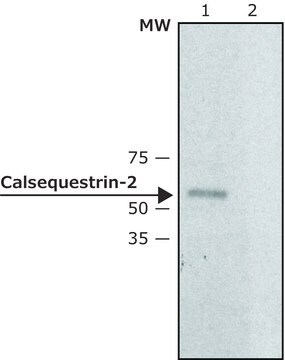
western blot: 0.5-1.0 μg/mL using HEK-293T cells expressing human calsequestrin-2, western blot: 0.5-1.0 μg/mL using extract of rat cardiac muscle (S1 fraction)

UniProt accession no.

Q92736

UniProt accession no.

P21817

UniProt accession no.

P21817

UniProt accession no.

O14958


Still not finding the right product?

Probieren Sie unser Produkt-Auswahlhilfe, um Ihre Auswahl einzugrenzen


Lagerklasse

12 - Non Combustible Liquids

wgk

WGK 1

flash_point_f

Not applicable

flash_point_c

Not applicable


Analysenzertifikate (COA)

Suchen Sie nach Analysenzertifikate (COA), indem Sie die Lot-/Chargennummer des Produkts eingeben. Lot- und Chargennummern sind auf dem Produktetikett hinter den Wörtern ‘Lot’ oder ‘Batch’ (Lot oder Charge) zu finden.

Besitzen Sie dieses Produkt bereits?

In der Dokumentenbibliothek finden Sie die Dokumentation zu den Produkten, die Sie kürzlich erworben haben.

Die Dokumentenbibliothek aufrufen


Global Trade Item Number

SKUGTIN
ABS2231-25UG04065269135128
ABS2231-100UG04065269135111

Questions

Reviews

No rating value

Active Filters