
Przejdź do
PLA0292

Goat anti-RNA Polymerase II Antibody, Affinity Purified
Powered by Bethyl Laboratories, Inc.
Synonim(y):
220kDa, DNA-directed RNA polymerase II largest subunit, DNA-directed RNA polymerase II subunit A, DNA-directed RNA polymerase III largest subunit, POLR2, POLRA, RNA polymerase II 220 kd subunit, RNA polymerase II subunit B1, RNA-directed RNA polymerase II subunit RPB1, RPB1, RPBh1, RPO2, RPOL2, RpIILS, hRPB220, hsRPB1, polymerase (RNA) II (DNA directed) polypeptide A
Wybierz wielkość
| Do Państwa/SKU | Dostępność | Cena netto |
|---|---|---|
100 μL | Skontaktuj się z Obsługą Klienta, aby uzyskać informacje na temat dostępności | 2030,00 zł |
Informacje o tej pozycji
2030,00 zł
biological source
goat
Quality Segment
conjugate
unconjugated
antibody form
affinity purified immunoglobulin
antibody product type
primary antibodies
clone
polyclonal
species reactivity
human, mouse
concentration
1 mg/mL
technique(s)
immunoprecipitation (IP): 2- 10 μg/mg, western blot: 1:1,000- 1:5,000
accession no.
NP_000928.1
shipped in
wet ice
storage temp.
2-8°C
target post-translational modification
unmodified
Gene Information
human ... POLR2A(5430)
Immunogen
Physical form
Other Notes
Disclaimer
1 of 1
Ta pozycja | |||
|---|---|---|---|
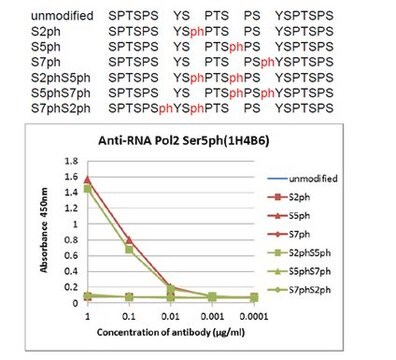
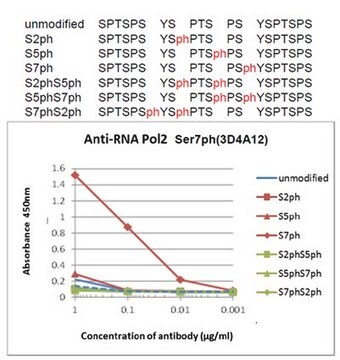
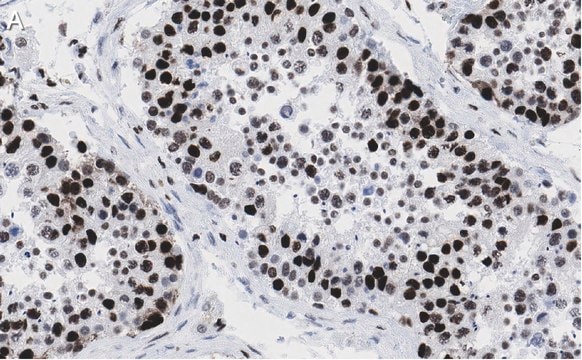
| antibody form affinity purified immunoglobulin | antibody form purified antibody | antibody form purified antibody | antibody form purified antibody |
| conjugate unconjugated | conjugate - | conjugate - | conjugate unconjugated |
| species reactivity human, mouse | species reactivity canine, mouse, rat, human, monkey | species reactivity canine, human, monkey, rat, mouse | species reactivity mouse, human, rat |
| clone polyclonal | clone 1H4B6, monoclonal | clone 3D4A12, monoclonal | clone recombinant monoclonal |
| biological source goat | biological source rat | biological source rat | biological source rabbit |
| technique(s) immunoprecipitation (IP): 2- 10 μg/mg, western blot: 1:1,000- 1:5,000 | technique(s) ChIP: suitable (ChIP-seq), ELISA: suitable, immunocytochemistry: suitable, western blot: suitable | technique(s) ChIP: suitable (ChIP-seq), ELISA: suitable, immunocytochemistry: suitable, western blot: suitable | technique(s) immunocytochemistry: suitable, immunohistochemistry: suitable, western blot: suitable |

Still not finding the right product?
Wypróbuj nasze narzędzie Narzędzie selektora produktów, aby zawęzić opcje.
Klasa składowania
12 - Non Combustible Liquids
wgk
nwg
flash_point_f
Not applicable
flash_point_c
Not applicable
Wybierz jedną z najnowszych wersji:
Masz już ten produkt?
Dokumenty związane z niedawno zakupionymi produktami zostały zamieszczone w Bibliotece dokumentów.