



Yes, the glassy carbon electrode (GCE) is suitable for stability testing at negative potentials of -1 to -1.5 V, including applications such as chronopotentiometry. It can effectively serve as a counter electrode in hydrogen evolution reactions (HER) using 1 M KOH.
Przejdź do
ESYNTH019

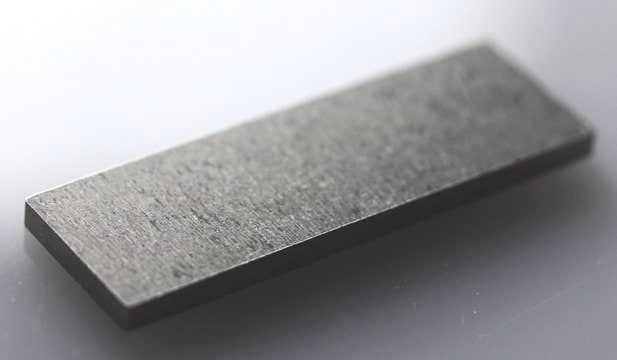
SynLectro® Glassy Carbon Electrode
size 3 mm × 20 mm × 60 mm
Synonim(y):
Glassy Carbon SynLectro® Electrode
Zaloguj się, aby wyświetlić ceny organizacyjne i kontraktowe.
Wybierz wielkość
Zmień widok
| Rozmiar/SKU | Dostępność | Cena netto |
|---|---|---|
1 ea | Skontaktuj się z Obsługą Klienta, aby uzyskać informacje na temat dostępności | 1220,00 zł |
Informacje o tej pozycji
NACRES:
NB.61
UNSPSC Code:
81141502
1220,00 zł
Skontaktuj się z Obsługą Klienta, aby uzyskać informacje na temat dostępności
Pomoc techniczna
Potrzebujesz pomocy? Nasz zespół doświadczonych naukowców chętnie Ci pomoże.
Pozwól nam pomócproduct line
SynLectro®
size
3 mm × 20 mm × 60 mm
General description
SynLectro® Glassy Carbon Electrode is a 3x20x60 mm electrode designed for use with the SynLectro® Electrolysis Platform for synthetic electrochemistry.
SynLectro® Electrolysis Platform
The SynLectro® Electrolysis Platform is a portfolio of labware products and electrodes designed to simplify and standardize preparative scale electrosynthesis. Learn more about each component, designed with consistency, reproducibility, and safety in mind.
SynLectro® Electrolysis Platform
The SynLectro® Electrolysis Platform is a portfolio of labware products and electrodes designed to simplify and standardize preparative scale electrosynthesis. Learn more about each component, designed with consistency, reproducibility, and safety in mind.
Legal Information
SynLectro is a registered trademark of Merck KGaA, Darmstadt, Germany
Ta strona może zawierać tekst przetłumaczony maszynowo.
1 of 1
Ta pozycja | |||
|---|---|---|---|
| description size 3 mm × 20 mm × 60 mm | description size 3 mm × 20 mm × 60 mm | description size 3 mm × 20 mm × 60 mm | description size 3 mm × 20 mm × 60 mm |
| size 3 mm × 20 mm × 60 mm | size 3 mm × 20 mm × 60 mm | size 3 mm × 20 mm × 60 mm | size 3 mm × 20 mm × 60 mm |
| product line SynLectro® | product line SynLectro® | product line SynLectro® | product line SynLectro® |
Wybierz jedną z najnowszych wersji:
Masz już ten produkt?
Dokumenty związane z niedawno zakupionymi produktami zostały zamieszczone w Bibliotece dokumentów.
-
Is this electrode suitable for stability testing at negative potentials of -1 to-1.5 V, like chronopotentiometry testing? I want to use it as counter electrode in HER using 1 M KOH.
1 answer-
Helpful?
-
-
Is there any kind of documentation on the elemental and/or structural analysis of the electrode? I.e. what percentage is amorphous carbon vs graphite?
1 answer-
There is no documentation on the elemental and/or structural analysis of the electrode, including the percentages of amorphous carbon versus graphite. This product is made from glassy carbon, which is a non-graphitizing carbon material.
Helpful?
-
-
Is it possible to cut the electrode ESYNTH019-1EA into smaller pieces, for example, cutting it in half to make 3mm x 10mm x 30mm from the original 3 mm × 20 mm × 60 mm? If so, what is the best method for doing so - diamond scribe or some other method?
1 answer-
In the past, diamond scribers have been used for this purpose. However, this method requires quickly pressing an edge against it on the reverse side. If the customer has access to a mechanical workshop, a diamond saw is recommended. It should be noted that glassy carbon becomes harder with higher pressure. Therefore, when using a diamond saw, it is advisable to saw slowly and not apply excessive pressure.
Helpful?
-