Saltar al contenido
Merck

Saltar a

MBD0059

Alphaproteobacteria FISH probe-Cy3

Probe for fluorescence in situ hybridization (FISH), 20 μM in water

Sinónimos:

ALF968

Iniciar sesión para ver los precios por organización y contrato.

Seleccione un Tamaño

Cambiar Vistas
Talla/SKUDisponibilidadPrecio
50 μL
Póngase en contacto con nuestro Servicio de Atención al Cliente para disponibilidad
1120,00 €

Acerca de este artículo

NACRES:
NA.55
UNSPSC Code:
12352200
Storage temp.:
-10 to -25°C

1120,00 €


Póngase en contacto con nuestro Servicio de Atención al Cliente para disponibilidad

​
Solicita un pedido personalizado
Servicio técnico
¿Necesita ayuda? Nuestro equipo de científicos experimentados está aquí para ayudarle.
Permítanos ayudarle


Quality Segment

concentration

20 μM in water

fluorescence

λex 550 nm; λem 570 nm (Cy3)

shipped in

dry ice

storage temp.

-10 to -25°C

General description

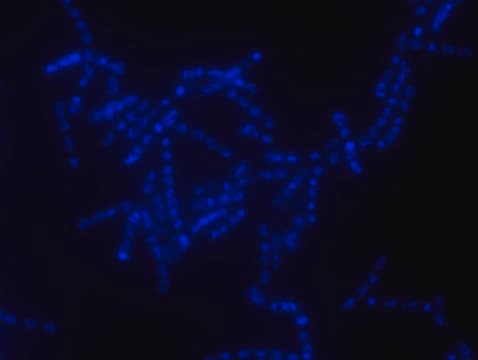
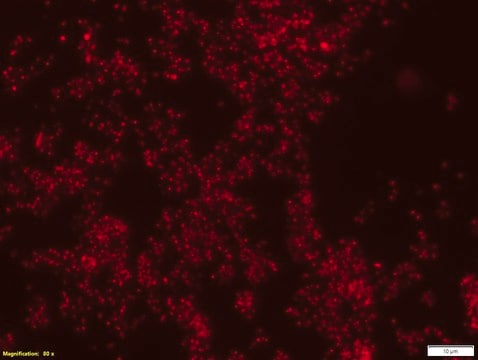
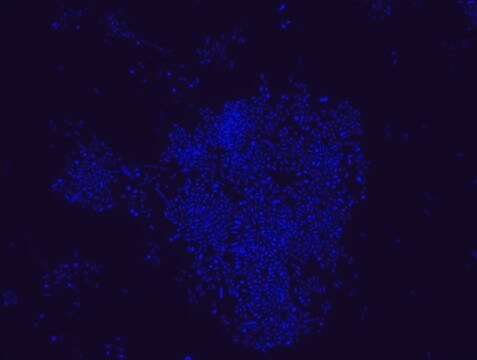
FISH (Fluorescent in Situ Hybridization) technique is based on the hybridization of fluorescently labeled oligonucleotide probes to a specific complementary DNA or RNA sequence in whole and intact cells. Microbial FISH allows the visualization, identification and isolation of bacteria due to recognition of ribosomal RNA also in unculturable samples. FISH can serve as a powerful tool in the microbiome research field by allowing the observation of native microbial populations in diverse microbiome environments, such as samples from human origin (blood and other tissues), microbial ecology (solid biofilms and aquatic systems) and plants. Alphaproteobacteria FISH probe – Cy3 (MBD0059) specifically recognizes Alphaproteobacteria cells. Alphaproteobacteria is the second largest class of bacteria within the gram-negative phylum Proteobacteria, with a high level of functional diversity among its eight major orders: Caulobacterales, Rhizobiales, Rhodobacterales, Pelagibacterales, Sphingomonadales, Rhodospirillales, Holosporales and Rickettsiales. Mitochondria are thought to have evolved from Alphaproteobacteria. Between 20-50% of bacterioplankton cells in the ocean belong to the Alphaproteobacteria class, and Alphaproteobacteria is also abundant in soil and freshwater environments. Rhizobiales is a soil-based plant symbiont Alphaproteobacteria widely studied in agricultural research and Rhodobacterales is an example of a purple photosynthetic Alphaproteobacteria bacteria. Certain genera of Alphaproteobacteria, such as Brucella, are common human pathogens. One species of Alphaproteobacteria, Paracoccus yeei, was correlated to opportunistic infections in humans, including peritonitis,myocarditis, and dermatologic lesions. Interestingly, several types of Alphaproteobacteria have been shown to divide asymmetrically, a trait that may contribute to this class’s heterogeneity and adaptability to a wide variety of microbiome environments. The FISH probe has been used to recognize many Alphaproteobacteria species, such as Magnetospirillum gryphiswaldense, a spiral-shaped magnetotactic bacteria first isolated from river sediment in 1990. In addition, the FISH probe has been used to detect Alphaproteobacteria from a wide variety of environmental microbial samples, including bacterial populations isolated from snow, wastewater treatment plants, lichen and sphagnum moss samples, seawater, and freshwater sediments.

Application

Probe for fluorescence in situ hybridization (FISH), recognizes Alphaproteobacteria cells (except for Rickettsiales)

Features and Benefits

  • Visualize, identify and isolate Alphaproteobacteria cells.
  • Observe native Alphaproteobacteria cell populations in diverse microbiome environments.
  • Specific, sensitive and robust identification of Alphaproteobacteria in bacterial mixed populations.
  • Specific, sensitive and robust identification even when Alphaproteobacteria is in low abundance in the sample.
  • FISH can complete PCR based detection methods by avoiding contaminant bacteria detection.
  • Provides information on Alphaproteobacteria morphology

Comparar elementos similares

Ver comparación completa

Mostrar Diferencias

1 of 1

Este artículo
MBD0062MBD0041MBD0051
description

Probe for fluorescence in situ hybridization (FISH), 20 μM in water

description

EUBII-Cy3 and EUBIII-Cy3 FISH (fluorescence in situ hybridization) probes for research, 20 μM in water

description

Probe for fluorescence in situ hybridization (FISH),20 μM in water

description

Probe for fluorescence in situ hybridization (FISH), 20µM in water

Quality Level

200

Quality Level

200

Quality Level

200

Quality Level

200

concentration

20 μM in water

concentration

20 μM in water

concentration

-

concentration

-

shipped in

dry ice

shipped in

dry ice

shipped in

dry ice

shipped in

dry ice

storage temp.

-10 to -25°C

storage temp.

-10 to -25°C

storage temp.

−20°C

storage temp.

−20°C

fluorescence

λex 550 nm; λem 570 nm (Cy3)

fluorescence

-

fluorescence

λex 550 nm; λem 570 nm (Cy3)

fluorescence

λex 550 nm; λem 570 nm (Cy3)


Clase de almacenamiento

12 - Non Combustible Liquids

¿Qué está pasando?

WGK 1


Elija entre una de las versiones más recientes:

Certificados de análisis (COA)

Lot/Batch Number

It looks like we've run into a problem, but you can still download Certificates of Analysis from our Documentos section.

Si necesita más asistencia, póngase en contacto con Atención al cliente

¿Ya tiene este producto?

Encuentre la documentación para los productos que ha comprado recientemente en la Biblioteca de documentos.

Visite la Librería de documentos