
MBD0035

Bacterial negative control FISH probe - Cy3
Probe for fluorescence in situ hybridization (FISH),20 μM in water
Oferta disponible
Gastar 450 € — Ahorrar 5 %; Gastar 700 € — Ahorrar 10 %; Gastar 1300 € — Ahorrar 15 %*
Iniciar sesión para comprobar la elegibilidad. Comprar productos subvencionables
Seleccione un Tamaño
| Talla/SKU | Disponibilidad | Precio |
|---|---|---|
50 μL | Póngase en contacto con nuestro Servicio de Atención al Cliente para disponibilidad | 1080,00 € |
Acerca de este artículo
1080,00 €
Ahorre hasta 15 %
Quality Segment
technique(s)
FISH: suitable
fluorescence
λex 550 nm; λem 570 nm (Cy3)
shipped in
dry ice
storage temp.
−20°C
General description
FISH technique can serve as a powerful tool in the microbiome research field by allowing the observation of native microbial populations in diverse microbiome environments, such as samples from human origin (blood3 and tissue4), microbial ecology (solid biofilms5 and aquatic systems6) and plants7.
Prokaryotic single cell life forms are divided into two domains, called Bacteria and Archaea, originally categorized as Eubacteria and Archaebacteria.8 However both terms, Eubacteria and Bacteria are still being used in microbiology.
The Negative control non-specific, nonsense probe, is used in the FISH experiments to detect nonspecific binding of the probes and set the appropriate conditions for the experiment.9
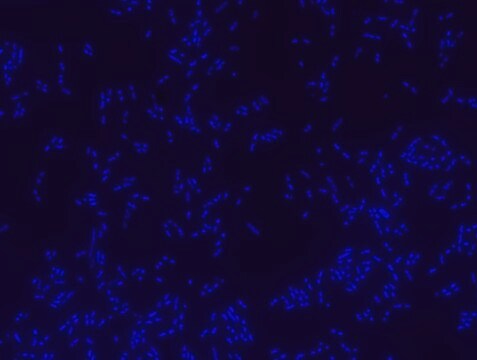
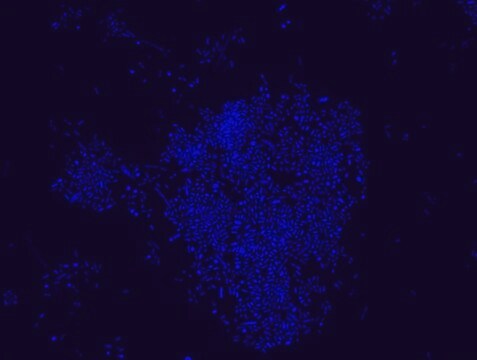
The negative control probe was used in FISH technique on various samples such as, pure culture (as described in the figure legends) and blood cultures9,10.
It is strongly recommended to include positive and negative controls in FISH assays to ensure specific binding of the probe of interest and appropriate protocol conditions. We offer positive (MBD0032/33) and negative (MBD0034/35) control probes, that accompany the specific probe of interest.
Application
Features and Benefits
- Detection of nonspecific binding of tested probes.
- Verification of FISH results accuracy.
- Calibration of FISH experiment appropriate conditions.
- Can be used to control for nonspecific binding in variuos samples such as, blood cultures and pure cultures.
- The ability to detect bacteria in its natural habitat is an essential tool for studying host-microbiome interaction.
1 of 1
Este artículo | |||
|---|---|---|---|
| description Probe for fluorescence in situ hybridization (FISH),20 μM in water | description Probe for fluorescence in situ hybridization (FISH),20 μM in water | description Probe for fluorescence in situ hybridization (FISH),20 μM in water | description Probe for fluorescence in situ hybridization (FISH), 20µM in water |
| technique(s) FISH: suitable | technique(s) FISH: suitable | technique(s) FISH: suitable | technique(s) FISH: suitable |
| shipped in dry ice | shipped in dry ice | shipped in dry ice | shipped in dry ice |
| fluorescence λex 550 nm; λem 570 nm (Cy3) | fluorescence λex 504 nm; λem 521 nm (ATTO488) | fluorescence λex 550 nm; λem 570 nm (Cy3) | fluorescence λex 550 nm; λem 570 nm (Cy3) |
| Quality Level 200 | Quality Level 200 | Quality Level 200 | Quality Level 200 |
| storage temp. −20°C | storage temp. −20°C | storage temp. −20°C | storage temp. −20°C |


Clase de almacenamiento
12 - Non Combustible Liquids
¿Qué está pasando?
nwg
Elija entre una de las versiones más recientes:
¿Ya tiene este producto?
Encuentre la documentación para los productos que ha comprado recientemente en la Biblioteca de documentos.