
The immunogen corresponds to 15 amino acids from the C terminus half of human UVRAG surrounding phosphoserine 498. While the antibody has been successfully used in mouse during the characterization process, reactivity cannot be guaranteed.
ABS1600

Anti-phospho-UVRAG (Ser498)
from rabbit
Sinónimos:
UV radiation resistance-associated gene protein, p63
Iniciar sesión para ver los precios por organización y contrato.
Acerca de este artículo
UNSPSC Code:
12352203
NACRES:
NA.41
eCl@ss:
32160702
Clone:
polyclonal
Species reactivity:
human
Application:
WB
Citations:
3
biological source
rabbit
antibody form
affinity isolated antibody
antibody product type
primary antibodies
clone
polyclonal
species reactivity
human
technique(s)
western blot: suitable
isotype
IgG
NCBI accession no.
UniProt accession no.
shipped in
ambient
target post-translational modification
phosphorylation (pSer498)
Gene Information
human ... UVRAG(7405)
General description
UV radiation resistance-associated gene protein (UniProt: Q9P2Y5; also known as p63) is encoded by the UVRAG gene (Gene ID: 7405) in human. UVRAG is a key autophagic tumor suppressor that is mutated in several common human cancers. It contains four functional domains, a proline-rich domain, a lipid-binding C2 domain, a Beclin1-binding coiled-coil domain (CCD) and a C-terminal domain. It is a critical regulator of intracellular membrane trafficking, autophagy, and chromosomal stability. UVRAG is also involved in regulation of the COPI-dependent retrograde transport from Golgi and the endoplasmic reticulum by associating with the NRZ complex. Its function is dependent on its binding to phosphatidylinositol 3-phosphate (PtdIns3P). During autophagy UVRAG acts as regulatory subunit of the alternative PI3K complex II (PI3KC3-C2) that mediates formation of phosphatidylinositol 3-phosphate and is believed to be involved in maturation of autophagosomes and endocytosis. It is involved in maturation of autophagosomes and degradative endocytic trafficking independently of Beclin-1, but depends on its association with a class C Vps complex. UVRAG is also shown to enhance class C Vps complex association with a SNARE complex and promote fusogenic SNARE complex formation during late endocytic membrane fusion. UVRAG is also reported to promote DNA double-strand break repair by association with DNA-dependent protein kinase complex DNA-PK and activating it in non-homologous end joining. Disruption of UVRAG is shown to increase genetic instability and sensitivity of cells to irradiation. (Ref: Zhao, Z et al. (2012). Dev. Cell 22(5): 1001-1016).
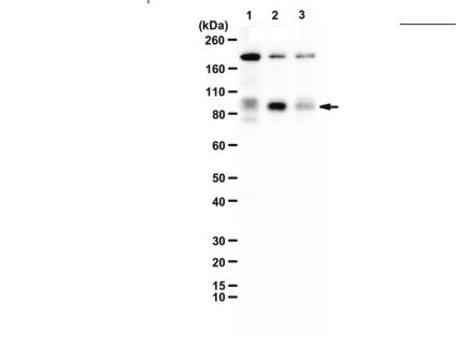
~98 kDa observed; 78.15 kDa calculated. Uncharacterized bands may be observed in some lysate(s).
Immunogen
A linear peptide corresponding to 15 amino acids from the C-terminal half of human UVRAG surrounding phosphoserine 498.
Application
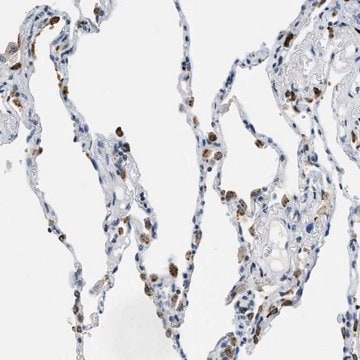
Detect UV radiation resistance-associated gene protein using this rabbit polyclonal Anti-phospho-UVRAG (Ser498), Cat. No. ABS1600 that has been tested in Western Blotting.
Research Category
Signaling
Signaling
Western Blotting Analysis: A representative lot detected phospho-UVRAG (Ser498) in TSC1 KO MEFs and treated with Torin1 (Kim, Y.M., et. al. (2015). Mol Cell. 57(2):207-18).
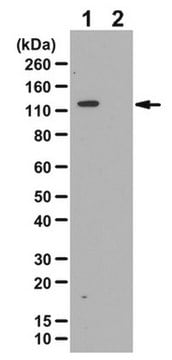
Western Blotting Analysis: A representative lot detected phospho-UVRAG (Ser498) in HA-UVRAG+myc-Rheb2+DMSO. (Courtesy of Dr. Do-Hyung Kim at University of Minnesota).
Western Blotting Analysis: A representative lot detected phospho-UVRAG (Ser498) in HA-UVRAG+myc-Rheb2+DMSO. (Courtesy of Dr. Do-Hyung Kim at University of Minnesota).
Biochem/physiol Actions
This polyclonal antibody detects human UVRAG phosphorylated on Serine 498.
Physical form
Affinity Purified
Format: Purified
Purified rabbit polyclonal antibody in buffer containing 0.1M Tris-Glycine, 0.15M NaCl, 0.05% sodium azide, pH7.4 with 0.05% sodium azide.
Preparation Note
Stable for 1 year at 2-8°C from date of receipt.
Analysis Note
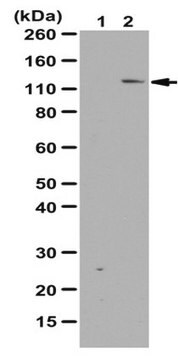
Evaluated by Western Blotting in HEK293 cells transfected with HA-UVRAG+myc-Rheb2+DMSO (vehicle).
Western Blotting Analysis: A 1:1,000 dilution of this antibody detected phospho-UVRAG (Ser498) in HEK293 cells transfected with HA-UVRAG+myc-Rheb2+DMSO (vehicle).
Western Blotting Analysis: A 1:1,000 dilution of this antibody detected phospho-UVRAG (Ser498) in HEK293 cells transfected with HA-UVRAG+myc-Rheb2+DMSO (vehicle).
Other Notes
Concentration: Please refer to lot specific datasheet.
Disclaimer
Unless otherwise stated in our catalog or other company documentation accompanying the product(s), our products are intended for research use only and are not to be used for any other purpose, which includes but is not limited to, unauthorized commercial uses, in vitro diagnostic uses, ex vivo or in vivo therapeutic uses or any type of consumption or application to humans or animals.
1 of 1
Este artículo | |||
|---|---|---|---|
| antibody form affinity isolated antibody | antibody form affinity isolated antibody | antibody form affinity isolated antibody | antibody form affinity isolated antibody |
| biological source rabbit | biological source rabbit | biological source rabbit | biological source rabbit |
| clone polyclonal | clone polyclonal | clone polyclonal | clone polyclonal |
| shipped in ambient | shipped in wet ice | shipped in wet ice | shipped in wet ice |
| UniProt accession no. | UniProt accession no. | UniProt accession no. | UniProt accession no. |
| Gene Information human ... UVRAG(7405) | Gene Information human ... UVRAG(7405) | Gene Information human ... ULK1(8408) | Gene Information human ... SRPK2(6733) |
Still not finding the right product?
Pruebe nuestra Herramienta de selección de productos para limitar sus opciones
Clase de almacenamiento
12 - Non Combustible Liquids
wgk
WGK 1
Certificados de análisis (COA)
Busque Certificados de análisis (COA) introduciendo el número de lote del producto. Los números de lote se encuentran en la etiqueta del producto después de las palabras «Lot» o «Batch»
¿Ya tiene este producto?
Encuentre la documentación para los productos que ha comprado recientemente en la Biblioteca de documentos.
-
bonjour, Can I use this phospho-specific antibody, ABS1600 Sigma-Aldrich Anti-phospho-UVRAG (Ser498), on mouse UVRAG-S497, knowing that the sequence of the peptide are close but not similar. human: GFSGGIPsPDKGHRK; mouse: GFSAGIPsPDKVHRK.
1 respuesta-
¿Le ha resultado útil?
-