
MABC615

Anti-TNFα Receptor Antibody, clone 13F9.1
clone 13F9.1, from mouse
Synonym(s):
Tumor necrosis factor receptor superfamily member 1A, Tumor necrosis factor receptor 1, TNF-R1, Tumor necrosis factor receptor type I, TNF-RI, TNFR-I, p55, p60, CD120a, Tumor necrosis factor receptor superfamily member 1A, membrane form, Tumor necrosis f
Select a Size
| Pack Size | SKU | Availability | Price |
|---|---|---|---|
| 100 μg | Estimated to ship onApril 07, 2026fromAreál Kühne+Nagel spol. s r.o. | CZK 11,200.00 |
About This Item
1 of 1
This Item | |||
|---|---|---|---|
| clone 13F9.1, monoclonal | clone polyclonal | clone polyclonal | clone 3F8, monoclonal |
| biological source mouse | biological source rabbit | biological source goat | biological source mouse |
| Gene Information human ... TNF(7124) | Gene Information human ... TNF(7124) | Gene Information human ... TNFRSF1B(7133) | Gene Information human ... RELT(84957) |
| conjugate unconjugated | conjugate unconjugated | conjugate unconjugated | conjugate unconjugated |
| antibody form purified antibody | antibody form affinity isolated antibody | antibody form IgG fraction of antiserum | antibody form purified immunoglobulin |
| species reactivity mouse, human | species reactivity mouse, human, rat | species reactivity human | species reactivity human |

General description
Immunogen
Application
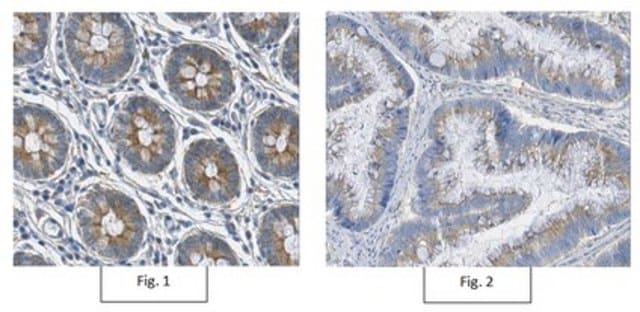
Immunohistochemistry Analysis: A 1:1,000 dilution from a representative lot detected TNFα Receptor in human colon tissue and human colon cancer cells.
Biochem/physiol Actions
Physical form
Analysis Note
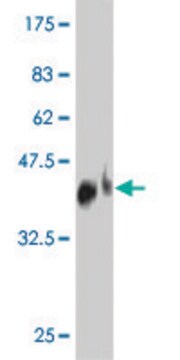
Western Blotting Analysis: 1.0 µg/mL of this antibody detected TNFα Receptor in 10 µg of Jurkat cell lysate.
Other Notes
Not finding the right product?
Try our Product Selector Tool.
Storage Class
12 - Non Combustible Liquids
wgk
WGK 1
flash_point_f
Not applicable
flash_point_c
Not applicable
Certificates of Analysis (COA)
Search for Certificates of Analysis (COA) by entering the products Lot/Batch Number. Lot and Batch Numbers can be found on a product’s label following the words ‘Lot’ or ‘Batch’.
Already Own This Product?
Find documentation for the products that you have recently purchased in the Document Library.
Related Content
A major focus of breast cancer research is to understand the mechanisms responsible for disease progression and drug resistance. Toward that end, it has been found that approximately two thirds of all human breast carcinomas overexpress the Estrogen Receptor α (ERα) protein and it remains the primary pharmacological target for endocrine therapy1,2. The normal cellular function of ERα is as a transcription factor that mediates a wide variety of physiological processes, many of which are dependent upon phosphorylation of the receptor at specific amino acid residues3,4. Indeed, ERα is known to be phosphorylated at a multitude of different sites, yet how these all correlate to disease remains unclear5. Here, we interrogated multiple sites of ERα for phosphorylation status by screening an extensive panel of different breast cancer patient samples and other non-breast cancer tissue microarray (TMA) slide samples to determine their relevance to disease.
Global Trade Item Number
| SKU | GTIN |
|---|---|
| MABC615 | 04055977171419 |
Active Filters
Our team of scientists has experience in all areas of research including Life Science, Material Science, Chemical Synthesis, Chromatography, Analytical and many others.
Contact Technical Service