Direkt zum Inhalt
Merck

Fortfahren mit

R2655

Monoclonal Anti-Rabbit IgG, Native in Maus hergestellte Antikörper

clone RabT-50, purified from hybridoma cell culture

Anmelden zur Ansicht der Organisations- und Vertragspreise.

Größe auswählen

Ansicht ändern
Ihnen/SKUVerfügbarkeitPreis
200 μL
Warenkorb auf Verfügbarkeit prüfen
€ 406,00
€ 345,10

Über diesen Artikel

NACRES:
NA.46
UNSPSC Code:
12352203
Conjugate:
unconjugated
Clone:
RabT-50, monoclonal
Application:
ELISA (i), ICC, WB
Citations:
9

€ 345,10

Listenpreis€ 406,00Sparen Sie 15%
Aktion nur im Web

Warenkorb auf Verfügbarkeit prüfen

Großbestellung anfragen
Technischer Dienst
Benötigen Sie Hilfe? Unser Team von erfahrenen Wissenschaftlern ist für Sie da.
Unterstützung erhalten


biological source

mouse

Quality Segment

conjugate

unconjugated

antibody form

purified immunoglobulin

antibody product type

secondary antibodies

clone

RabT-50, monoclonal

form

buffered aqueous solution

species reactivity

rabbit

should not react with

human, rat, chicken, cat, bovine, monkey, goat, pig, horse

concentration

~1 mg/mL

technique(s)

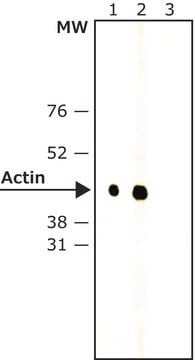
immunocytochemistry: suitable, indirect ELISA: suitable, western blot: 1-2 μg/mL using 10 ng of non-reduced rabbit IgG (Cat. No. I5006) per lane

isotype

IgG1

shipped in

dry ice

storage temp.

−20°C

target post-translational modification

unmodified

General description

Anti-Rabbit IgG, Native antibody, Mouse monoclonal (mouse IgG1 isotype) is derived from the hybridoma RabT-50 produced by the fusion of mouse myeloma cells (NS1) and splenocytes from BALB/c mice. Immunoglobulin G (IgG) is found abundantly in the human serum. It constitutes about 10-20% of the plasma proteins. IgG is composed of glycoproteins, out of which it is 82-96% proteins and 4-18% carbohydrates. It consists of four sub-classes i.e IgG1, IgG2, IgG3, and IgG4. IgG is composed of four polypeptide chains-two heavy chains (γ chains) and two light chains (κ or λ chains) which are linked by inter-chain disulfide bonds. The heavy and the light chains are linked at VH and CH1 domain to form the Fragment antigen binding (Fab) arm. The antigen binds to the V regions of the antibody.
This antibody reacts specifically with non-reduced rabbit IgG and does not react with reduced rabbit IgG.

Immunogen

Enriched fraction of rabbit IgG light chain.

Application

Anti-Rabbit IgG, Native antibody, Mouse monoclonal has been used in:
  • immunoblotting[1]
  • immunocytochemistry
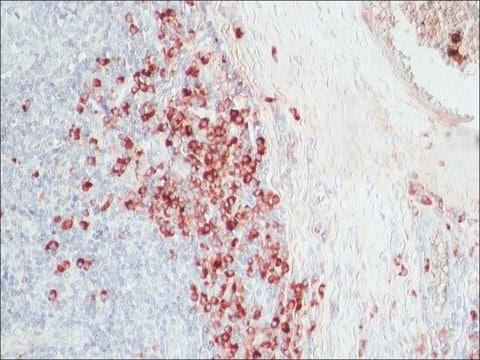
  • immunohistochemistry[2]
  • enzyme-linked immunosorbent assay (ELISA)

Biochem/physiol Actions

Anti-Rabbit IgG, Native antibody, Mouse monoclonal reacts specifically with non-reduced rabbit IgG and does not react with reduced rabbit IgG. It does not recognize human, monkey, bovine, horse, pig, goat, cat, rat, and chicken IgGs.
IgG antibody subtype is the most abundant of serum immunoglobulins of the immune system. It is secreted by B cells and is found in blood and extracellular fluids and provides protection from infections caused by bacteria, fungi and viruses. Maternal IgG is transferred to fetus through the placenta that is vital for immune defense of the neonate against infections.

Physical form

Solution in 0.01 M phosphate buffered saline, pH 7.4, containing 15 mM sodium azide.

Preparation Note

For extended storage, freeze at –20 °C in working aliquots. Repeated freezing and thawing, or storage in “frost-free” freezers, is not recommended. If slight turbidity occurs upon prolonged storage, clarify the solution by centrifugation before use. Working dilution samples should be discard if not used within 12 hours.

Disclaimer

Unless otherwise stated in our catalog or other company documentation accompanying the product(s), our products are intended for research use only and are not to be used for any other purpose, which includes but is not limited to, unauthorized commercial uses, in vitro diagnostic uses, ex vivo or in vivo therapeutic uses or any type of consumption or application to humans or animals.

Ähnliche Artikel vergleichen

Vollständigen Vergleich anzeigen

Unterschiede anzeigen

1 of 1

Dieser Artikel
B5283R3155A9169
conjugate

unconjugated

conjugate

biotin conjugate

conjugate

peroxidase conjugate

conjugate

peroxidase conjugate

antibody form

purified immunoglobulin

antibody form

purified immunoglobulin

antibody form

purified immunoglobulin

antibody form

IgG fraction of antiserum

biological source

mouse

biological source

mouse

biological source

mouse

biological source

goat

technique(s)

immunocytochemistry: suitable, western blot: 1-2 μg/mL using 10 ng of non-reduced rabbit IgG (Cat. No. I5006) per lane, indirect ELISA: suitable

technique(s)

direct ELISA: 1:150,000, immunohistochemistry (formalin-fixed, paraffin-embedded sections): 1:1,000, western blot (chemiluminescent): 1:200,000-1:400,000

technique(s)

immunocytochemistry: suitable, indirect ELISA: suitable, western blot: 1:10,000-1:20,000 using 3T3 cell extracts using Anti-Actin (20-33), Catalog Number A5060, as the primary antibody, western blot: 1:10,000-1:20,000 using Hela cell extracts using Anti-Actin, N-terminal, Catalog Number A2103, as the primary antibody.

technique(s)

direct ELISA: 1:50,000 using using 5 μg/ml of rabbit IgG for coating and OPD substrate, immunohistochemistry (formalin-fixed, paraffin-embedded sections): 1:400, western blot (chemiluminescent): 1:80,000-1:160,000 using using β-actin in total cell extract of HeLa cells (5-10 μg per well)

species reactivity

rabbit

species reactivity

rabbit

species reactivity

rabbit

species reactivity

rabbit

isotype

IgG1

isotype

IgG1

isotype

IgG1

isotype

-


Still not finding the right product?

Probieren Sie unser Produkt-Auswahlhilfe, um Ihre Auswahl einzugrenzen


Lagerklasse

10 - Combustible liquids

flash_point_f

Not applicable

flash_point_c

Not applicable

ppe

Eyeshields, Faceshields, Gloves, type ABEK (EN14387) respirator filter


Hier finden Sie alle aktuellen Versionen:

Analysenzertifikate (COA)

Lot/Batch Number

It looks like we've run into a problem, but you can still download Certificates of Analysis from our Dokumente section.

Wenn Sie Hilfe benötigen, wenden Sie sich bitte an Kundensupport

Besitzen Sie dieses Produkt bereits?

In der Dokumentenbibliothek finden Sie die Dokumentation zu den Produkten, die Sie kürzlich erworben haben.

Die Dokumentenbibliothek aufrufen


Questions

Reviews

No rating value

Active Filters