
SCC195

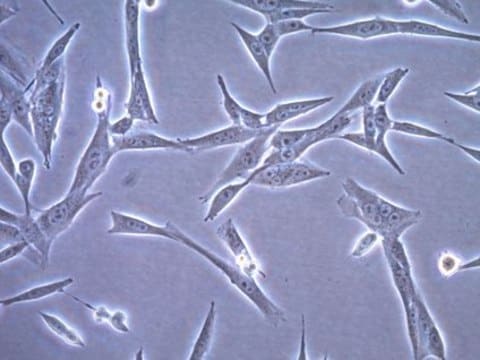
CT-2A-Luc Mouse Glioma Cell Line
Mouse
Synonym(e):
CT-2A Luciferase, CT2A Luciferase, mouse astrocytoma cell line
Größe auswählen
| Ihnen/SKU | Verfügbarkeit | Preis |
|---|
Über diesen Artikel
Produktname
CT-2A-Luc Mouse Glioma Cell Line, CT-2A-Luc mouse glioma cell line is a valuable mouse model for therapeutic research on brain malignancies.
biological source
mouse
technique(s)
cell culture | mammalian: suitable
shipped in
ambient
storage temp.
-140 to -196°C
General description
References:
1. Weller M, Cloughesy T, Perry JR, and Wick W (2013) Neuro Oncol 15(1): 4-27.
2. Seyfried TN, Mukherjee P (2010) J Oncol 2010:961243 doi.10.1155/2010/961243.
3. Cotterchio M, Seyfried TN (1994) J Lipid Res 35(1): 10-14.
4. Binello E, Qadeer ZA, Kothari HP, Emdad L, Germano IM (2012) J Cancer 3: 166-174.
5. Martinez-Murillo R, Martinez A (2007) Histol Histopathol 22(12): 1309-1326.
6. Zimmerman HM and Arnold H. (1941) Cancer Res 1(12): 919-938.
7. Huysentruyt LC, Mukherjee P, Banerjee D, Shelton LM, Seyfried TN (2008) Int J Cancer 123(1): 73-84.
Source:
The parental CT-2A cell line was generated from a malignant astrocytoma formed via implantation of the carcinogen 20-methylcholanthrene in the cerebrum of a C57BL/6J mouse (6). The tumor was maintained through serial intracranial transplants prior to cell line isolation. The CT-2A-Luc luciferase cell line was clonally derived from CT-2A cells transduced with a lentiviral vector harboring a firefly luciferase (Fluc)-IRES-GFP cassette under control of the CMV promoter; cells were subsequently sorted for EGFP expression (7).
Application
Cancer
Oncology
Biochem/physiol Actions
Preparation Note
Analysis Note
• Cells are tested negative for infectious diseases by a Mouse Essential CLEAR panel by Charles River Animal Diagnostic Services.
• Cells are verified to be of mouse origin and negative for inter-species contamination from rat, chinese hamster, Golden Syrian hamster, human and non-human primate (NHP) as assessed by a Contamination CLEAR panel by Charles River Animal Diagnostic Services.
• Cells are negative for mycoplasma contamination
1 of 1
Dieser Artikel | |||
|---|---|---|---|
| description CT-2A-Luc mouse glioma cell line is a valuable mouse model for therapeutic research on brain malignancies. | description CT-2A mouse glioma cell line is a valuable mouse model for therapeutic research on brain malignancies. | description MCA205 mouse fibrosarcoma cell line is an excellent model for studying immune response to tumor cells and the development of targeted cancer immunotherapies. | description - |
| technique(s) cell culture | mammalian: suitable | technique(s) cell culture | mammalian: suitable | technique(s) cell culture | mammalian: suitable | technique(s) cell based assay: suitable, cell culture | mammalian: suitable |
| biological source mouse | biological source mouse | biological source mouse | biological source mouse |
| shipped in ambient | shipped in ambient | shipped in ambient | shipped in liquid nitrogen |
| storage temp. -140 to -196°C | storage temp. -140 to -196°C | storage temp. -140 to -196°C | storage temp. −196°C |


Lagerklasse
12 - Non Combustible Liquids
wgk
WGK 2
flash_point_f
does not flash
flash_point_c
does not flash
Zulassungslistungen
Zulassungslistungen werden hauptsächlich für chemische Produkte erstellt. Für nicht-chemische Produkte können hier nur begrenzte Angaben gemacht werden. Kein Eintrag bedeutet, dass keine der Komponenten gelistet ist. Es liegt in der Verantwortung des Benutzers, die sichere und legale Verwendung des Produkts zu gewährleisten.
10035-04-8
Hier finden Sie alle aktuellen Versionen:
Besitzen Sie dieses Produkt bereits?
In der Dokumentenbibliothek finden Sie die Dokumentation zu den Produkten, die Sie kürzlich erworben haben.