
616394

TPEN, CAS-Nr. 16858-02-9, Calbiochem
Synonym(e):
TPEN, CAS-Nr. 16858-02-9, Calbiochem
Größe auswählen
| Ihnen/SKU | Verfügbarkeit | Preis |
|---|---|---|
100 mg | Warenkorb auf Verfügbarkeit prüfen | Anfragen |
Über diesen Artikel
assay
≥97% (titration)
Quality Segment
form
solid
reaction suitability
reagent type: chelator
manufacturer/tradename
Calbiochem®
storage condition
OK to freeze
color
tan
solubility
ethanol: 10 mg/mL, 0.1 M phosphate pH 7.0: 25 μM, DMSO: soluble
shipped in
ambient
storage temp.
15-25°C
SMILES string
N(CCN(Cc4ncccc4)Cc3ncccc3)(Cc2ncccc2)Cc1ncccc1
InChI
1S/C26H28N6/c1-5-13-27-23(9-1)19-31(20-24-10-2-6-14-28-24)17-18-32(21-25-11-3-7-15-29-25)22-26-12-4-8-16-30-26/h1-16H,17-22H2
InChI key
CVRXLMUYFMERMJ-UHFFFAOYSA-N
General description
Application
- Poly(ADP-ribosyl)ation of p53 contributes to TPEN-induced neuronal apoptosis.: This study investigates the role of poly(ADP-ribosyl)ation of the tumor suppressor protein p53 in neuronal apoptosis induced by TPEN, highlighting mechanisms of cell death in neurodegenerative diseases (Kim HL et al., 2015).
- Essential role of p53 in TPEN-induced neuronal apoptosis.: This article explores the critical involvement of the p53 protein in apoptosis initiated by TPEN in neuronal cells, offering insights into potential therapeutic targets for neuroprotection (Ra H et al., 2009).
- Clioquinol induces autophagy in cultured astrocytes and neurons by acting as a zinc ionophore.: Demonstrates how Clioquinol, similar to TPEN, functions as a zinc ionophore to induce autophagy, particularly in neurological contexts, which may be relevant for understanding TPEN′s mechanisms (Park MH et al., 2011).
Preparation Note
Other Notes
Cherny, R.A., et al. 1999. J. Biol. Chem. 274, 23223.
Aballay, A., et al. 1995. Biochem. J.312, 919.
Jiang, S., et al. 1995. Labor. Invest.73, 111.
Sheridan, R.E. und Deshpande, S.S. 1995. Toxicon33, 539.
McCabe, M.J., et al. 1993. Lab. Invest. 69, 101.
Hinkle, P.M., et al. 1992. J. Biol. Chem.267, 25553.
Baba, A., et al. 1991. Brain Res. 557, 103.
Forbes, I.J., et al. 1991. Exp. Cell Res. 195, 224.
Csermely, P. and Somogyi, J. 1989. J. Cellular Physiol.138, 593.
Raspe, E., et al. 1989. Eur. J. Pharmacol.163, 345.
Arslan, L.P., et al. 1985. J. Biol. Chem.260, 2719.
Legal Information
Disclaimer
1 of 1
Dieser Artikel | |||
|---|---|---|---|
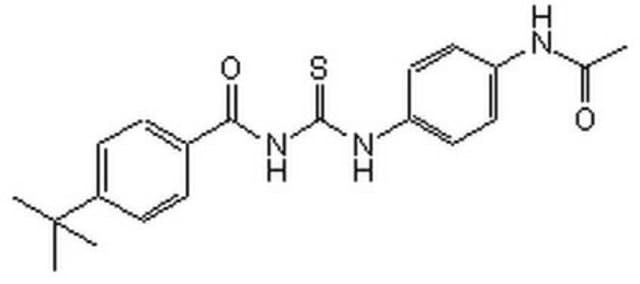
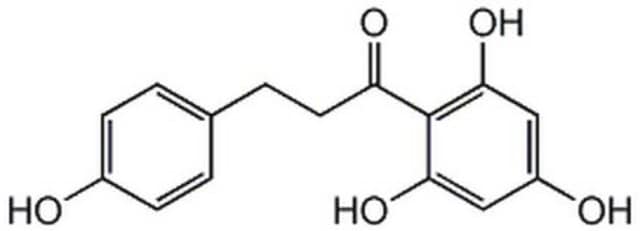
| description - | description Membrane-permeable form of BAPTA. | description A cell-permeable benzoylthiourea compound that acts as a reversible inhibitor of class III HDAC sirtuins against SirT2 (IC50 = ~ 10 µM). | description A cell-permeable inhibtor of protein kinase C (IC50 = 20-50 µM). |
| form solid | form solid | form solid | form solid |
| assay ≥97% (titration) | assay ≥90% (TLC) | assay ≥98% (HPLC) | assay ≥97% (TLC) |
| Quality Level 100 | Quality Level 100 | Quality Level 100 | Quality Level 100 |
| manufacturer/tradename Calbiochem® | manufacturer/tradename Calbiochem® | manufacturer/tradename Calbiochem® | manufacturer/tradename Calbiochem® |
| storage temp. 15-25°C | storage temp. −20°C | storage temp. 2-8°C | storage temp. −20°C |
| storage condition OK to freeze | storage condition OK to freeze, protect from light | storage condition OK to freeze, protect from light | storage condition OK to freeze |


Lagerklasse
11 - Combustible Solids
wgk
WGK 3
flash_point_f
Not applicable
flash_point_c
Not applicable
Hier finden Sie alle aktuellen Versionen:
Besitzen Sie dieses Produkt bereits?
In der Dokumentenbibliothek finden Sie die Dokumentation zu den Produkten, die Sie kürzlich erworben haben.