

Detection of O-propargyl-puromycin has not been validated. An independent researcher has shown that 12D10 may bind to O-propargyl-puromycin treated samples with reduced sensitivity (Yeast. 2014 Mar 19;31(5):167–178).
MABE343

Anti-Puromycin Antibody, clone 12D10
clone 12D10, from mouse
Synonym(s):
Anti-Puromycin, Clone 12D10 Anti-Puromycin, Puromycin Detection Antibody
Sign In to View Organizational & Contract Pricing.
Select a Size
Change View
| Size/SKU | Availability | Price |
|---|
About This Item
UNSPSC Code:
12352203
NACRES:
NA.41
eCl@ss:
32160702
Clone:
12D10, monoclonal
Species reactivity:
human
Application:
FACS, ICC, IF, IHC, IP, WB
Citations:
657
Pricing and availability is not currently available.
biological source
mouse
Quality Segment
antibody form
purified immunoglobulin
antibody product type
primary antibodies
clone
12D10, monoclonal
species reactivity
human
species reactivity (predicted by homology)
all
technique(s)
flow cytometry: suitable, immunocytochemistry: suitable, immunofluorescence: suitable, immunohistochemistry: suitable, immunoprecipitation (IP): suitable, western blot: suitable
isotype
IgG2aκ
shipped in
wet ice
target post-translational modification
unmodified
Gene Information
human ... NPEPPS(9520)
General description
Puromycin is an aminonucleoside antibiotic, derived from the Streptomyces alboniger bacterium, that functions as a protein synthesis inhibitor that blocks translation through premature chain termination in the ribosome. Monoclonal antibodies to puromycin may be used with standard immunochemical methods to directly monitor translation, a method known as surface sensing of translation (SUnSET). Part of the molecule resembles the 3′ end of the aminoacylated tRNA, making it useful for protein translation analysis. Puromycin induces DNA fragmentation in thymocytes and in human HL-60 leukemia cells.
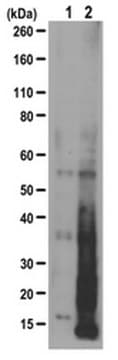
Puromycin is incorporated in neosynthesized proteins. In the presense of Puromycin only, this antibody detects Puromycin-incorporated neosynthesized proteins at multiple molecular weights. However, a weaker signal is observed in the co-presense of Cycloheximide, an inhibitor of protein biosynthesis in eukaryotic organisms.
Immunogen
Puromycin from Streptomyces alboniger
Application
Anti-Puromycin antibody, clone 12D10, detects puromycin incorporated into protein. Monoclonal antibodies to puromycin may be used with standard immunochemical methods.
Research Category
Epigenetics & Nuclear Function
Epigenetics & Nuclear Function
Research Sub Category
RNA Metabolism & Binding Proteins
RNA Metabolism & Binding Proteins
Western Blotting Analysis (Total Protein Staining): HEK293 cell lysates treated with Puromycin and Cyclohexamide, or Puromycin only were resolved using SDS-PAGE and transferred to a membrane. Proteins were visualized using Ponceau S staining.
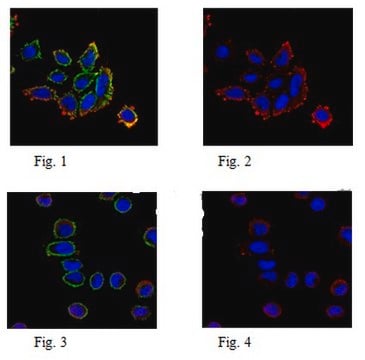
Immunocytochemistry Analysis: A 1:10,000 dilution from a representative lot detected Puromycin-incorporated neosynthesized proteins in HeLa cells treated with Puromycin.
Western Blotting Analysis: A representative lot detected Puromycin-incorporated neosynthesized proteins in WB (Reineke, L. C., et al. (2012). Mol Biol Cell. 23(18):3499-3510.; Trinh, M. A. et al. (2012). Cell Rep. 1(6):678-688.; Fortin, D. A., et al. (2012). J Neurosci. 32(24):8127-8137.; Clavarino, G., et al. (2012). PLoS Pathog. 8(5):e1002708.; David, A., et al. (2012). J Cell Biol. 197(1):45-57.; White, L. K., et al. (2011). J Virol. 85(1):606-620.; Hoeffer, C. A., et al. (2011). Proc Natl Acad Sci USA. 108(8):3383-3388.; Goodman, C. A., et al. (2010). FASEB J. 25(3):1028-1039.; Schmidt, E., K., et al. (2009). Nat Methods. 6(4):275-277.; Santini, E., et al. (2013). Nature. 493(7432):411-415.; Quy. P. N., et al. (2013). J Biol Chem. 288(2):1125-1134.; Hulmi. J. J., et al. (2012). Am J Physiol Endocrinol Metab. 304(1):E41-50.; Bhattacharya, A., et al. (2012). Neuron. 76(2):325-337.; Hoeffer, C. A., et al. (2013). J Neurophysiol. 109(1):68-76.).
Immunofluorescence Analysis: A representative lot detected Puromycin-incorporated neosynthesized proteins in WB (Reineke, L. C., et al. (2012). Mol Biol Cell. 23(18):3499-3510.; Trinh, M. A. et al. (2012). Cell Rep. 1(6):678-688.; Fortin, D. A., et al. (2012). J Neurosci. 32(24):8127-8137.;David, A., et al. (2012). J Cell Biol. 197(1):45-57.; David, A., et al. (2011). J Biol Chem. 286(23):20688-20700.; White, L. K., et al. (2011). J Virol. 85(1):606-620.; Hoeffer, C. A., et al. (2011). Proc Natl Acad Sci USA. 108(8):3383-3388.; Schmidt, E., K., et al. (2009). Nat Methods. 6(4):275-277.; Goodman, C. A., et al. (2012). Proc Natl Acad Sci USA. 109(17):E989.; Santini, E., et al. (2013). Nature. 493(7432):411-415.; Quy. P. N., et al. (2013). J Biol Chem. 288(2):1125-1134.).
Immunohistochemistry Analysis: A representative lot detecte Puromycin-incorporated neosynthesized protein in IHC (Goodman, C. A., et al. (2010). FASEB J. 25(3):1028-1039.).
Fluorescence Activated Cell Sorting Analysis: A representative lot detected Puromycin-incorporated neosynthesized proteins in FACS (David, A., et al. (2012). J Cell Biol. 197(1):45-57.; Schmidt, E., K., et al. (2009). Nat Methods. 6(4):275-277.).
Alexa Fluor™ is a registered trademark of Life Technologies.
Immunocytochemistry Analysis: A 1:10,000 dilution from a representative lot detected Puromycin-incorporated neosynthesized proteins in HeLa cells treated with Puromycin.
Western Blotting Analysis: A representative lot detected Puromycin-incorporated neosynthesized proteins in WB (Reineke, L. C., et al. (2012). Mol Biol Cell. 23(18):3499-3510.; Trinh, M. A. et al. (2012). Cell Rep. 1(6):678-688.; Fortin, D. A., et al. (2012). J Neurosci. 32(24):8127-8137.; Clavarino, G., et al. (2012). PLoS Pathog. 8(5):e1002708.; David, A., et al. (2012). J Cell Biol. 197(1):45-57.; White, L. K., et al. (2011). J Virol. 85(1):606-620.; Hoeffer, C. A., et al. (2011). Proc Natl Acad Sci USA. 108(8):3383-3388.; Goodman, C. A., et al. (2010). FASEB J. 25(3):1028-1039.; Schmidt, E., K., et al. (2009). Nat Methods. 6(4):275-277.; Santini, E., et al. (2013). Nature. 493(7432):411-415.; Quy. P. N., et al. (2013). J Biol Chem. 288(2):1125-1134.; Hulmi. J. J., et al. (2012). Am J Physiol Endocrinol Metab. 304(1):E41-50.; Bhattacharya, A., et al. (2012). Neuron. 76(2):325-337.; Hoeffer, C. A., et al. (2013). J Neurophysiol. 109(1):68-76.).
Immunofluorescence Analysis: A representative lot detected Puromycin-incorporated neosynthesized proteins in WB (Reineke, L. C., et al. (2012). Mol Biol Cell. 23(18):3499-3510.; Trinh, M. A. et al. (2012). Cell Rep. 1(6):678-688.; Fortin, D. A., et al. (2012). J Neurosci. 32(24):8127-8137.;David, A., et al. (2012). J Cell Biol. 197(1):45-57.; David, A., et al. (2011). J Biol Chem. 286(23):20688-20700.; White, L. K., et al. (2011). J Virol. 85(1):606-620.; Hoeffer, C. A., et al. (2011). Proc Natl Acad Sci USA. 108(8):3383-3388.; Schmidt, E., K., et al. (2009). Nat Methods. 6(4):275-277.; Goodman, C. A., et al. (2012). Proc Natl Acad Sci USA. 109(17):E989.; Santini, E., et al. (2013). Nature. 493(7432):411-415.; Quy. P. N., et al. (2013). J Biol Chem. 288(2):1125-1134.).
Immunohistochemistry Analysis: A representative lot detecte Puromycin-incorporated neosynthesized protein in IHC (Goodman, C. A., et al. (2010). FASEB J. 25(3):1028-1039.).
Fluorescence Activated Cell Sorting Analysis: A representative lot detected Puromycin-incorporated neosynthesized proteins in FACS (David, A., et al. (2012). J Cell Biol. 197(1):45-57.; Schmidt, E., K., et al. (2009). Nat Methods. 6(4):275-277.).
Alexa Fluor™ is a registered trademark of Life Technologies.
Biochem/physiol Actions
Anti-Puromycin Antibody, clone 12D10 demonstrated to react with Human test sample, preincubated with Puromycin. Predicted to react with all species when test sample is incubated with Puromycin.
Physical form
Format: Purified
Protein G Purified
Purified mouse monoclonal IgG2aκ in buffer containing 0.1 M Tris-Glycine (pH 7.4), 150 mM NaCl with 0.05% sodium azide.
Preparation Note
Stable for 1 year at 2-8°C from date of receipt.
Analysis Note
Control
HEK293 cell lysates treated with Puromycin and Cyclohexamide, or with Puromycin only.
HEK293 cell lysates treated with Puromycin and Cyclohexamide, or with Puromycin only.
Evaluated by Western Blotting in HEK293 cell lysates treated with Puromycin and Cyclohexamide, or with Puromycin only.
Western Blotting Analysis: A 1:25,000 dilution of this antibody detected Puromycin-incorporated neosynthesized proteins in HEK293 cell lysates treated with Puromycin only. This antibody also detected small mounts of Puromycin-incorporated neosynthesized proteins in HEK293 cells treated with Puromycin and Cyclohexamide.
Western Blotting Analysis: A 1:25,000 dilution of this antibody detected Puromycin-incorporated neosynthesized proteins in HEK293 cell lysates treated with Puromycin only. This antibody also detected small mounts of Puromycin-incorporated neosynthesized proteins in HEK293 cells treated with Puromycin and Cyclohexamide.
Other Notes
Concentration: Please refer to the Certificate of Analysis for the lot-specific concentration.
Legal Information
ALEXA FLUOR is a trademark of Life Technologies
Disclaimer
Unless otherwise stated in our catalog or other company documentation accompanying the product(s), our products are intended for research use only and are not to be used for any other purpose, which includes but is not limited to, unauthorized commercial uses, in vitro diagnostic uses, ex vivo or in vivo therapeutic uses or any type of consumption or application to humans or animals.
1 of 1
This Item | |||
|---|---|---|---|
| biological source mouse | biological source mouse | biological source rat | biological source goat |
| clone 12D10, monoclonal | clone 4G11, monoclonal | clone 17H1, monoclonal | clone polyclonal |
| Gene Information human ... NPEPPS(9520) | Gene Information human ... NPEPPS(9520) | Gene Information human ... NPEPPS(9520) | Gene Information human ... NPEPPS(9520) |
| species reactivity human | species reactivity human | species reactivity human | species reactivity rat, mouse |
| antibody form purified immunoglobulin | antibody form purified immunoglobulin | antibody form purified antibody | antibody form purified immunoglobulin |
| Quality Level 100 | Quality Level 100 | Quality Level 100 | Quality Level 100 |
Still not finding the right product?
Try our Product Selector Tool to narrow your options
Storage Class
12 - Non Combustible Liquids
wgk
WGK 1
flash_point_f
Not applicable
flash_point_c
Not applicable
Certificates of Analysis (COA)
Search for Certificates of Analysis (COA) by entering the products Lot/Batch Number. Lot and Batch Numbers can be found on a product’s label following the words ‘Lot’ or ‘Batch’.
Already Own This Product?
Find documentation for the products that you have recently purchased in the Document Library.
-
Does the antibody recognize O-propargyl-puromycin (OP-puro)?
1 answer-
Helpful?
-
-
What's the concentration (mg/mL) of anti-Puromycin antibody (MABE343) ?
1 answer-
The concentration of this product is 1 mg/mL. This information is published in the lot-specific Certificate of Analysis. Please see the link below to review a sample or lot-specific Certificate:
https://www.emdmillipore.com/product/Anti-Puromycin-Antibody-clone-12D10,MM_NF-MABE343#anchor_COAHelpful?
-
-
Does the Anti-Puromycin Antibody (MABE343) exhibit specificity for puromycin incorporated into proteins, or does it bind to any puromycin?
1 answer-
The Anti-Puromycin Antibody (MABE343) likely detects puromycin only when it is incorporated into proteins, as indicated on the webpage. Researchers may need to review the numerous citations for this antibody to confirm this specificity.
Helpful?
-