Przejdź do zawartości
Merck

Przejdź do

SRP2140

PPAR γ, ligand binding domain (204-477), GST tagged human

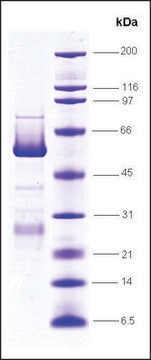
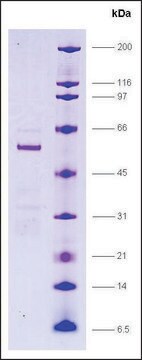
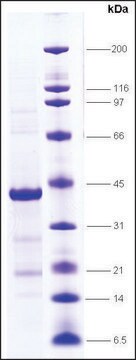
recombinant, expressed in E. coli, ≥80% (SDS-PAGE)

Synonim(y):

CIMT1, GLM1, NR1C3, PPARG1, PPARG2, PPARgamma

Zaloguj się, aby wyświetlić ceny organizacyjne i kontraktowe.

Wybierz wielkość

Zmień widok
Do Państwa/SKUDostępnośćCena netto
10 μg
Skontaktuj się z Obsługą Klienta, aby uzyskać informacje na temat dostępności
1680,00 zł

Informacje o tej pozycji

NACRES:
NA.26
UNSPSC Code:
12352200
Form:
frozen liquid
Assay:
≥80% (SDS-PAGE)
Biological source:
human
Recombinant:
expressed in E. coli
Mol wt:
~57.8 kDa

1680,00 zł


Skontaktuj się z Obsługą Klienta, aby uzyskać informacje na temat dostępności

Złóż zamówienie na produkt na zamówienie
Pomoc techniczna
Potrzebujesz pomocy? Nasz zespół doświadczonych naukowców chętnie Ci pomoże.
Pozwól nam pomóc


biological source

human

recombinant

expressed in E. coli

assay

≥80% (SDS-PAGE)

form

frozen liquid

mol wt

~57.8 kDa

packaging

pkg of 10 μg

storage condition

avoid repeated freeze/thaw cycles

concentration

450 μg/mL

color

clear colorless

NCBI accession no.

UniProt accession no.

shipped in

dry ice

storage temp.

−70°C

Gene Information

human ... PPARG(5468)

Biochem/physiol Actions

There is evidence that a group of closely related nuclear receptors, called peroxisome proliferator-activated receptors (PPARs), may be involved in chronic diseases such as diabetes, obesity, artherosclerosis and cancer. The PPARs were first cloned as the nuclear receptors that mediate the effects of synthetic compounds called peroxisome proliferators on gene transcription. It soon became clear that eicosanoids and fatty acids can also regulate gene transcription through PPARs. They bind a specific element in the promoter region of target genes only as a heterodimer with the receptor for 9- cis retinoic acid, RXR (retinoid X receptor). Binding of the ligand of either receptor can activate the complex, but binding of both ligands simultaneously is more potent. Three PPAR isotypes have been identified: α, β (also called NUC1) and γ. PPARα is expressed most in brown adipose tissue and liver, then kidney, heart and skeletal muscle. PPARγ is mainly expressed in adipose tissue, and to a lesser extent in colon, the immune system and the retina. PPARβ is found in many tissues but the highest expression is in the gut, kidney and heart. PPARγ influences the storage of fatty acids in the adipose tissue. With the C/EBP transcription factors, PPARγ is part of the adipocyte differentiation program that induces the maturation of pre-adipocytes into fat cells. Most of the PPARγ target genes in adipose tissue are directly implicated in lipogenic pathways, including lipoprotein lipase (LPL), adipocyte fatty acid binding protein (A-FABP or AP2), acyl-CoA synthase and fatty acid transport protein (FATP). In addition, PPARγ is a direct target gene of the transcription factor sterol response element binding protein 1 (SREBP1) emphasizing the cooperative and additive functions between these two types of receptor.

Physical form

Clear and colorless frozen liquid solution

Preparation Note

Use a manual defrost freezer and avoid repeated freeze-thaw cycles. While working, please keep sample on ice.
Ta strona może zawierać tekst przetłumaczony maszynowo.

Porównaj podobne pozycje

Wyświetl pełne porównanie

Pokaż różnice

1 of 1

Ta pozycja
SRP2139SRP2054SRP2135
description

recombinant, expressed in E. coli, ≥80% (SDS-PAGE)

description

recombinant, expressed in E. coli, ≥80% (SDS-PAGE)

description

recombinant, expressed in E. coli, ≥80% (SDS-PAGE)

description

recombinant, expressed in E. coli, ≥80% (SDS-PAGE)

recombinant

expressed in E. coli

recombinant

expressed in E. coli

recombinant

expressed in E. coli

recombinant

expressed in E. coli

assay

≥80% (SDS-PAGE)

assay

≥80% (SDS-PAGE)

assay

≥80% (SDS-PAGE)

assay

≥80% (SDS-PAGE)

biological source

human

biological source

human

biological source

human

biological source

human

concentration

450 μg/mL

concentration

300 μg/mL

concentration

850 μg/mL

concentration

-

form

frozen liquid

form

frozen liquid

form

frozen liquid

form

frozen liquid

mol wt

~57.8 kDa

mol wt

~58.2 kDa

mol wt

~39.4 kDa

mol wt

~60.2 kDa


Klasa składowania

10 - Combustible liquids

wgk

WGK 1

flash_point_f

Not applicable

flash_point_c

Not applicable


Wybierz jedną z najnowszych wersji:

Certyfikaty analizy (CoA)

Lot/Batch Number

It looks like we've run into a problem, but you can still download Certificates of Analysis from our Dokumenty section.

Proszę o kontakt, jeśli potrzebna jest pomoc Obsługa Klienta

Masz już ten produkt?

Dokumenty związane z niedawno zakupionymi produktami zostały zamieszczone w Bibliotece dokumentów.

Odwiedź Bibliotekę dokumentów


Questions

Reviews

No rating value

Active Filters