Przejdź do zawartości
Merck

Przejdź do

MABS1208

Anti-LDL Receptor Antibody, clone 2H7.1

clone 2H7.1, from mouse

Synonim(y):

Low-density lipoprotein receptor, LDL Receptor

Zaloguj się, aby wyświetlić ceny organizacyjne i kontraktowe.

Wybierz wielkość

Zmień widok
Do Państwa/SKUDostępnośćCena netto
100 μg

Przewidywany termin wysyłki10 czerwca 2026zKuehne + Nagel Sp. z o.o.

1750,00 zł

Informacje o tej pozycji

UNSPSC Code:
12352203
NACRES:
NA.41
eCl@ss:
32160702
Conjugate:
unconjugated
Clone:
2H7.1, monoclonal
Application:
FACS, IHC, WB
Citations:
3

1750,00 zł


Przewidywany termin wysyłki10 czerwca 2026Szczegóły

Rekombinowane, niezawierające konserwantów przeciwciało jest dostępne dla Twojego celu. Wypróbuj ZRB1176

Pomoc techniczna
Potrzebujesz pomocy? Nasz zespół doświadczonych naukowców chętnie Ci pomoże.
Pozwól nam pomóc


biological source

mouse

Quality Segment

conjugate

unconjugated

antibody form

purified immunoglobulin

antibody product type

primary antibodies

clone

2H7.1, monoclonal

species reactivity

human

technique(s)

flow cytometry: suitable, immunohistochemistry: suitable (paraffin), western blot: suitable

isotype

IgG2bκ

NCBI accession no.

UniProt accession no.

shipped in

wet ice

target post-translational modification

unmodified

Gene Information

human ... LDLR(3949)

General description

Low-density lipoprotein receptor (UniProt P01130; also known as LDL receptor) is encoded by the LDLR (also known as FH, FHC) gene (Gene ID 3949) in human. Low-density lipoprotein (LDL) receptor recognizes the apoprotein B100 embedded in the outer phospholipid layer of cholesterol-rich LDL particles and mediates their remval by endocytosis via clathrin-coated pits. LDL receptor also recognizes the apoE protein found in chylomicron remnants and VLDL remnants (IDL). LDLR gene mutations are known causes of familial hypercholesterolaemia (FH). LDL receptor is initially produced with a signal peptide sequence (a.a. 1-21), the removal of which yields the mature single transmembrane (a.a. 789-810) protein with a C-terminal cytoplasmic tail (a.a. 811-860) and a large N-terminal extracellular region (a.a. 22-788) that contains seven class A (a.a. 25-313) and six class B (a.a. 397-658) LDLR repeats, as well as three EGF-like domains (a.a. 314-353, 354-393, 663-712). LDL-A repeats mediate LDL binding, repeats 2-7 are required for ApoB binding, while only repeat 5 is required for ApoE binding. The class B (LDL-B) repeats region adopts a beta-propeller conformation and is believed to be responsible for the pH-dependent release of LDL in the endosome. The cytoplasmic tail contains a signal sequence important for localizing the receptors to clathrin-coated pits and for triggering receptor-mediated endocytosis upon LDL binding.
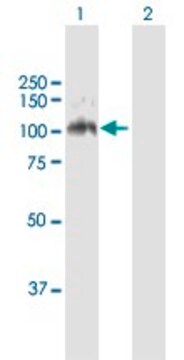
~150 kDa observed. Target band size appears larger than the calculated molecular weights of 95.38 kDa (isoform 1), 75.85 kDa (isoform 2), 76.86 kDa (isoform 3), 90.94 kDa (isoform 4), 95.09 kDa (isoform 5), and 82.25 kDa (isoform 6) due to glycosylation. Uncharacterized band(s) may appear in some lysates.

Immunogen

Epitope: Extracellular class A domains 1-3.
GST-tagged recombinant human LDL receptor extracellular fragment corresponding to class A domains 1-3.

Application

Anti-LDL Receptor Antibody, clone 2H7.1 is an antibody against LDL Receptor for use in Western Blotting, Immunohistochemistry (Paraffin), Flow Cytometry.
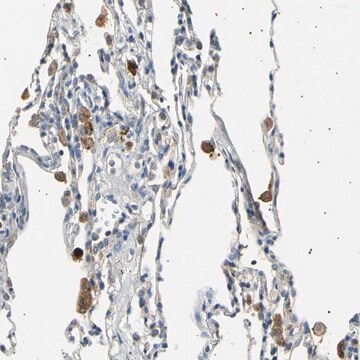
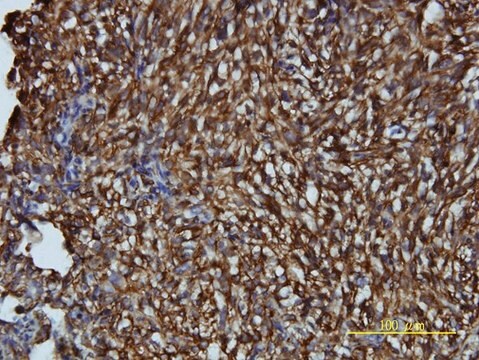
Immunohistochemistry Analysis: A 1:250 dilution from a representative lot detected LDL receptor immunoreactivity in human adrenal gland tissue.
Flow Cytometry Analysis: 1.0 µg of this antibody from a representative lot detected LDL receptor expression in one million HepG2 cells.
Research Category
Signaling
Research Sub Category
Lipid Metabolism & Weight Regulation

Biochem/physiol Actions

Expected to react with spliced isoforms 1 and 5 reported by UniProt P01130). Reactivity toward spliced isoforms 2, 3, 4, and 6 has not been determined.

Physical form

Format: Purified
Protein G Purified
Purified mouse monoclonal IgG2bκ antibody in buffer containing 0.1 M Tris-Glycine (pH 7.4), 150 mM NaCl with 0.05% sodium azide.

Preparation Note

Stable for 1 year at 2-8°C from date of receipt.

Analysis Note

Evaluated by Western Blotting in human adrenal gland tissue lysate.

Western Blotting Analysis: 0.5 µg/mL of this antibody detected LDL receptor in 10 µg of human adrenal gland tissue lysate.

Other Notes

Concentration: Please refer to lot specific datasheet.

Disclaimer

Unless otherwise stated in our catalog or other company documentation accompanying the product(s), our products are intended for research use only and are not to be used for any other purpose, which includes but is not limited to, unauthorized commercial uses, in vitro diagnostic uses, ex vivo or in vivo therapeutic uses or any type of consumption or application to humans or animals.
Ta strona może zawierać tekst przetłumaczony maszynowo.

Porównaj podobne pozycje

Wyświetl pełne porównanie

Pokaż różnice

1 of 1

Ta pozycja
SAB1406079HPA009647WH0026119M1
conjugate

unconjugated

conjugate

unconjugated

conjugate

unconjugated

conjugate

unconjugated

Gene Information

human ... LDLR(3949)

Gene Information

human ... LDLR(3949)

Gene Information

human ... LDLR(3949)

Gene Information

human ... LDLRAP1(26119)

clone

2H7.1, monoclonal

clone

polyclonal

clone

polyclonal

clone

4G4-D5, monoclonal

species reactivity

human

species reactivity

human

species reactivity

human

species reactivity

human

antibody form

purified immunoglobulin

antibody form

purified immunoglobulin

antibody form

affinity isolated antibody

antibody form

purified immunoglobulin

biological source

mouse

biological source

mouse

biological source

rabbit

biological source

mouse


Still not finding the right product?

Wypróbuj nasze narzędzie Narzędzie selektora produktów, aby zawęzić opcje.


Klasa składowania

12 - Non Combustible Liquids

wgk

WGK 1

flash_point_f

Not applicable

flash_point_c

Not applicable


Certyfikaty analizy (CoA)

Poszukaj Certyfikaty analizy (CoA), wpisując numer partii/serii produktów. Numery serii i partii można znaleźć na etykiecie produktu po słowach „seria” lub „partia”.

Masz już ten produkt?

Dokumenty związane z niedawno zakupionymi produktami zostały zamieszczone w Bibliotece dokumentów.

Odwiedź Bibliotekę dokumentów


Questions

Reviews

No rating value

Active Filters