
MABN2287

Anti-Amyloid Precursor Protein (APP) Antibody
rat monoclonal, 1D1
Synonim(y):
Amyloid beta A4 protein, ABPP, APPI, Alzheimer disease amyloid protein, Amyloid precursor protein, Beta-amyloid precursor protein, Cerebral vascular amyloid peptide, CVAP, PreA4, Protease nexin-II, PN-II
Wybierz wielkość
| Do Państwa/SKU | Dostępność | Cena netto |
|---|---|---|
100 μL | Przewidywany termin wysyłki05 czerwca 2026zKuehne + Nagel Sp. z o.o. | 1630,00 zł |
Informacje o tej pozycji
1630,00 zł
Przewidywany termin wysyłki05 czerwca 2026Szczegóły
Nazwa produktu
Anti-APP Antibody, clone 1D1, clone 1D1, from rat
biological source
rat
Quality Segment
antibody form
purified immunoglobulin
antibody product type
primary antibodies
clone
1D1, monoclonal
species reactivity
human
technique(s)
ELISA: suitable, flow cytometry: suitable, immunocytochemistry: suitable, immunohistochemistry: suitable (paraffin), western blot: suitable
isotype
IgG1κ
NCBI accession no.
UniProt accession no.
shipped in
ambient
target post-translational modification
unmodified
Gene Information
human ... APP(351)
General description
Immunogen
Application
Immunoprecipitation Analysis: A representative lot detected APP in Immunoprecipitation applications (Hofling, C., et. al. (2016). Aging Cell. 15(5):953-63).
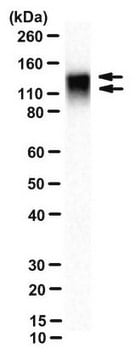
Western Blotting Analysis: A representative lot detected APP in WT, but not in APP knockdown HEK293T cells (Courtesy of Dr. med. Peer-Hendrik Kuhn, Ph.D., Institut fur Allgemeine Pathologie und Pathologische Anatomie, Technische Universität München, Munich, Germany).
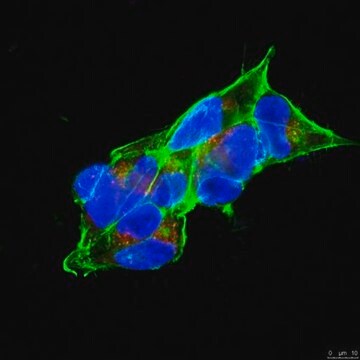
Immunocytochemistry Analysis: A 1:250 dilution from a representative lot detected APP in HEK293 cell line.
Immunocytochemistry Analysis: A representative lot detected APP in Immunocytochemistry applications (Hofling, C., et. al. (2016). Aging Cell. 15(5):953-63).
Immunocytochemistry Analysis: A 1:10 dilution from a representative lot detected APP in HEK293T cells, but not in cells lentivirally transduced with APP shRNA-1 or APP shRNA-2, both coexpressing GFP as a reporter (Courtesy of Dr. med. Peer-Hendrik Kuhn, Ph.D., Institut fur Allgemeine Pathologie und Pathologische Anatomie, Technische Universität München, Munich, Germany).
Immunohistochemistry Analysis: A representative lot detected APP in Immunohistochemistry applications (Hofling, C., et. al. (2016). Aging Cell. 15(5):953-63).
Immunohistochemistry Analysis: A 1:50 dilution from a representative lot detected APP in human cerebral cortex and human Alzheimer′s brain tissues.
ELISA Analysis: A representative lot detected APP in ELISA applications (Hofling, C., et. al. (2016). Aging Cell. 15(5):953-63).
Western Blotting Analysis: A representative lot detected APP in Western Blotting applications (Hofling, C., et. al. (2016). Aging Cell. 15(5):953-63).
Flow Cytometry Analysis: A representative lot detected APP in Flow Cytometry applications (Hofling, C., et. al. (2016). Aging Cell. 15(5):953-63).
Neuroscience
Biochem/physiol Actions
Physical form
Preparation Note
Analysis Note
Western Blotting Analysis: 1 µg/mL of this antibody detected APP in 10 µg of HEK293 cell lysate.
Other Notes
Disclaimer
1 of 1
Ta pozycja | |||
|---|---|---|---|
| biological source rat | biological source rat | biological source mouse | biological source rat |
| Gene Information human ... APP(351) | Gene Information human ... APP(351) | Gene Information human ... APP(351) | Gene Information human ... APP(351) |
| antibody form purified immunoglobulin | antibody form purified antibody | antibody form purified immunoglobulin | antibody form purified antibody |
| species reactivity human | species reactivity human | species reactivity mouse, human | species reactivity mouse, human |
| clone 1D1, monoclonal | clone 7H6, monoclonal | clone 2B3, monoclonal | clone 2D8, monoclonal |
| UniProt accession no. | UniProt accession no. | UniProt accession no. | UniProt accession no. |


Still not finding the right product?
Explore all of our products under Anti-APP Antibody, clone 1D1
— lub —
Wypróbuj nasze narzędzie Narzędzie selektora produktów, aby zawęzić opcje.
Klasa składowania
12 - Non Combustible Liquids
wgk
WGK 1
flash_point_f
does not flash
flash_point_c
does not flash
Certyfikaty analizy (CoA)
Poszukaj Certyfikaty analizy (CoA), wpisując numer partii/serii produktów. Numery serii i partii można znaleźć na etykiecie produktu po słowach „seria” lub „partia”.
Masz już ten produkt?
Dokumenty związane z niedawno zakupionymi produktami zostały zamieszczone w Bibliotece dokumentów.