Skip to Content
Merck

Key Documents

Skip To

A5977

Anti-VSV-G−Peroxidase antibody, Mouse monoclonal

1.0-1.5 mg/mL, clone P5D4, purified from hybridoma cell culture

Promotion Available

Synonym(s):

Monoclonal Anti-VSV Glycoprotein

Sign In to View Organizational & Contract Pricing.

Save 15% off list price*

Use code SAVE15 in cart. Sign in to check eligibility. Shop Products

Select a Size

Change View
Size/SKUAvailabilityPrice
1 vial
Please contact Customer Service for Availability
15 400,00 CZK
13 090,00 CZK

About This Item

NACRES:
NA.56
UNSPSC Code:
12352203
Conjugate:
peroxidase conjugate
Clone:
P5D4, monoclonal
Application:
WB
Citations:
7

13 090,00 CZK

List Price15 400,00 CZKSave 15%
Web-Only Promotion
Save 15% with code SAVE15
Web-Only Discount

Please contact Customer Service for Availability

​
Technical Service
Need help? Our team of experienced scientists is here for you.
Let Us Assist


biological source

mouse

Quality Segment

conjugate

peroxidase conjugate

antibody form

purified from hybridoma cell culture

antibody product type

primary antibodies

clone

P5D4, monoclonal

form

lyophilized powder

concentration

1.0-1.5 mg/mL

technique(s)

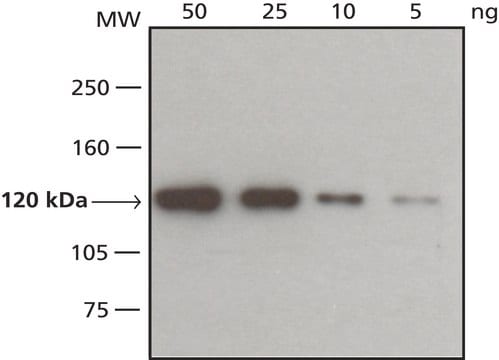
western blot: 1:1,000 using 20-50 ng of a purified VSV-G tagged fusion protein

isotype

IgG1

shipped in

wet ice

storage temp.

2-8°C

General description

Monoclonal Anti-VSV-G-Peroxidase is a lyophilized preparation of the purified immunoglobulin fraction of monoclonal Anti-VSV-G (mouse IgG1 isotype) isolated from ascites fluid of the P5D4 hybridoma, conjugated to horseradish peroxidase (HRP). The antibody is derived from the P5D4 hybridoma produced by the fusion of mouse myeloma cells and splenocytes from BALB/c mouse immunized with a synthetic peptide. Vesicular Stomatitis Virus Glycoprotein (VSV-G) exists as a trimer and comprises of four domains, among which domain III is a pleckstrin homology (PH) domain.

Immunogen

synthetic peptide containing the 15 carboxy-terminal amino acids (497-511) of Vesicular Stomatitis Virus Glycoprotein (VSV-G), conjugated to KLH.

Application

Monoclonal Anti-VSV-G−Peroxidase antibody produced in mouse may be used immunoblotting.

Biochem/physiol Actions

Vesicular Stomatitis Virus Glycoprotein (VSV-G) amino acid sequence YTDIEMNRLGK, corresponding to amino acids 501-511 has been widely used as an epitope tag in expression vectors, enabling the expression of proteins as VSV-G tagged fusion proteins. It constitutes an attractive model to study maturation and intracellular transport of membrane proteins. VSV-G mediates attachment of VSV to the cell surface and induces pH-dependent fusion between viral and target membranes. Besides, its cytoplasmic domain contains information for several intracellular sorting steps, which include efficient export from the endoplasmic reticulum, basolateral delivery and endocytosis..VSV-G is transported through stacks in the Golgi cisternae.
The antibody recognizes an epitope containing the five carboxy-terminal amino acids of VSV Glycoprotein. In infected cells, the antibody localizes the immature forms of VSV-G in the rough endoplasmic reticulum (RER) and in the cisternae of Golgi complex, as well as mature VSV-G at the cell surface and in the budding virus. The antibody does not stain the secreted form of VSV-G which lacks the membrane and the cytoplasmic domain. This antibody has been used for studies on the role of the cytoplasmic domain on newly-synthesized VSV-G during transfer to the plasma membrane and cell surface, using micro-injected antibody, immunoblotting, immunoprecipitation, immunocytochemistry and immunoelectron microscopy. The antibody has been used for the detection, immunoprecipitation and immunocytochemical staining of exogenously introduced constructs tagged with the carboxyl-terminus of VSV-G. This tag does not interfere with the function of the studied protein and can be specifically recognized by the P5D4 antibody without cross-reaction with any endogenous protein.
VSV-G tag sequence (YTDIEMNRLGK) on VSV-G tagged fusion proteins when expressed N- or C-terminal to the fusion protein. Recognizes native and denatured forms of VSV-G tagged proteins.

Physical form

Supplied as a lyophilized powder. After reconstitution,the solution contains 1% BSA and 0.05% MIT in 0.01 M sodium phosphate buffered saline, pH 7.4.

Preparation Note

Reconstitution with 0.5 mL water results in a solution of 0.01 M sodium phosphate buffered saline, pH 7.4, containing 1% BSA and 0.05% MIT.
Stored the lyophilized product at 2-8 °C. After reconstitution, for extended storage, freeze in working aliquots at –20 °C. For continuous use, the solution may be store at 2-8 °C for up to 1 month. Working dilutions should be discarded. Avoid repeated freeze-thaw.

Disclaimer

Unless otherwise stated in our catalog, our products are intended for research use only and are not to be used for any other purpose, which includes but is not limited to, unauthorized commercial uses, in vitro diagnostic uses, ex vivo or in vivo therapeutic uses or any type of consumption or application to humans or animals.

Compare Similar Items

View Full Comparison

Show Differences

1 of 1

This Item
C7706V4888SAB4200695
description

1.0-1.5 mg/mL, clone P5D4, purified from hybridoma cell culture

description

clone P5D4, purified immunoglobulin, buffered aqueous solution

description

affinity isolated antibody, buffered aqueous solution

description

clone P5D4, purified from hybridoma cell culture

biological source

mouse

biological source

mouse

biological source

rabbit

biological source

mouse

antibody form

purified from hybridoma cell culture

antibody form

purified immunoglobulin

antibody form

affinity isolated antibody

antibody form

purified immunoglobulin

clone

P5D4, monoclonal

clone

P5D4, monoclonal

clone

polyclonal

clone

P5D4, monoclonal

conjugate

peroxidase conjugate

conjugate

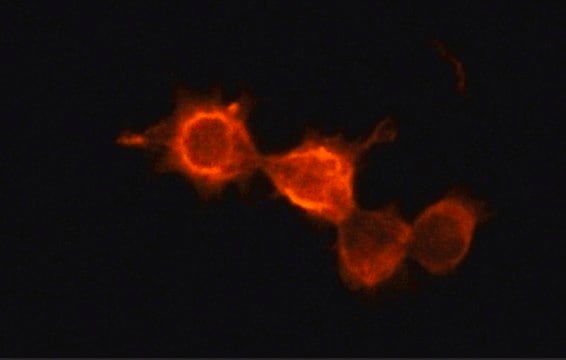
CY3 conjugate

conjugate

unconjugated

conjugate

-

technique(s)

western blot: 1:1,000 using 20-50 ng of a purified VSV-G tagged fusion protein

technique(s)

direct immunofluorescence: 1:10,000 using COS-7 cells transfected with a VSV-G tagged vinculin construct

technique(s)

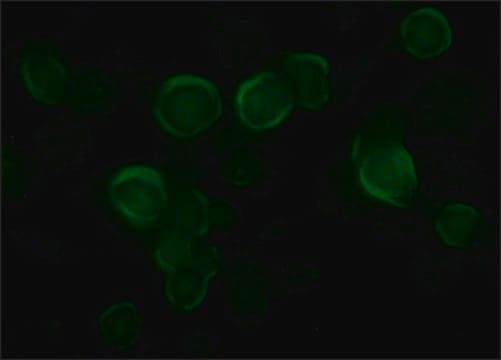
indirect immunofluorescence: 1.0 μg/mL using VSV-G tagged fusion proteins in methanol/acetone fixed transiently transfected cells, immunoprecipitation (IP): 0.5 μg using VSV-G tagged fusion proteins from transfected mammalian cell lysates (tagged fusion proteins from transfected mammalian cell lysates), western blot: 0.1-0.2 μg/mL using VSV-G tagged fusion proteins from transfected mammalian cell lysates

technique(s)

immunoblotting: 0.5-1 μg/mL using whole extract of human HEK-293T cells over-expressing Vinculin with VSV-G tagged fusion protein., immunocytochemistry: suitable, immunoprecipitation (IP): suitable, immunofluorescence: 5-10 μg/mL using COS7 cells over-expressing Vinculin with VSV-G tagged fusion protein.

storage temp.

2-8°C

storage temp.

2-8°C

storage temp.

−20°C

storage temp.

−20°C


Still not finding the right product?

Try our Product Selector Tool to narrow your options


Pictograms

Exclamation mark

Signal Word

Warning

Hazard Codes

Hazard Classifications

Skin Sens. 1

Storage Class

13 - Non Combustible Solids

WGK

WGK 2

Flash Point (°F)

Not applicable

Flash Point (°C)

Not applicable


Choose from one of the most recent versions:

Certificates of Analysis (COA)

Lot/Batch Number

Don't see the Right Version?

If you require a particular version, you can look up a specific certificate by the Lot or Batch number.

Already Own This Product?

Find documentation for the products that you have recently purchased in the Document Library.

Visit the Document Library


Questions

Reviews

No rating value

Active Filters