Přejít k obsahu
Merck

Přeskočit na

MABN1837

Anti-AGE Antibody, Carboxy-Methyl Lysine Antibody, clone 6C7

clone 6C7, from mouse

Synonyma:

N(epsilon)-(carboxymethyl) lysine, CML, AGE-CML, N-epsilon-CML, AGE-CML (6C7) Antibody

Přihlásit pro zobrazení organizačních a smluvních cen.

Vybrat velikost

Změnit zobrazení
Vám/Skladová položkaDostupnostCena

O této položce

UNSPSC Code:
12352203
NACRES:
NA.43
eCl@ss:
32160702
Clone:
6C7, monoclonal
Species reactivity:
mouse
Application:
IHC
Citations:
2
Informace o stanovených cenách a dostupnosti nejsou v současnosti dostupné.
Technický servis
Potřebujete pomoc? Náš tým zkušených odborníků je vám k dispozici.
Dovolte nám, abychom vám pomohli


biological source

mouse

Quality Segment

antibody form

purified immunoglobulin

antibody product type

primary antibodies

clone

6C7, monoclonal

species reactivity

mouse

species reactivity (predicted by homology)

rat, human

technique(s)

immunohistochemistry: suitable (paraffin)

isotype

IgG2aκ

shipped in

ambient

target post-translational modification

unmodified

General description

Chronic accumulation of Advanced Glycation End products (AGEs) is a common feature during aging, hyperlipidemia, and diabetes and affects function of proteins, lipids, and DNA. Although formation of AGE products is considered to be predominantly an endogenous process, certain external factors, such as some dietary products and smoking can increase the level of AGE in tissues. Under certain conditions glucose may form covalent adducts with the plasma proteins through the process of glycation. Glycation is a non-enzymatic reaction of reducing carbohydrates with lysine side chains and N-terminal amino groups of proteins. The term AGE often refers to non-reactive terminal products, such as N- carboxymethyllysine (CML) as well as reactive precursors, such as methylglyoxal (MG). CML is an AGE product that is usually found on proteins and lipids as a result of oxidative stress and chemical glycation. Excessive glycation can disrupt protein function by altering enzyme activity, receptor function, and molecular conformation. Protein glycation and subsequent formation of AGE products contributes to the pathogenesis of diabetes-related complications, such as retinopathy, nephropathy, and neuropathy. Higher levels of CML have been linked to greater hip fracture risk in older adults, independent of bone mineral density. AGE products interact with a variety of cell-surface AGE-binding receptors (RAGE) that results in their endocytosis and degradation. It can also generate pro-oxidant and pro-inflammatory events in cells. AGE products could also contribute to the development or worsening of many degenerative diseases, including Alzheimer′s disease. (Ref.: Cai, W., et al. (2002). Mol. Med 8 (7): 337-346; Barzilay, JI et al (2014). J. Bone Miner. Res. 29(5):1061-1066).

Immunogen

Carboxymethyl Lysine ­modified Keyhole Limpet Hemocyanin (KLH).

Application

Anti-AGE, Carboxy-Methyl Lysine, clone 6C7, Cat. No. MABN1837, is a highly specific mouse monoclonal antibody, that targets Carboxy-Methyl Lysine (CML) modified proteins and has been tested in Immunohistochemistry (Paraffin).
Research Category
Neuroscience

Biochem/physiol Actions

Clone 6C7 specifically reacts with carboxymethyl lysine modified proteins.

Physical form

Format: Purified
Protein G purified
Purified mouse monoclonal antibody IgG2a in buffer containing 0.1 M Tris-Glycine (pH 7.4), 150 mM NaCl with 0.05% sodium azide.

Preparation Note

Stable for 1 year at 2-8°C from date of receipt.

Analysis Note

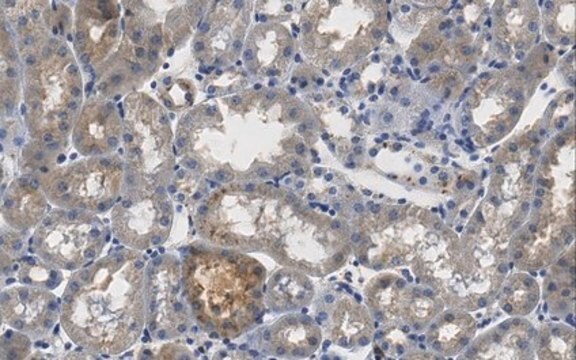
Evaluated by Immunohistochemistry in mouse kidney tissue.

Immunohistochemistry Analysis: A 1:50 dilution of this antibody detected AGE, Carboxy-Methyl Lysine in kidney tissue of mice fed high AGE diets.

Other Notes

Concentration: Please refer to lot specific datasheet.

Disclaimer

Unless otherwise stated in our catalog or other company documentation accompanying the product(s), our products are intended for research use only and are not to be used for any other purpose, which includes but is not limited to, unauthorized commercial uses, in vitro diagnostic uses, ex vivo or in vivo therapeutic uses or any type of consumption or application to humans or animals.

Porovnat podobné položky

Zobrazit úplné porovnání

Zobrazit rozdíly

1 of 1

Tato položka
MAB8131ZRB1684MABN1838
biological source

mouse

biological source

mouse

biological source

rabbit

biological source

mouse

species reactivity

mouse

species reactivity

human

species reactivity

human, mouse, rat

species reactivity

mouse

antibody form

purified immunoglobulin

antibody form

purified immunoglobulin

antibody form

purified antibody

antibody form

purified immunoglobulin

clone

6C7, monoclonal

clone

6F8.2, monoclonal

clone

1F13, recombinant monoclonal

clone

3D11, monoclonal

technique(s)

immunohistochemistry: suitable (paraffin)

technique(s)

immunocytochemistry: suitable, immunofluorescence: suitable, immunohistochemistry: suitable (paraffin), western blot: suitable

technique(s)

affinity binding assay: suitable, immunocytochemistry: suitable, immunohistochemistry (formalin-fixed, paraffin-embedded sections): suitable, western blot: suitable

technique(s)

ELISA: suitable, immunohistochemistry: suitable (paraffin)

Quality Level

100

Quality Level

300

Quality Level

200

Quality Level

100


Still not finding the right product?

Vyzkoušejte náš nástroj Nástroj pro výběr produktů a zúžte své možnosti.


Skladovací třída

12 - Non Combustible Liquids

wgk

WGK 1

flash_point_f

Not applicable

flash_point_c

Not applicable


Osvědčení o analýze (COA)

Vyhledejte osvědčení Osvědčení o analýze (COA) zadáním čísla šarže/dávky těchto produktů. Čísla šarže a dávky lze nalézt na štítku produktu za slovy „Lot“ nebo „Batch“.

Již tento produkt vlastníte?

Dokumenty související s produkty, které jste v minulosti zakoupili, byly za účelem usnadnění shromážděny ve vaší Knihovně dokumentů.

Navštívit knihovnu dokumentů


Questions

Reviews

No rating value

Active Filters