
05-583

Anti-CFTR Antibody, clone M3A7
clone M3A7, Upstate®, from mouse
Synonym(s):
ATP-binding cassette sub-family C, member 7, ATP-binding cassette transporter sub-family C member 7, cAMP-dependent chloride channel, cystic fibrosis transmembrane conductance regulator, cystic fibrosis transmembrane conductance regulator (ATP-binding ca
Select a Size
| Size/SKU | Availability | Price |
|---|---|---|
200 μg | Check Cart for Availability | € 583,00 |
About This Item
€ 583,00
biological source
mouse
Quality Segment
conjugate
unconjugated
antibody form
purified immunoglobulin
antibody product type
primary antibodies
clone
M3A7, monoclonal
species reactivity
human
manufacturer/tradename
Upstate®
technique(s)
immunohistochemistry: suitable, immunoprecipitation (IP): suitable, western blot: suitable
isotype
IgG1
NCBI accession no.
UniProt accession no.
shipped in
dry ice
target post-translational modification
unmodified
Gene Information
human ... CFTR(1080)
General description
Immunogen
Application
This antibody has been reported to immunoprecipitate CFTR. (Kartner, N., 1998.)
Immunohistochemistry:
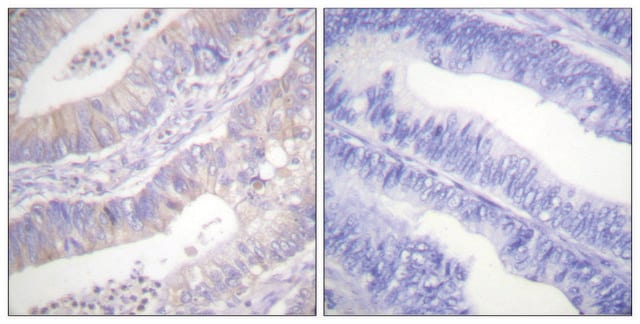
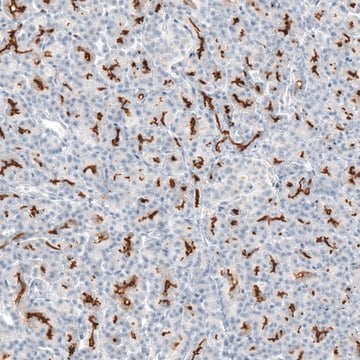
This antibody has been reported to immunostain CFTR in human pancreatic tissue sections. (Kartner, N., 1998.)
Neuroscience
Ion Channels & Transporters
Biochem/physiol Actions
Physical form
Preparation Note
Handling Recommendations:
Upon receipt, and prior to removing the cap, centrifuge the vial and gently mix the solution. Aliquot into microcentrifuge tubes and store at -20°C. Avoid repeated freeze/thaw cycles, which may damage IgG and affect product performance. Note: Variability in freezer temperatures below -20°C may cause glycerol-containing solutions to become frozen during storage.
Analysis Note
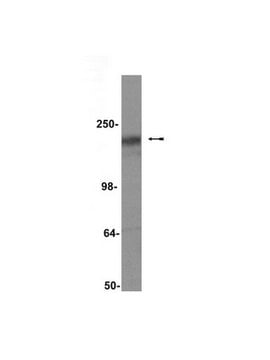
T84 cell lysate.
Western Blot Analysis:
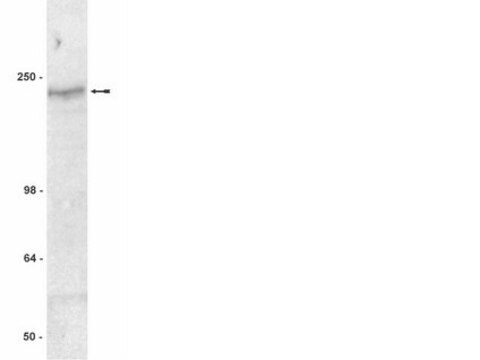
0.5-2 µg/mL of this lot detected CFTR from 20-50 µg of human T84 colon carcinoma epithelial RIPA cell lysates. 0.5-2 µg/mL of a previous lot detected CFTR from CFTR-transfected BHK (Haardt, M., 1999).
Note: Do not boil the lysate. Instead incubate at 37°C for 30 minutes. CFTR can run as a diffuse protein on SDS-PAGE.
Other Notes
Legal Information
Disclaimer
1 of 1
This Item | |||
|---|---|---|---|
| biological source mouse | biological source mouse | biological source rabbit | biological source rabbit |
| clone M3A7, monoclonal | clone MM13-4, monoclonal | clone polyclonal | clone polyclonal |
| antibody form purified immunoglobulin | antibody form purified antibody | antibody form affinity isolated antibody | antibody form affinity isolated antibody |
| conjugate unconjugated | conjugate unconjugated | conjugate unconjugated | conjugate unconjugated |
| species reactivity human | species reactivity human | species reactivity rat, mouse, human | species reactivity human |
| shipped in dry ice | shipped in wet ice | shipped in wet ice | shipped in wet ice |
Still not finding the right product?
Try our Product Selector Tool to narrow your options
Storage Class
10 - Combustible liquids
wgk
WGK 1
Certificates of Analysis (COA)
Search for Certificates of Analysis (COA) by entering the products Lot/Batch Number. Lot and Batch Numbers can be found on a product’s label following the words ‘Lot’ or ‘Batch’.
Already Own This Product?
Find documentation for the products that you have recently purchased in the Document Library.